

At the 20-week ultrasound, because of the baby’s position, my partner and I didn’t get any proper pictures to take home. Instead, the sonographer printed us a shot of the genitals. So, there it was, in black and white: I was having a boy.
Growing up, boys were a slightly alien concept. Our household was female-heavy – a mum, two sisters, a dad with no interest in conventional “boy stuff”. We did have two male cats, neutered, extremely fluffy and ironically named Mr White and Mr Orange by my dad (“Reservoir Cats”).
While in secondary school, an all-girls establishment where boys became more like mythical creatures than real people, I did briefly acquire a “boyfriend” – a fellow 12-year-old whom I met in a park once and spoke to twice on my parents’ landline. But that was about it.
As I got older, the distance I’d felt from boys as a child hardened into a wariness and distrust of men. It’s not difficult to see why. From groups of lads at university singing sexist songs in the student bars to the gaslighting, ghosting and dick pics on dating apps, my interactions with men – like those of so many women – were often negative. Combined with my growing engagement with gender politics, my lack of close relationships with men started to feel less like an accident of my upbringing and more like a matter of principle.
Of course, there have been men I’ve liked in my life – I’m quite fond of my partner, for example – but, if I’m honest, they have always felt to me like exceptions to a rule.
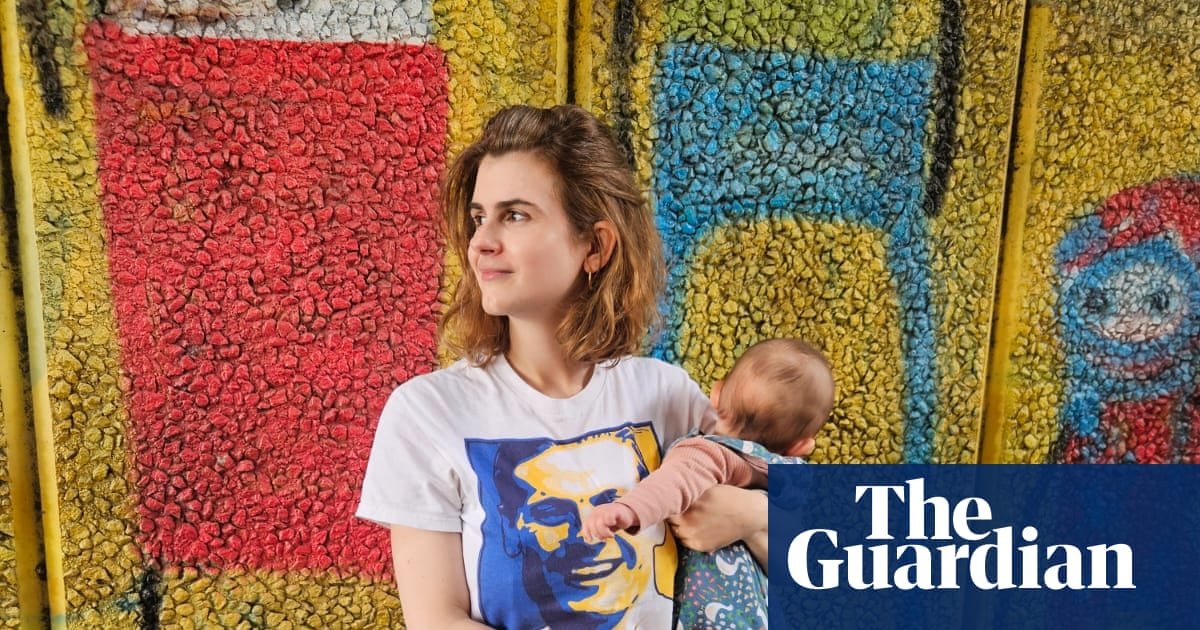
Imogen Crimp, pictured with her son on holiday in Yorkshire, March 2026. Photograph: Courtesy of Imogen Crimp
All this is to say that, when I found out my baby was a boy, I had a certain amount of trepidation. It wasn’t that I’d wanted a girl. Having lost a previous pregnancy, all I wanted was a healthy baby. But when I imagined myself with a boy – what he might be like, how I might be with him – I drew a blank.
Luckily, as with most things pregnancy- and baby-related, other people were all too willing to offer an opinion. “Boys are like dogs,” a random woman in a supermarket told me, unsolicited. “All they really need is three things: food, sleep, exercise.”
In some circles, having a boy was seen as a misfortune, best not to dwell on it, better luck next time. Certain friends had expressed relief in the past when they’d had girls and joked that none of us could have sons, because boys weren’t allowed at our get‑togethers. More than once, I was asked: “And how are you feeling about that?” as if we were in a therapy session and I’d just disclosed a minor trauma. A couple of people, trying a bit harder, said: “I can so see you as a boy mum.” In a slightly veiled way, this felt like an insult.
Meanwhile, my son already seemed to be developing his own personality. I talked to him and played him music, watched him dance through my stomach. Around the same time, it seemed as if suddenly everyone was discussing masculinity: from the TV drama Adolescence and the manosphere to a growing interest in men’s mental health, the challenges of raising a “good” and happy boy felt like the year’s most hotly debated topic. Yet the narratives people were telling me about having a son – which were uneasily similar to the way I had talked about men myself – felt reductive.
double quotation markI was asked: ‘And how are you feeling about having a boy?’ as if we were in a therapy session and I’d just disclosed a minor trauma
My son was born in the middle of the night. It’s hard to overstate the disorienting strangeness of that moment – the intensity of labour, then suddenly holding a tiny person who is both unknown and completely familiar to you. I took in his strangely long fingernails before they whisked him away for tests. It was only when they handed him back to me that the midwife asked for the sex of the baby.
There was a moment of confusion in the room. I explained he was a boy – I knew from the scan, I said. “But has anyone actually checked?” the midwife asked. “Sometimes we get it wrong.” The midwives and doctors looked at each other. No one had noticed. So he was taken away again to check they had got it right – and they had. But in that somewhat farcical moment, his sex – which had seemed like such a defining fact before his birth – became suddenly incidental.
My son is now five months old. I still encounter strangers who want to tell me how much energy I’ll need to run around after a boy or how they bet I hope the next one is a girl. He shares his name with a footballer, a 19th-century novelist and a character from a favourite children’s book – about a boy who is adventurous, sensitive and brave – to reflect all the many things that boys can be. I hope he won’t grow up to believe that, simply because he’s a boy, he is automatically a problem. And, of course, I’m worried about what he’ll learn about being a man from the world around him – but I myself will try very hard not to say in front of him: “Urgh, men.”
Give Me Everything You’ve Got by Imogen Crimp is out on 7 May (Bloomsbury, £18.99). To support the Guardian, order your copy at guardianbookshop.com
Do you have an opinion on the issues raised in this article? If you would like to submit a response of up to 300 words by email to be considered for publication in our letters section, please click here.
