

Unfortunately, many diseases aren’t always straightforward and simple like we want them to be.
For starters, certain health conditions don’t always present with symptoms. Even COVID-19, for example, can be asymptomatic, causing the number of cases to rise. Plus, illnesses can share symptoms. If you’ve ever googled “how to tell if you have a cold, allergies or COVID,” you’re familiar with that.
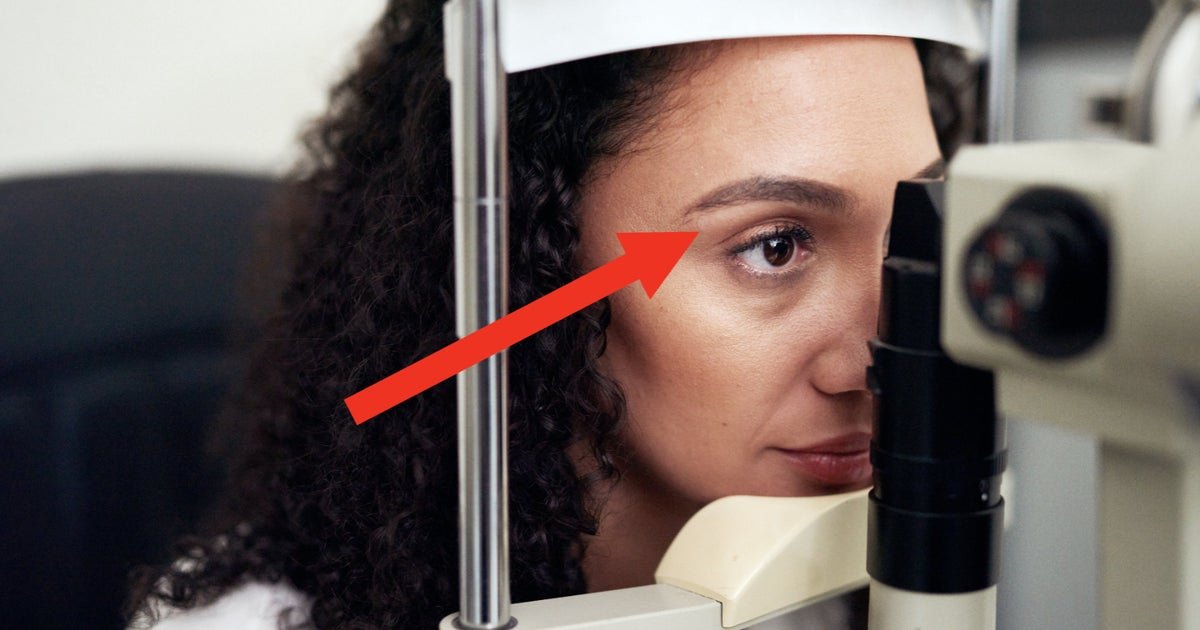
Along those lines, you might be surprised to hear that symptoms of certain health problems can be spotted in your eye, of all places — even if they aren’t eye diseases.
“Your eyes can reveal a lot about your overall health, often before you notice any changes yourself,” said Dr. Yuna Rapoport, a board-certified ophthalmologist and the founder and director of Manhattan Eye.
HuffPost Life delivers practical, reliable advice to navigate life’s challenges and make informed decisions. Support journalism that empowers you — join our membership program today.
Ahead, she and another ophthalmologist share health concerns they can see in your eye, what treatment looks like, how often to see an ophthalmologist and when further medical attention is needed.
High Blood Pressure
While a health care provider typically uses your arm to check your blood pressure, your eyes provide information about it, too.
In fact, “the blood vessels that help to serve the retina are the only microvasculature that can be observed in the body in a non-invasive fashion,” according to Dr. Benjamin Bert, a board-certified ophthalmologist at MemorialCare Orange Coast Medical Center in Fountain Valley, California. But how?
Basically, consistently high blood pressure can make the walls of the small arteries thick and stiff, leading to pinching and squeezing of the veins.
“In severe cases, the arteries can squeeze against the veins so strongly that it causes a blockage, leading to a retinal vein occlusion,” Bert continued. “Hypertension can also be observed in the retina by the tortuosity, or the curving of the branches of the retinal microvasculature.”
In layman’s terms, that might look like having blurry vision or noticing sharper curves in the eye’s blood vessels.
What treatment entails: The treatment here is pretty obvious: lowering and stabilizing blood pressure. “Normalizing the blood pressure prevents further damage to the blood vessels and can help stop the progression of the disease,” Bert said.
Some helpful habits for lowering blood pressure include exercising, eating more potassium, limiting alcohol, getting enough sleep, scheduling regular checkups and engaging in stress-reducing activities.
Glaucoma
Glaucoma, an eye condition that affects the optic nerve, is sneaky. “Glaucoma is often referred to as a ‘silent thief of sight’ because in early stages, patients don’t typically notice any symptoms,” Rapoport said.
It develops slowly, she continued, and by the time a person notices changes, permanent damage may have already occurred.
However, early signs can be detected through eye exams, particularly when there’s extra pressure, changes in the eye’s color and shape, a thinning cornea or blind spots.
What treatment entails: “Unfortunately, vision loss from glaucoma cannot be reversed, but early detection allows us to slow or stop the progression,” Rapoport said. “This is why regular eye exams (even when your eyes appear/feel healthy!) are so important.”
Diabetes
Remember talking about the eye’s “retinal microvasculature” (basically, the blood vessels)? Diabetes — or more specifically, elevated blood sugar — can affect it, too.
“The elevated blood sugar can damage pericytes, the little cells that are responsible for the integrity of the microvasculature in the retina,” Bert explained. “When these cells are damaged by elevated blood glucose, they disappear, leading to incompetence of the blood vessels.”
That can lead to microaneurysms and “outpouching” from the blood vessels, he continued, which look like red dots on the eyes.
In more severe cases, the blood vessels can leak, making even bigger dots and affecting vision.
What treatment entails: Controlling blood sugar and blood pressure is needed to prevent the progression of diabetes.
If vision changes have occurred, know they aren’t always a sign of “normal aging.” Eye treatments may be necessary, Bert said, such as special injections containing a medicine that can make blood vessels less leaky, preventing the growth of new abnormal blood vessels.
LaylaBird via Getty Images
Eye doctors can detect issues like demodex blepharitis and glaucoma during an eye exam.
Demodex Blepharitis
Prepare yourself: This one is pretty gross.
“Demodex blepharitis (DB) is an eyelid disease that is caused by an overgrowth of Demodex mites — microscopic parasites that live in eyelash follicles,” Rapoport said.
Even something as “innocent” and everyday as applying mascara can lead to it.
While you may experience symptoms that look like allergies, know that DB can be asymptomatic. Further, the disease won’t “just go away” on its own.
“Eye crust” is a red flag. “I can spot a patient with DB by analyzing the upper eyelid margin during an eye exam for the presence of crusties, otherwise known as collarettes,” Rapoport said.
What treatment entails: Good news: There’s a Food and Drug Administration-approved prescription eye drop that can treat and kill those pesky mites. Consider asking your ophthalmologist about it.
Brain Tumors Or Masses
This is clearly one of the most dangerous health concerns an ophthalmologist can spot. The mass can increase cerebrospinal fluid pressure, Bert said, causing papilledema, or a swelling of the optic nerve.
To be clear, papilledema doesn’t automatically mean a person has a brain tumor or mass, but it’s something to check regardless.
What treatment entails: Ophthalmologists can test for this with an automated visual field test, which helps locate the abnormality. Then, after a diagnosis, your provider will order an MRI to assess the possible risk of a mass.
“This can often help to get patients earlier care and intervention with an oncology/neurosurgery/neurology team,” Bert said.
Inflammation That Could Signal An Autoimmune Disease
Inflammation in the eye — whether the front or the back — can be a sign of various autoimmune diseases, such as rheumatoid arthritis, lupus, syphilis or even lymphoma, according to Rapoport.
It can present with eye-related symptoms, for better or for worse, such as light sensitivity, eye pain, redness and decreased vision, that may be benign.
Again, routine visits to the eye doctor are vital, even for conditions that don’t seemingly have to do with the eyes.
What treatment entails: Rapoport said she starts with topical steroid drops and, if needed, oral steroids. She also orders an autoimmune workup to see if there’s an underlying condition, and coordinates care with an appropriate specialist if needed.
When Further Medical Attention Is Needed
As illustrated by those examples, and according to Rapoport, seeing an eye doctor can be valuable even if you don’t have eye concerns. Not just once, either.
“It is advisable for everyone to see an eye doctor or surgeon once a year for routine monitoring, so that these issues can be identified in a timely fashion,” Bert said.
Any extra regularity depends on each person’s individual needs and health profile.
“For example, if someone has the start of signs of diabetic retinopathy, they may need to be seen monthly,” Bert continued. “However, someone who has a known diagnosis of diabetes and has their blood sugar controlled with no signs of diabetic retinopathy may be able to be seen annually.”
Experiencing eye or eyelid irritation, redness, swelling, inflammation or vision changes are other reasons to make an eye appointment ASAP, Rapoport added.
And of course, you may need to see other doctors if the ophthalmologist detects a non-eye concern. For example, a cardiologist for high blood pressure or an endocrinologist for signs of diabetes.
Don’t wait, just go. Protect your body before any potential problem worsens.
