

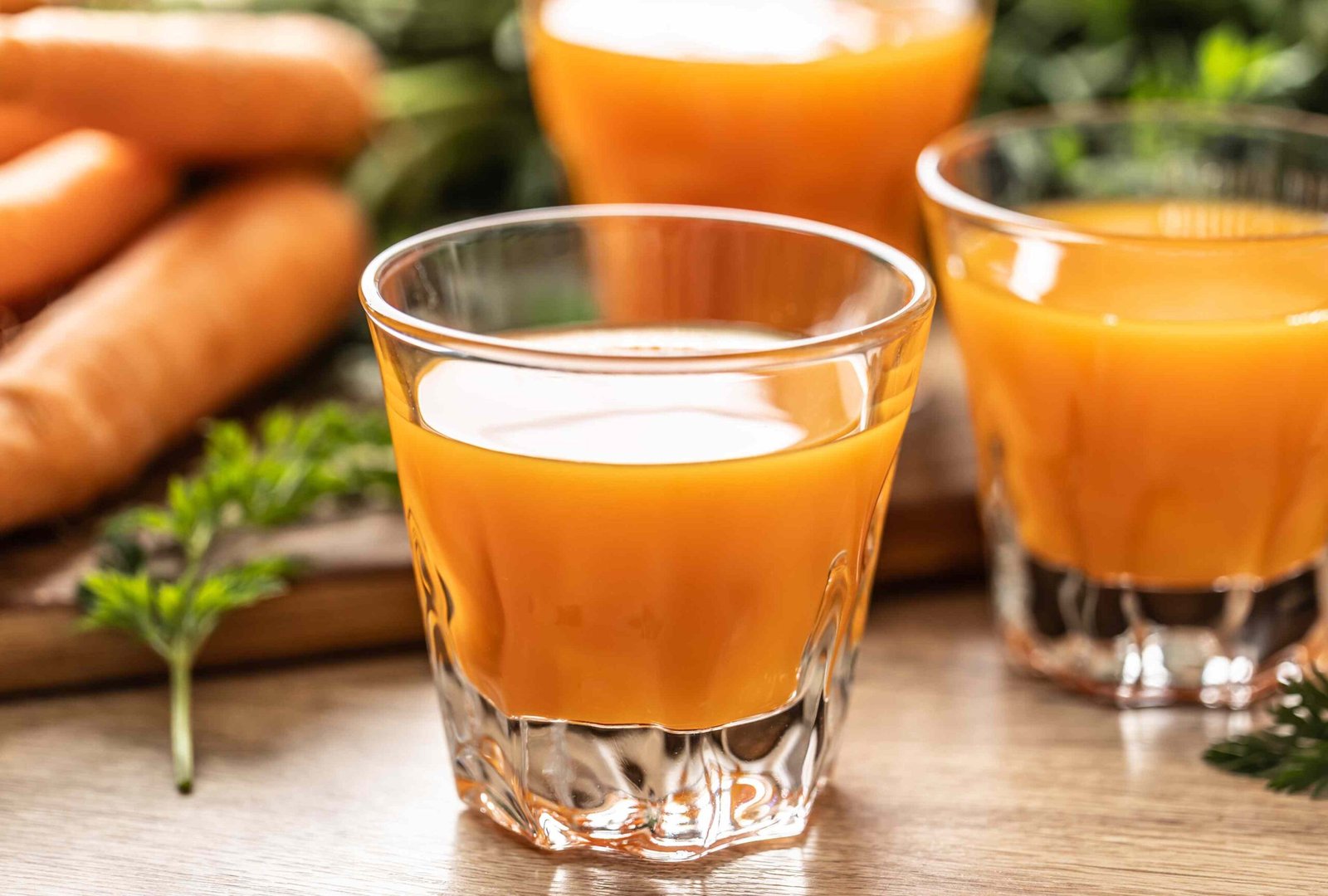
Drinking carrot juice may support your heart, eye, and immune health with its vitamins and antioxidants. It may also enhance vision and offer an energy boost.
Carrots are rich in vitamins A, C, and E, and potassium, all of which support heart health.
A 2024 study found that drinking juice high in vitamins A and E can improve blood lipid (fat) and antioxidant levels. It also helped blood become thinner and flow more easily through the blood vessels.
Higher levels of vitamins A, E, and C were also linked to a lower risk of death from heart disease.
Getting enough potassium is important for heart health. Higher potassium intake can improve blood pressure, especially in people with hypertension (high blood pressure).
Carrots are rich in vitamin A and the antioxidants lutein and zeaxanthin.
Your eyes need vitamin A to see in dim light. Vitamin A deficiency can cause a condition called xerophthalmia, which is when you cannot see well in low light or darkness.
Lutein and zeaxanthin are antioxidants. These compounds help protect your eyes from light damage.
Beta-carotene is a plant pigment found in carrots that gives the vegetable its orange color. It can also support the immune system.
A 2023 study found that carrot juice may improve immune cells’ ability to respond to potential dangers, such as bacteria that cause infections.
Carrot juice is rich in antioxidants such as vitamins A, C, and E.
Antioxidants are compounds that help protect cells from damage caused by unstable molecules called free radicals. Your body is exposed to free radicals due to environmental pollutants, ultraviolet rays, smoking, infections, and energy production.
A large 2018 study found that eating a high-antioxidant diet was linked to a lower risk of dying from any cause.
Vitamin A is important for cell growth and repair. Your skin is constantly forming new skin cells and shedding the outer layer of older cells. Vitamin A supports this process, which is essential for wound healing.
A form of vitamin A called retinol is commonly used to treat acne. A 2022 study found that people with acne had lower levels of vitamin A.
Carrot juice is also rich in vitamin C, which your body uses to make collagen. Collagen keeps skin and bones firm yet elastic. Vitamin C can also help prevent pigmentation (dark spots) caused by ultraviolet light.
Beta-carotene and other antioxidants in carrot juice can support the immune system. When the immune system works properly, it can eliminate or decrease inflammation effectively.
A 2021 study found that eating foods high in beta-carotene is linked to decreased C-reactive protein (CRP) levels. Doctors often measure CRP to check for inflammation in the body.
Carrot juice contains a good amount of carbohydrates, sugars, and micronutrients like vitamins A, C, and K, potassium, and iron.
A 240-milliliter serving of 100% carrot juice provides:
- Calories: 96 kcal
- Fat: 0.3 grams (g)
- Sodium: 158 milligrams (mg)
- Carbohydrates: 22.3 g
- Fiber: 1.9 g
- Total sugars: 9.3 g
- Protein: 2.2 g
100% carrot juice is rich in several vitamins and minerals:
- Vitamin A: 2290 micrograms (mcg), 254.4% of the Daily Value (DV)
- Vitamin K: 37.2 mcg, 31.0% of the DV
- Vitamin C: 20 mg, 22.2% of the DV
- Vitamin E: 2.7 mg, 18% of the DV
- Potassium: 701 mg, 14.9% of the DV
- Iron: 1.1 mg, 6.1% of the DV
Considerations
Carrot juice is high in carbohydrates and sugar. It’s great for quick energy, which means it raises blood sugar much more than a whole carrot. Many commercial carrot juices also have added sugars.
Juices lack fiber. It takes 4–6 medium carrots to make one serving of carrot juice. While this amount contains 6.8–10.2 grams of fiber, the juice only has about 1.9 grams.
Nutrition Guidelines
A cup of juice is considered one serving. It contains a large amount of fast-absorbing carbohydrates and sugar.
The American Heart Association (AHA) recommends keeping the portion small. It advises downsizing the serving to a half cup, or 4 ounces.
Although carrot juice is generally considered safe for most adults, there are a few risks to keep in mind:
- Carotenemia: This is when the skin develops an orange color from a build-up of beta-carotene. The orange color may be especially noticeable on the skin of the hands and the soles of the feet. Carotenemia is harmless and goes away when you stop or decrease carrot juice intake.
- High in sugar: Commercial fruit juices can contain a lot of added sugars. The recommended limit for daily added sugar intake is 25 grams for women and 36 grams for men. It’s best to opt for 100% juices, or check Nutrition Fact labels for the lowest added sugars.
- Foodborne diseases: Commercial juices are pasteurized, which kills germs. Homemade juices are more prone to spoilage, which causes foodborne infections. It’s best to be careful if you have a weak immune system or are pregnant.
Here are some ways to enjoy carrot juice:
- Drink it fresh: Some nutrients, like vitamins A and C, are lost due to heat, sunlight, and oxygen. You may drink carrot juice fresh to get the most nutrients. It’s best to refrigerate homemade juices and not leave them out for more than two hours.
- Use different types of carrots when making juice: Some varieties include purple, rainbow, yellow, and white carrots. They contain different compounds. Purple carrots are rich in anthocyanins, a strong antioxidant.
- Add chia seeds to carrot juice: Chia seeds absorb liquids, which gives the seeds an enjoyable gel-like texture. They’ll also add fiber, protein, healthy fats, vitamins, and minerals to the juice.
- Pair it with protein and fats: It’s best to drink 100% juice with a protein or healthy fats, like nuts. They slow digestion and help blood sugar rise more slowly.
- Make an iced drink: You can blend carrot juice with ice and fruits for a refreshing smoothie, or pour carrot juice over ice.
- Make your own juice blend: You may choose a few other vegetables or low-sugar fruits, such as beet, celery, or lemon juice. Juicing them with carrots offers a more complex flavor profile.
- Choose 100% carrot juice when buying commercial juices: Some juices are labeled as punch, nectar, drink, beverage, or cocktail. They usually contain added sugars and additives. You can also choose canned carrots packed with 100% carrot juice.
