

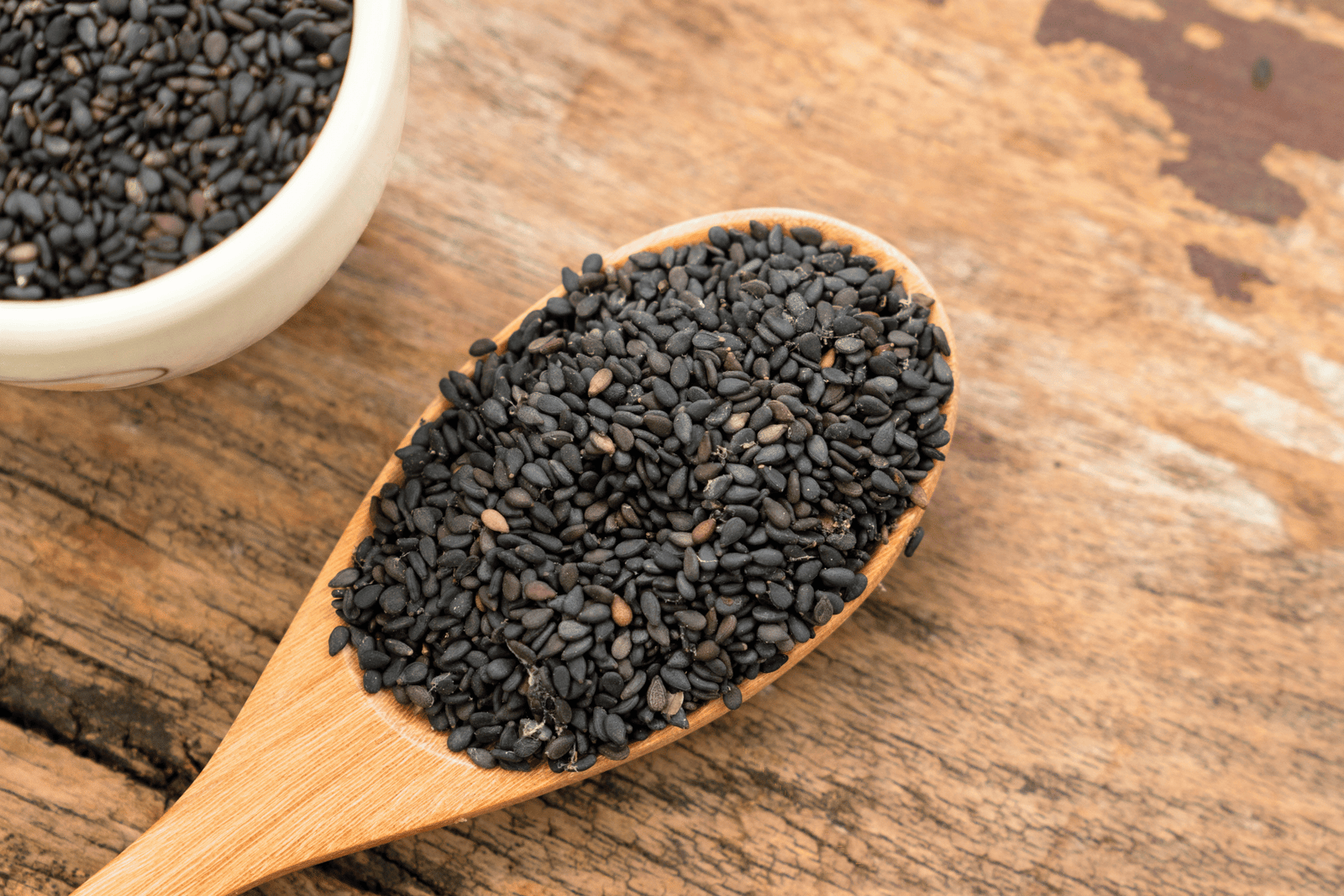
Black sesame seeds—the same seeds as regular sesame, just with the outer hull still intact—can give a nutritious boost to yogurt, smoothies, salads, savory dishes, and more. But how might adding this tiny, crunchy topping to your diet actually impact your body? Here are five potential benefits—and two possible downsides.
Black sesame is a solid source of fiber, with 1 ounce containing about 3 grams, which is 11% to 12% of the recommended daily intake of 25 to 34 grams. Because it retains its fiber-rich hull, black sesame contains even more fiber than its white counterpart, Sarah Glinski, RD, a Canadian registered dietitian, told Health.
For black sesame eaters, this can mean improved digestion: Fiber adds bulk and softness to stool, promoting smoother bowel movements and relieving constipation.
Black sesame seeds contain antioxidants such as vitamin E, flavonoids, and polyphenols, which may fight inflammation and protect the body from cell-damaging free radicals. In fact, black seeds contain even more antioxidants, particularly vitamin E and flavonoids, than the regular ones, according to registered dietitian Emily LaBombard, MPH, RDN, LDN.
One review found that black sesame seeds are made up of about 50% lipids, fatty compounds that help nourish and protect cells, including those in the brain. One type of lipid found in black sesame seeds, unsaturated fat, has been linked to improved cognition and memory, as well as a reduced risk of Alzheimer’s disease. Omega-3 fatty acids, a type of unsaturated fat present in black sesame seeds, may also increase blood flow to the brain and support brain cell structure and function.
Black sesame seeds are rich in minerals like calcium, iron, and magnesium, which promote healthy bones, muscles, and nerve signaling. Specifically, a 2-tablespoon serving of black sesame seeds contains:
- 180 milligrams (mg) of calcium
- 2.7 mg of iron
- 64 mg of magnesium
To get an extra boost of these nutrients, LaBombard recommends combining black sesame seeds with other foods high in these minerals, such as leafy greens, dairy products, and red meat.
Protein—the building blocks for cells, muscles, and tissue—makes up about a fifth of black sesame seeds. While a daily serving of black sesame seeds likely isn’t enough to contribute much to muscle building, it could help with blood sugar regulation, LaBombard said. Sprinkling black sesame seeds onto your dishes could also help you keep you full and satisfied between meals, especially if paired with other satiating foods like avocado toast, roasted vegetables, and oatmeal, said Kristen Carli, MS, RD, a registered dietitian with WOWMD.
The extra fiber in sesame seeds might backfire for people with sensitive stomachs, leading to digestive discomfort, Glinski said. To minimize this, experts suggested adding the seeds to your diet slowly, giving your stomach time to adjust.
Unfortunately, sesame is a common allergy. If you consume black sesame without realizing you’re allergic, you might develop symptoms like itching, swelling, wheezing, or shortness of breath. Talk to your doctor about getting an allergy test to confirm a diagnosis.
