

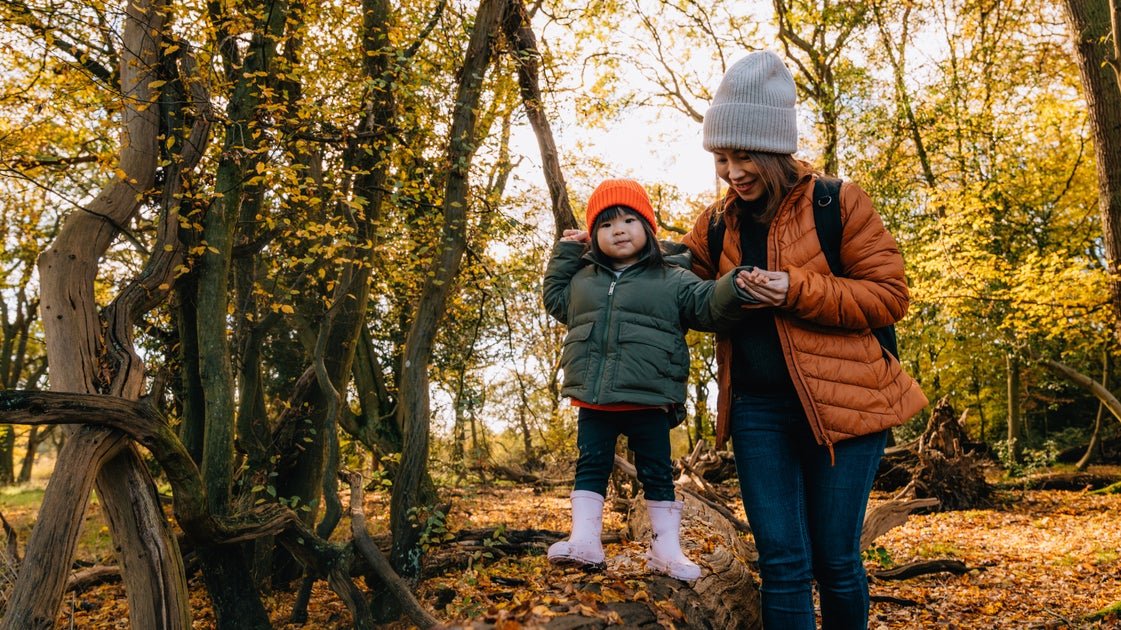
It can feel tough to get outside as the days get colder and shorter. Heading out for a walk on a rainy, windy or snowy day isn’t the average American’s definition of a dreamy experience, but researchers in Norway say it’s a practice Norwegians hold dear for many important reasons.
In Norway, it’s common for people to get outside all year because of the practice of “friluftsliv,” a concept first named by Henrik Ibsen, a Norwegian playwright. The term translates to “open-air life,” said Kari Leibowitz, a health psychologist based in Amsterdam and an expert in winter mindset in Norway. Leibowitz is also the author of “How To Winter.” Friluftsliv offers a range of emotional, physical and mental health benefits, such as stress relief and a boost in mood.
This isn’t just a feel-good trend, either. The practice of friluftsliv goes so deep that there’s coursework and entire college majors related to the topic, explained Helga Synnevåg Løvoll, a professor of friluftsliv in Norway. Friluftsliv encompasses education, traditions, nature access and more, and is something that children are taught to cherish starting at a young age.
“I think about it as connection with nature — living in a way that is connected with nature and the outdoors as part of your daily everyday life,” Leibowitz said. It’s not something that is done on occasion, but is instead part of your “regular everyday existence.”
Many activities that fall within the friluftsliv category are popular in other parts of the world, too, said Løvoll.
“It’s something that is developing very fast, and also it’s much formed by global development. New activities, nature sports, for example,” said Løvoll. (Think skiing, hiking, biking, rucking, gardening and more.)
It also deeply reflects Norwegian cultural values, said Inga Gentile, a clinical psychologist in Oslo. “One of [the cultural values] being that nature belongs to everyone … there’s private property, but conceptually and theoretically, nature is a resource that belongs to each of us, so it belongs to the collective in a way that I don’t know actually is mirrored in the U.S.,” Gentile said.
In Norway, there are rules and regulations known as “right to roam,” which are baked into law and allow everyone access to uncultivated land throughout the country, even if it’s technically private property. This applies to hiking trails, bogs, mountains, lakefronts and more.
“I think it’s an interesting concept and an interesting practice that I think makes it in some ways easier to actually access. It also reflects the cultural value of equality,” Gentile said. “There’s structural pieces that … really reflect the desire for people to be outside.”
While these elements make it easier to enjoy nature in Norway, that isn’t to say you can’t reap the benefits of friluftsliv if you live somewhere else. Below, experts share why this practice is so good for you and how to implement it:
Start practicing friluftsliv in small ways.
You don’t have to go all in and start off with cold-weather camping or long hikes. “You can lower the bar,” said Leibowitz. You can build up your fall and winter outdoor time by starting with something like an evening walk after work or a morning walk to start your day.
“Another thing you can do is reclaim things that you like to do in the warm weather,” Leibowitz noted. While you may not go to the beach for a swim in the fall or winter, you can go for a beach walk. Or you can buy warmer running clothes and head back to your favorite summer trail instead of retreating indoors until March.
“You could think about the things that you enjoy doing in other seasons and say … ‘How can I reimagine this for the darker, colder season and get pleasure in it?’” she added.
Gentile recommends that you also just try to get outside more often, overall. “Expand the definition of nature; it’s not all wilderness. It’s a park, it’s a tree, it’s watching birds,” she said. All of this is engagement with nature.
According to Løvoll, even sitting outside with a blanket and cup of hot coffee counts as friluftsliv, and so does stopping at a park before work for a five-minute break.
These all are good for your mental and physical health (more on that below).
Be sure to consider your clothing.
A large part of what makes friluftsliv possible is the fact that Norwegian people properly dress for weather.
“And that is also for children,” Løvoll said. “Dress them properly and they can stay out in the rain, no problem … that’s what we do. We cannot wait for the sun.”
Whether it’s raining, snowing, windy or cold, they don’t let a weather forecast keep them indoors. “There’s a Norwegian expression — ‘There’s no such thing as bad weather, only bad clothing,’” Leibowitz said.
Oscar Wong via Getty Images
“What is kind of very special, I think, in the dark, in the winter time is the aesthetic experience, which is in the contrast, which is something to actually learn to appreciate,” said Helga Løvoll.
Remind yourself that getting outside in the fall and winter is rewarding and mood-boosting.
Of course it’s more tempting to spend time outside when it’s 70 degrees and sunny, but that isn’t a reality in Norway.
“Lots of people do feel a little bit down in the winter, and we know that fresh air, connection with nature and movement, all three are natural antidepressants,” Leibowitz said. If you practice friluftsliv during the cold weather seasons, it may be an “antidote to winter blues,” she added.
Instead, look at being outside as a rewarding opportunity no matter what season you’re in. Mental health benefits exist whether you’re out in nature in the fall, winter, spring or summer. “But what is kind of very special, I think, in the dark, in the winter time is the aesthetic experience, which is in the contrast, which is something to actually learn to appreciate,” Løvoll said.
“Another thing that I think is really important is that when you have this sense that you can’t do things in the winter, it makes everything harder,” Leibowitz said.
Even if you have plans to meet friends for indoor plans on a chilly autumn day, if you want to avoid bad weather, it makes it harder to do the enjoyable, indoor things, too, she said. And getting out and having fun is good for our health and well-being during this darker time of year.
This isn’t to say mental health struggles won’t exist if you practice friluftsliv, though. “Are [Norwegians] depressed or not? Of course, we are depressed in Norway, as in other countries, but it’s not very much dependent on the weather,” Løvoll said.
It’s a stress-reducing behavior, too.
Lots of research shows spending time in nature can lower stress.
“Being in nature tends to reduce the activation in the branch of the nervous system that [controls] fight-or-flight, and it … engages the parasympathetic nervous system, which is the branch of the nervous system that calms us down,” Gentile said.
Hustle culture and modern society makes it easy for our fight-or-flight response to be activated too often. “What that does is, over time, that creates wear and tear on all the bodily systems that we have ― our gastrointestinal system, our cardiovascular system, our immune system,” Gentile said.
Being in nature can help counteract this activation, and help folks feel a sense of calm while also lowering heart rate and reducing stress hormones, Gentile added. “And that will have positive health benefits, both physical and mental.”
Use friluftsliv to celebrate the slower pace of the fall and winter.
Løvoll said accepting the darkness of fall and winter is part of Norwegian lifestyle, whether that’s indoors or outdoors. While fall and winter are certainly different from sun-soaked June and July, they have their benefits, too.
In Norway, it’s customary to light candles, have a warm cup of tea or hot chocolate, make a fire and cozy up with a blanket in the autumn and winter, said Løvoll. “It’s so good to have this contrast from the summer season, which is more … a very active time,” she said.
As we head into autumn and winter, it’s good to do so with an “open-minded mindset and actually appreciate the slower pace. [This] is something that is also culturally embedded in Norway,” Løvoll noted.
