

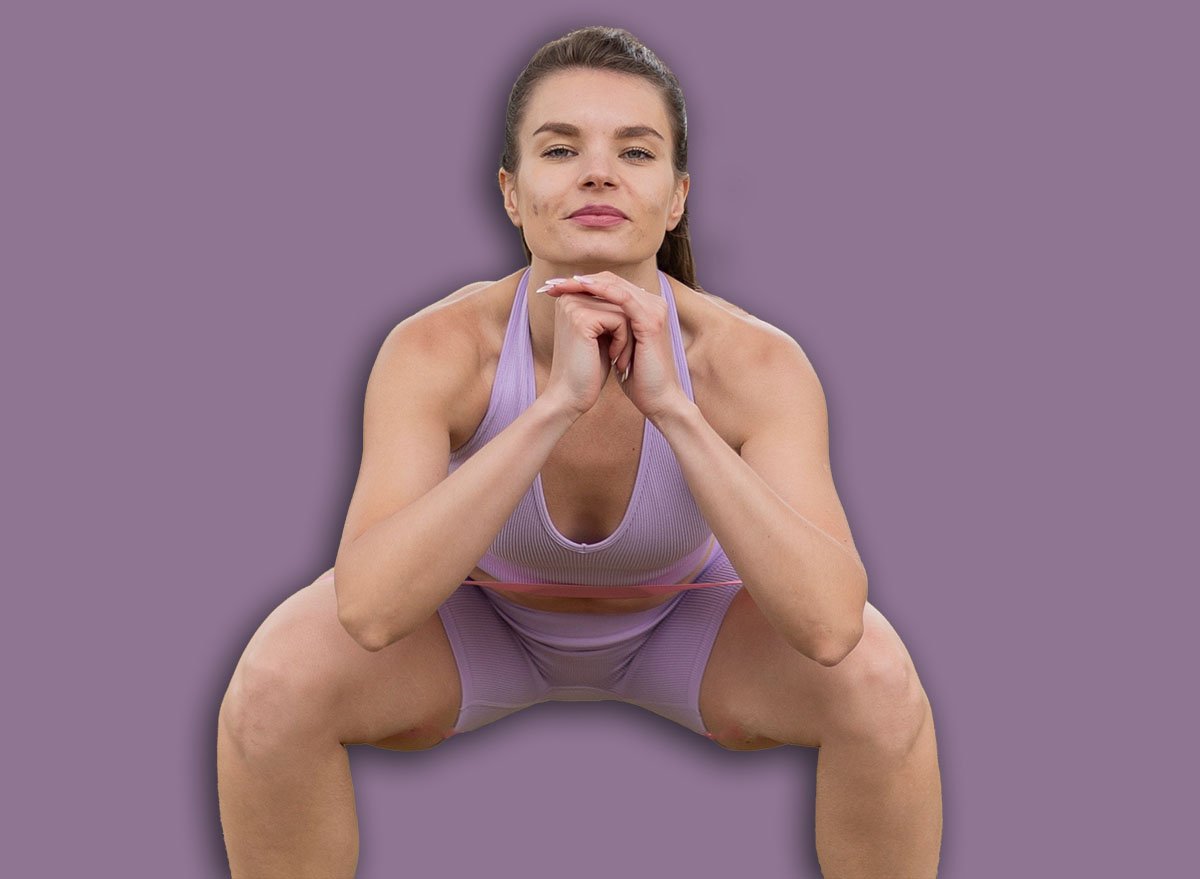
Can you hold a squat for 60 seconds? After 50, that’s the benchmark.
After 50, measuring your strength is no longer about how much weight you can lift. Other factors like your muscular endurance, joint stability, balance, and mobility become as crucial (if not more so) when it comes to staying independence and injury-free as you age.
That’s where physical tests like the squat hold come in handy. This simple movement will test multiple aspects of your fitness at once by engaging your quads, glutes, and core while challenging coordination and stability in your hips, knees, and ankles.
Research published in The Scandinavian Journal of Medicine & Science in Sports shows that isometric exercises—where muscles are held under tension without movement—can effectively improve muscular endurance and joint stability. These adaptations are essential for older adults as they can help improve balance and reduce fall risk.
“If someone over 50 can hold a squat for an extended period, it’s a strong indicator of both muscular endurance and joint stability, which often decline with age,” says James Brady, CPT, a certified personal trainer at OriGym.
He adds,”From a coaching perspective, a solid benchmark for over-50s would be holding a controlled squat for 30 to 60 seconds. Reaching or exceeding that suggests well-developed strength in the quads, glutes, and stabilizing muscles, along with good mobility in the hips and ankles.”
Below, you’ll find five movements that build the strength, stability, and endurance needed to improve your squat hold, lower-body strength, and overall fitness. Read on to learn more.
(Next up: Check out these 5 Dumbbell Exercises That Build Shoulder Strength Faster Than Gym Machines After 55.)
Bodyweight Squat Hold
This hold is the test itself, which Brady says holding for 30 to 60 seconds can indicate you’re stronger than 90 percent of your peers after 50. The squat hold challenges your ability to maintain tension through your legs and core while maintaining proper alignment.
How to do it:
- Stand with your feet shoulder-width apart and your toes slightly turned outward.
- Engage your core and keep your chest upright.
- Lower your hips back and down into a squat position.
- Bring your thighs parallel to the floor (or as close as comfortable).
- Keep your weight evenly distributed through your heels and midfoot.
- Hold the position while breathing steadily through your nose.
- Avoid letting your knees collapse inward.
- Keep your torso upright and stable.
- Hold for 30 to 60 seconds, rest for one to two minutes, then repeat for two to three sets.
Wall Sit
Similar to the bodyweight squat hold, wall sits are an isometric exercise that builds endurance in your quads while enhancing balance. Mastering this exercise is an excellent progression for building the capacity needed to hold a free-standing squat.
How to do it:
- Stand with your back against a wall.
- Step your feet forward about two feet from the wall.
- Slide your back down the wall until your knees are bent at about 90 degrees.
- Keep your knees aligned over your ankles.
- Press your lower back into the wall for support.
- Engage your core and keep your shoulders relaxed.
- Hold the position without placing your hands on your legs.
- Breathe steadily through your nose during the hold.
- Hold for 30 to 60 seconds, resting for one to two minutes between sets.
Supported Squat Hold
If you can’t hold a squat quite yet, doing this supported variation can help you build the requisite strength. Holding onto a stable object reduces the amount of balance needed and allows you to focus on maintaining proper depth and form during the squat hold.
How to do it:
- Stand facing a sturdy object like a chair or countertop.
- Hold onto the support with both hands.
- Lower into a squat position as you normally would.
- Keep your chest tall and your core engaged.
- Use the support only for balance, not to hold your weight.
- Maintain proper knee alignment.
- Keep your breathing steady and controlled.
- Hold for 20 to 45 seconds, rest for one to two minutes, and repeat for two to three sets.
Step-Back Squats
Step-back squats are a dynamic movement that forces you to hold the squat while building strength and coordination. Alternating steps like this will challenge your balance and improve stability significantly.
How to do it:
- Stand tall with your feet hip-width apart.
- Engage your core and keep your posture upright.
- Step one foot slightly backward.
- Lower into a partial squat position.
- Keep your front knee aligned over your ankle.
- Push through your front foot to return to a standing position.
- Bring your back foot forward.
- Repeat on the opposite side.
- Perform two to three sets of 10 to 12 reps per leg. Rest for one to two minutes between sets.
Single-Leg Sit-to-Stand
Single-leg sit-to-stands target each leg one at a time and require unilateral strength and balance, which are essential for maintaining stability as you age. This dynamic exercise is a strong indicator of your functional strength and coordination after 50 and can help you hold a squat longer.
How to do it:
- Sit on a sturdy chair with one foot flat on the floor.
- Extend your opposite leg slightly forward.
- Engage your core and keep your chest tall.
- Lean forward slightly from your hips.
- Press through the standing foot to rise up.
- Keep your balance steady as you stand.
- Slowly lower yourself back into the chair.
- Complete two to three sets of 6 to 10 reps per leg, resting for one to two minutes between sets.
Adam Meyer, RHN
Adam is a health writer, certified holistic nutritionist, and 100% plant-based athlete. Read more about Adam
