

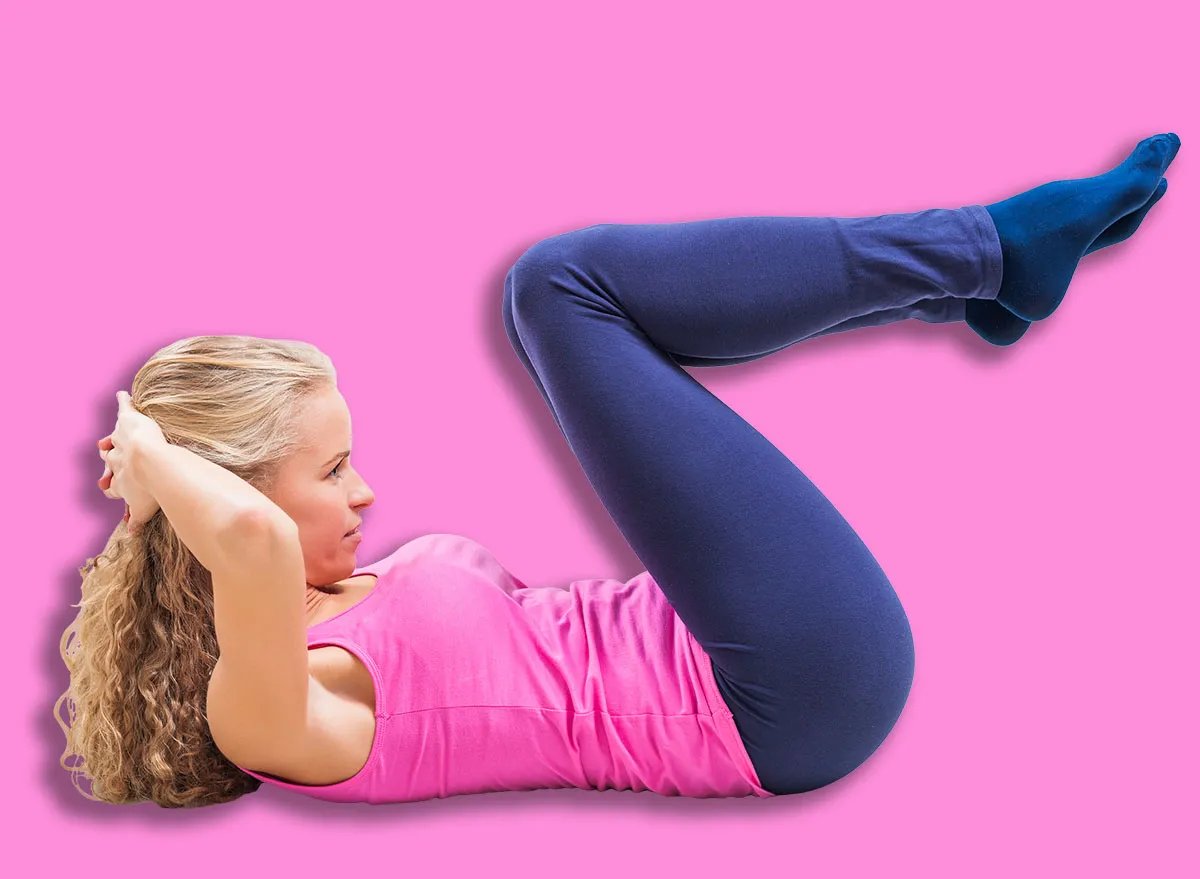
A trainer’s 6 bed moves to firm your lower belly after 55 — no gym needed.
Firming the lower belly usually becomes a greater focus after 55 because the midsection can start to feel softer, looser, or less supported than it used to be. Some of that comes from changes in muscle mass, daily activity, hormones, and the amount of direct core work that makes it into your routine. The lower belly is also one of those areas people notice quickly because it affects how clothes fit and how your core feels when you move.
From my perspective, with years of coaching, I like lower-belly work that teaches control first. A lot of people jump straight into fast, “easy” ab exercises and end up relying on momentum, hip flexors, or their lower back more than their core. The better play is to slow things down, keep your ribs and pelvis in a strong position, and let your midsection control each rep from start to finish.
Weight training still matters for strength, muscle, and body composition, but bed exercises give you an easy way to add more core work without turning it into a full workout. You can sneak these in before your feet hit the floor in the morning or before you wind down at night. When you pair that consistency with smart nutrition and regular movement, your lower belly starts to feel firmer, stronger, and more connected.
Dead Bugs
Dead bugs train your lower abs, deep core, and hip control while your back stays supported on the bed. As your arm and opposite leg move, your core has to brace to keep your lower back from arching. That makes the movement useful for firming the lower belly because your midsection has to control the position instead of just chasing a burn. Better control here also carries over to standing, walking, and lifting, as your core learns to stay active while your limbs move.
Muscles Trained: Lower abs, deep core, hip flexors, shoulders
How to Do It:
- Lie on your back with your arms reaching toward the ceiling.
- Lift your knees over your hips and bend them to 90 degrees.
- Press your lower back gently into the bed.
- Extend your right arm and left leg away from your body.
- Return to the starting position and switch sides.
Recommended Sets and Reps: Perform 3 sets of 8 to 10 reps per side. Rest for 30 seconds between each set.
Best Variations: Same-side dead bugs, paused dead bugs, heel-tap dead bugs
Form Tip: Keep your lower back pressed down throughout each rep.
Heel Taps
Heel taps train your lower abs by making your core control small leg movements from a supported position. As one heel lowers toward the bed, your midsection has to brace to keep your pelvis from tipping forward. That control matters because the lower belly often feels loose when the core can’t hold the ribs and pelvis in a strong position. Slow, steady reps make this exercise much more effective than rushing through a long set.
Muscles Trained:
Lower abs, deep core, hip flexors
How to Do It:
- Lie on your back with your knees bent over your hips.
- Press your lower back gently into the bed.
- Lower one heel toward the bed with control.
- Tap your heel lightly without relaxing your core.
- Bring your leg back up and switch sides.
Recommended Sets and Reps: Perform 3 sets of 10 to 12 reps per side. Rest for 30 seconds between each set.
Best Variations: Alternating heel taps, slower heel taps, extended-leg heel taps
Form Tip: Move only as low as you can while keeping your back set and head flat on the floor.
Reverse Crunches
Reverse crunches train the lower abs by curling your pelvis instead of just lifting your head and shoulders. As your knees move toward your chest, your lower belly has to help control the curl and keep the movement tight. This makes reverse crunches a strong choice when the goal is a firmer lower belly, as the work centers on pelvic control. Keep the range small and controlled so your abs do the work rather than your legs swinging.
Muscles Trained: Lower abs, deep core, hip flexors
How to Do It:
- Lie on your back with your knees bent and feet lifted.
- Place your arms by your sides for support.
- Brace your core and curl your hips slightly off the bed.
- Bring your knees toward your chest without swinging.
- Lower your hips back down with control.
Recommended Sets and Reps: Perform 3 sets of 8 to 12 reps. Rest for 30 seconds between each set.
Best Variations: Bent-knee reverse crunches, paused reverse crunches, slow tempo reverse crunches
Form Tip: Think about curling your pelvis instead of throwing your legs upward.
Flutter Kicks
Flutter kicks train your lower abs and hip flexors while your core works to keep your pelvis steady. Your legs keep moving, so your midsection has to stay engaged for the full set. That steady tension helps firm the lower belly because your core can’t relax between reps. Keep the kicks small and controlled so your lower back stays supported.
Muscles Trained: Lower abs, hip flexors, core
How to Do It:
- Lie on your back with your legs extended.
- Place your hands under your hips if you need support.
- Press your lower back gently into the bed.
- Lift your legs a few inches.
- Alternate small kicks up and down with control.
Recommended Sets and Reps: Perform 3 sets of 20 to 30 seconds. Rest for 30 seconds between each set.
Best Variations: Higher-leg flutter kicks, slower flutter kicks, bent-knee flutter kicks
Form Tip: Keep your kicks small enough to control your lower back.
Bent-Knee Leg Lowers
Bent-knee leg lowers train the lower abs by forcing your core to control both legs as they move away from your body. The bent-knee position makes the exercise more manageable than straight-leg lowers, while still challenging your midsection. Your lower belly has to brace hard to keep your back from arching as your legs lower. This teaches the control you need for a stronger, firmer core.
Muscles Trained: Lower abs, deep core, hip flexors
How to Do It:
- Lie on your back with your knees bent over your hips.
- Press your lower back gently into the bed.
- Keep your knees bent as you lower both legs.
- Stop before your lower back lifts.
- Bring your knees back over your hips with control.
Recommended Sets and Reps: Perform 3 sets of 8 to 10 reps. Rest for 30 seconds between each set.
Best Variations: Single-leg lowers, slower leg lowers, straight-leg lowers
Form Tip: Stop the rep as soon as your lower back starts to arch.
Forearm Plank
A forearm plank trains your entire core while your lower belly works to keep your hips from sagging. Holding the position forces your abs, obliques, glutes, and shoulders to stay active together. That full-body tension gives your midsection a stronger training effect than many small ab movements. Start with shorter holds and focus on keeping your ribs down, hips level, and breathing steady.
Muscles Trained: Core, lower abs, obliques, shoulders, glutes
How to Do It:
- Place your forearms on the bed with your elbows under your shoulders.
- Step your feet back into a plank position.
- Brace your core and squeeze your glutes.
- Keep your body in a straight line from head to heels.
- Hold the position while breathing steadily.
Recommended Sets and Reps: Perform 3 sets of 20 to 30 seconds. Rest for 30 seconds between each set.
Best Variations: Knee plank, longer holds, plank with alternating leg lifts
Form Tip: Keep your hips level and avoid letting your lower back sink.
How to Make Lower-Belly Work Pay Off
Shutterstock
Lower-belly exercises work best when each rep is controlled. The goal is to keep your pelvis steady, your lower back supported, and your core engaged before your legs start moving. These small details make a big difference because they keep the work in your midsection rather than shifting it to your hip flexors or lower back. Pair these exercises with regular walking, strength training, and a nutrition plan that supports fat loss, and you’ll have a much better path toward a firmer waistline.
- Control your pelvis first: Press your lower back gently into the bed before moving your legs. This helps your lower abs stay involved and keeps your lower back from taking over.
- Move slower than you think you need to: Slower reps create more tension through your midsection. If your legs are flying around, your core probably isn’t controlling the movement.
- Keep the range honest: Lower your legs only as far as you can control. A shorter, cleaner rep beats a bigger rep that makes your back arch.
- Pair core work with full-body strength training: Lower-belly firmness improves faster when you build muscle throughout your body. Squats, rows, presses, and hinges all support better body composition.
- Stay consistent with daily movement: Walking, climbing stairs, and taking short breaks help increase calorie burn throughout the day. Fat loss still comes from the overall energy balance, so those small habits matter.
Stick with these bed exercises a few days per week and keep your reps clean. Your core will feel stronger first, then visual changes follow as your overall body composition improves.
References
- Shur, N. F., et al. “Age-Related Changes in Muscle Architecture and Metabolism in Humans: The Likely Contribution of Physical Inactivity to Age-Related Functional Decline.” Ageing Research Reviews, vol. 68, 2021, p. 101344. ScienceDirect, https://doi.org/10.1016/j.arr.2021.101344
- Maccarone, Maria Chiara et al. “Effects of the Full-Body in-Bed Gym program on quality of life, pain and risk of sarcopenia in elderly sedentary individuals: preliminary positive results of a Padua prospective observational study.” European journal of translational myology vol. 33,3 11780. 26 Sep. 2023, doi:10.4081/ejtm.2023.11780
