

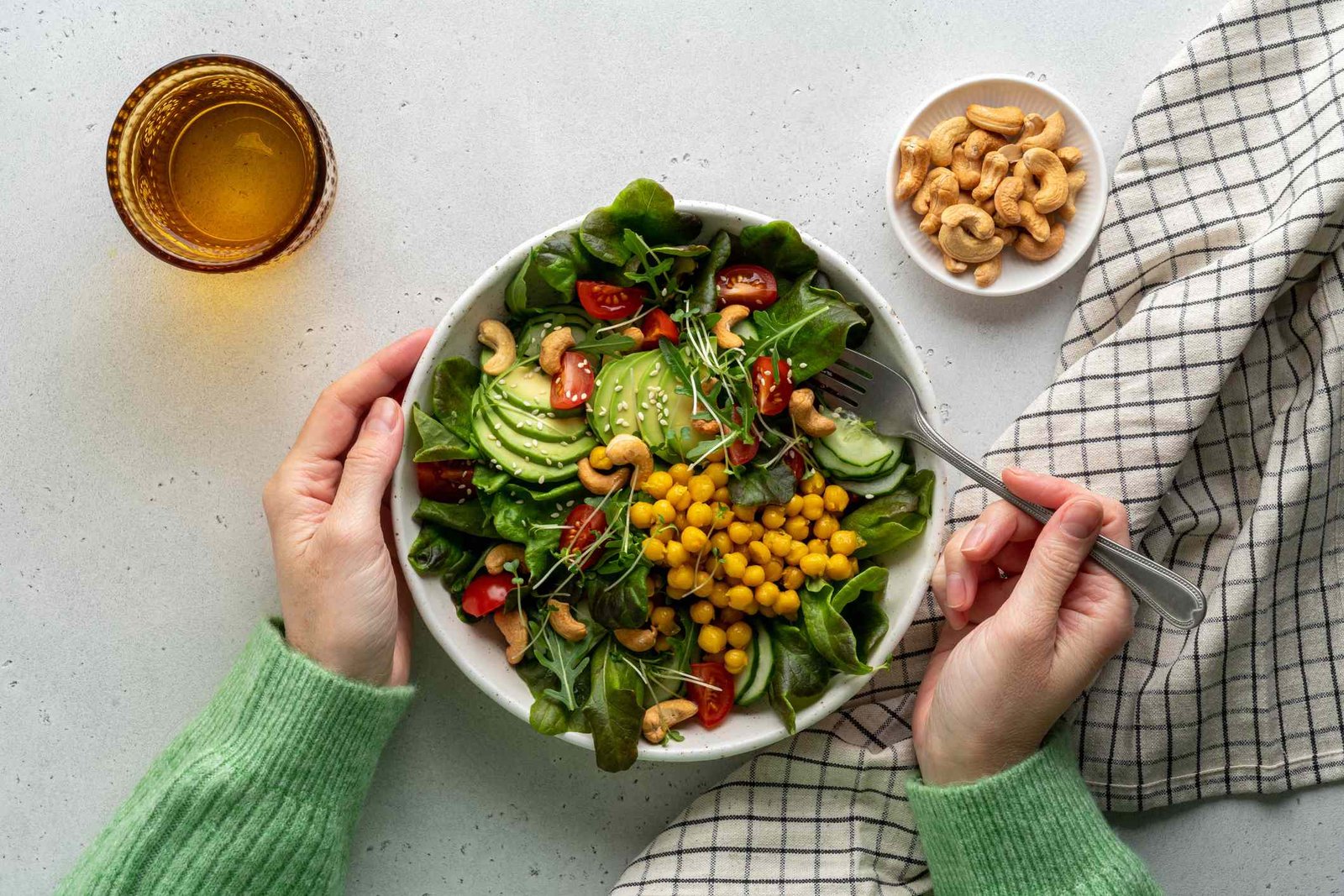
Cortisol, the “stress hormone,” helps control stress responses and regulates blood sugar, blood pressure, and inflammation.
Though cortisol plays important roles in health, elevated levels can contribute to issues like anxiety, poor sleep, weight gain, and a weakened immune system.
Fortunately, leading a healthy lifestyle, including following a diet rich in nutrient-dense foods, can support the regulation of cortisol.
Keep reading to find out the top foods experts recommend to help bring your cortisol levels back into balance.
Certain foods can help your body reduce its levels of cortisol, the stress hormone.
Narong KHUEANKAEW / Getty Images
Cocoa products, like cocoa powder and dark chocolate, are packed with magnesium, which can help reduce cortisol. Magnesium reduces the release of adrenocorticotropic hormone (ACTH), a hormone produced by the pituitary gland that stimulates the adrenal glands to release cortisol.
“Magnesium is involved in cortisol metabolism and is a key player in helping the body regulate cortisol levels,” Lamees Hamdan, MD, integrative medical doctor and founder of Timebeam, told Health. “My preference is un-Dutched chocolate, which means it’s non-alkalized,” she said. Alkalization is a treatment that reduces cocoa’s acidity and alters its color, flavor, and solubility.
Tip for consumption: Hamdan loves to mix pure cocoa powder and a pinch of turmeric into milk or plant-based milk to make a delicious magnesium-rich drink.
Jordan Lye / Getty Images
Matcha is rich in L-theanine, an amino acid that may reduce stress and decrease cortisol levels.
Hamdan explained that the L-theanine in matcha can naturally lower cortisol levels while improving sleep quality, which is a major benefit. L-theanine also enhances the release of anxiety-mediating neurotransmitter dopamine and increases alpha-frequency brain waves, which is a pattern of brain activity associated with relaxation.
Tip for consumption: Hamdan recommends sipping your matcha early in the morning, as the caffeine in matcha may impact your sleep.
YelenaYemchuk / Getty Images
“Fatty fish such as wild-caught salmon and sardines are rich in omega-3 fatty acids, which have anti-inflammatory properties and play a critical role in brain health and mood regulation,” Jason Itri, MD, PhD, founder of Longevity Health Clinic in Charlottesville, Virginia, told Health.
Studies show that taking omega-3 supplements can significantly reduce cortisol levels and stress.
Omega-3s also have powerful anti-inflammatory properties and can support and protect the health of the heart and brain. “The anti-inflammatory effects of omega-3s can help counteract cortisol’s pro-inflammatory effects,” Kimberly Rose-Francis, RDN, CDCES, LD, told Health.
Tip for consumption: “Incorporating two servings of fatty fish per week, such as in a salmon bowl with greens and olive oil, can be a simple yet powerful dietary strategy for managing stress,” said Itri.
Kseniya Ovchinnikova / Getty Images
“Fermented foods like yogurt, kefir, kimchi, and sauerkraut support cortisol regulation by enhancing the gut-brain axis,” explained Itri. The gut-brain axis is a signaling pathway between the digestive tract and the central nervous system.
These foods are packed with beneficial bacteria called probiotics. Probiotics support overall gut health, reduce inflammation, and positively affect the gut-brain axis, potentially easing stress and boosting mood.
Tip for consumption: Itri recommends including fermented foods in daily meals, such as adding a few ounces of kimchi to grain dishes or drinking kefir for a protein-rich, gut-friendly snack.
istetiana / Getty Images
“Leafy greens, particularly spinach and Swiss chard, are excellent sources of magnesium, folate, and vitamin C,” said Itri. “Magnesium, in particular, is essential for modulating the stress response and low magnesium levels are associated with increased cortisol secretion and heightened sensitivity to stress,” he explained.
To keep your magnesium levels optimal, Itri recommends bumping up your intake of magnesium-rich foods, like dark leafy greens.
Tip for consumption: “Adding a handful of greens to a smoothie or using them as the base for a salad can help meet daily magnesium needs,” he said.
apomares / Getty Images
Study findings suggest that increasing carbohydrates as part of a healthy diet may reduce cortisol and decrease stress-related cortisol responsiveness.
“Eating nutritious carbohydrates may reduce stress-related increases in glucocorticoid hormones like cortisol by increasing the production of serotonin, production of serotonin, a mood-stabilizing neurotransmitter,” explained Rose-Francis.
“Whole grains like brown rice, corn, and quinoa are incredibly nutritious and versatile,” said Rose-Francis.
Tip for consumption: To increase your whole grain intake, she recommends swapping white rice for brown rice, using air-popped popcorn as a snack, or adding quinoa as the base of a nourishing Buddha bowl.
F.J. Jimenez / Getty Images
Beans are an excellent source of magnesium, which is essential for your body’s stress response. Eating more magnesium-rich foods, like beans, can help keep cortisol at a healthy level.
Beans are also high in fiber, which is important for the health of the heart and digestive system. Research suggests that a higher intake of fiber, especially soluble fiber, which is found in beans, can boost the production of short-chain fatty acids (SCFAs), which may help regulate the body’s stress response and potentially reduce cortisol levels.
Tip for consumption: “While I like dried beans, I always keep canned beans on hand for when I need something quick,” Amanda Sauceda, MS, RD, creator of The Mindful Gut, told Health. She also recommends using beans as a side dish or incorporating them into plant-based burgers or even baked goods, like brownies, for a boost of fiber and protein.
Viktoriya Skorikova / Getty Images
“Avocados are another good source of magnesium, making them a great food for natural stress regulation,” Jennifer Pallian, BSc, RD, creator of Foodess, told Health.
Unfortunately, around half of the U.S. population fails to meet the recommended intake for magnesium on a daily basis, which may contribute to elevated stress levels and cortisol dysregulation.
Tip for consumption: “Try spreading mashed avocado on toast in the morning, blending it into a smoothie, or using it to make guacamole paired with oven-baked whole wheat pita wedges,” Pallian recommended.
Cortisol is a steroid hormone produced by the adrenal glands. The production of cortisol is regulated by the hypothalamic-pituitary-adrenal (HPA) axis, which is the body’s main stress response system.
Though cortisol is important for your health, having chronically high levels of cortisol can be bad for you. Studies show that high cortisol can suppress your immune system and increase the risk of health conditions like heart disease.
Chronic stress, underlying health conditions like Cushing’s syndrome, and certain medications can all lead to chronically elevated cortisol levels. Your diet can also impact cortisol levels.
For example, studies show that diets high in nutritious foods, like vegetables, nuts, and fruit, are associated with lower cortisol levels, while diets high in ultra-processed foods and added sugar can increase cortisol.
Choosing certain foods high in nutrients like fiber, magnesium, and omega-3s can support a healthy stress response and help maintain optimal cortisol levels.
Cortisol is a hormone that plays several important roles in the body, but chronically high levels can negatively affect your health.
In addition to managing stress and maintaining a healthy lifestyle, eating nutrient-rich foods, especially those high in magnesium and fiber, can help support balanced cortisol levels and promote overall well-being.
