

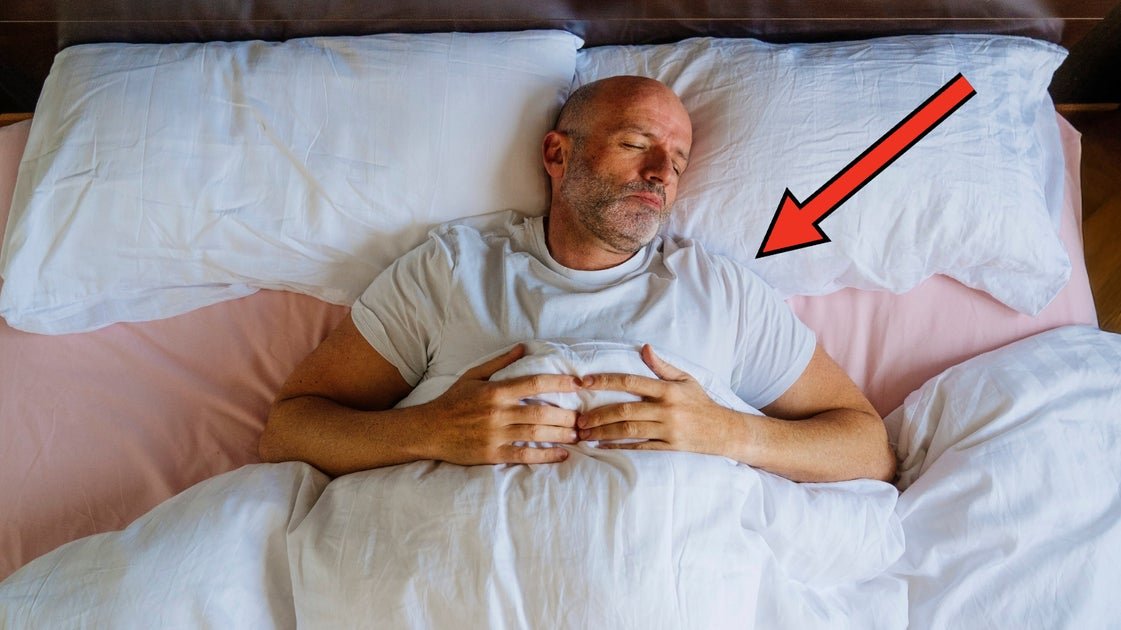
When you wake up in the middle of the night, do you find that you’re sleeping on stomach or your side? Or do you consistently wind up on your back with the sole of one foot tucked against the calf of your other leg?
If so, you sleep like a flamingo. And if you’re on TikTok or Instagram, you might come across an influencer claiming this sleep position signals you’re stressed out or carry pain in your hips.
While this sleep position isn’t inherently dangerous — and, in fact, may be most comfortable for your body — it may suggest you need some extra support in certain cases, said Laura Nolan, a psychotherapist who specializes in somatic therapy. Here’s what to know.
Why do people wind up in the “flamingo position”?
Nolan said she most commonly sees people sleeping this way when they have hypermobility, a condition in which joints stretch beyond their typical range of motion. Many people with joint hypermobility syndrome experience loose joints, joint instability and chronic pain.
“Hypermobility is linked to neurodivergence and many of the neurodivergent adults I work with report sleeping in more unconventional ways, including in the flamingo posture as well as with clenched fists or T. rex hands,” she said.
Sleeping in the flamingo position may be a habit acquired through experience and repetition. Or perhaps you wind up in this position because of chronic pain or a physical injury, Nolan added.
It’s also possible that consistently sleeping in this position — which could be unstable for some — could further strain your joints or even result in muscle stiffness, she explained. “Our bodies are complex,” she noted.
The flamingo position doesn’t immediately mean you are hurting your joints.
The flamingo position isn’t an automatic red flag. Nolan said it’s entirely possible that this position is simply a cozy way for you to sleep. “It can be normal and healthy to sleep in the flamingo position,” she explained.
Jade Wu, a board-certified sleep psychologist, similarly said we naturally sleep in positions that are most comfortable to us. “Often being in this position simply shows that someone feels most comfortable doing it,” she added.
In fact, if you’re on your side with a leg up — a variation of side sleeping — the flamingo position may lower your risk of sleep apnea and other breathing problems, Wu noted.
As a somatic psychotherapist, Nolan is more curious about what feels good about sleeping in this position rather than assuming you have “stuck stress” in the body or that something is wrong.
Here’s how to find a comfortable (and safe) sleeping position.
Nolan encourages people to have a relaxed, easeful approach to sleeping. “Having too much scrutiny over how you sleep, including by thinking you are sleeping wrong or engaging in sleep perfectionism, will likely worsen sleep quality for those with existing issues,” she said.
Unless an orthopedic health care provider or another physician has advised you to stop sleeping like a flamingo to avoid putting pressure on certain joints, there’s no need to stop sleeping this way, according to Wu.
Rather than forcing or training yourself to sleep in certain positions, get creative about how you can support your body while you snooze, Nolan advised. For example, if you tend to sleep like a flamingo, consider adding a pillow underneath your knees. If you’re more of a T. rex sleeper, consider holding something in your hands, like a stuffed animal or pillow. “Be creative,” Nolan said.
If you feel stressed at bedtime, carve out some time to unwind — by practicing yoga, mindfulness or deep breathing — after dinner. Another technique Nolan recommends is progressive muscle relaxation, which involves tensing then relaxing various muscle groups. As you move between body parts, notice how each one feels.
“Remind yourself that stress is not all bad and we have many easy and quick ways of completing the stress response,” Nolan said.
