

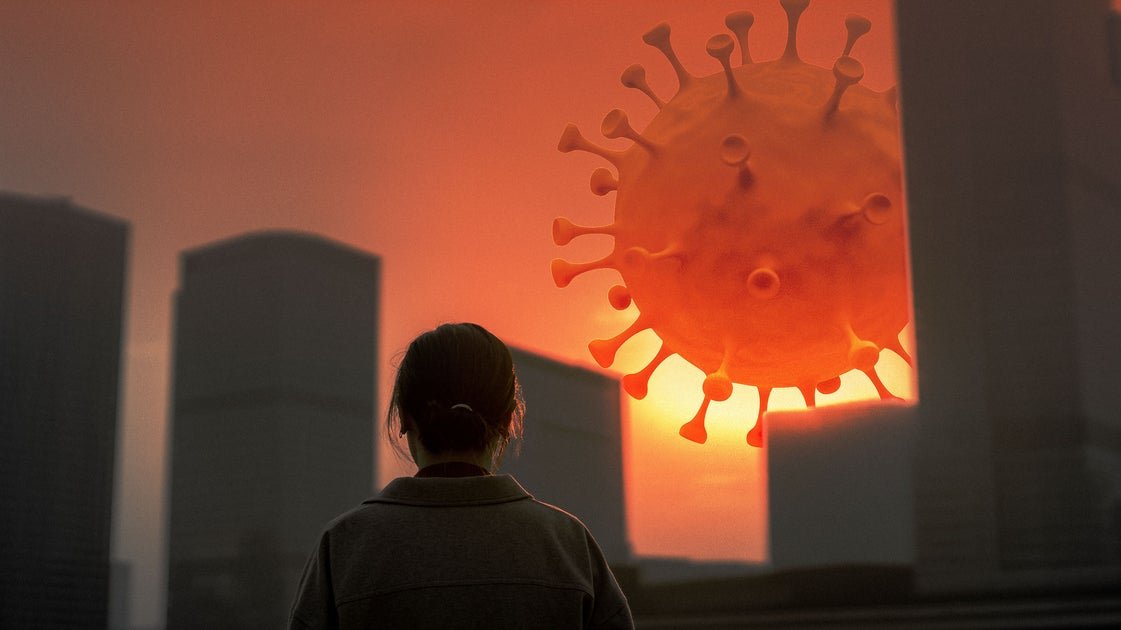
Longing for the way things were before March 2020 is a pretty universal experience. As we usher in the six-year anniversary of the COVID-19 pandemic, it’s not hard to feel like we’re missing or grieving a state of being that we never even got a chance to say goodbye to. A lot of people simply remember life feeling lighter in 2019, or 2016 or even 2008.
Simply put, everything seems generally worse after COVID. Right? Or is that the rose-colored glasses speaking?
“I don’t think everything is objectively worse, but I do think that we feel worse and that we have to pay attention to that perception,” said Rebecca Moravec, a licensed professional counselor, trauma therapist and founder of Full Bloom Counseling in Denver.
For some people, certain elements of life may be worse now, and for others, circumstances may have been more dire a decade ago. But the feeling that something has shifted since the pandemic is prevalent ― and therapists say there’s a psychological explanation for that. Here’s why you may be feeling this way:
The pandemic was a time of immense tangible and intangible grief.
The Centers for Disease Control and Prevention estimates that nearly 850,000 Americans died during the height of the pandemic in 2020 and 2021 ― a time when families weren’t allowed in hospitals to say their goodbyes, and funerals couldn’t happen. Many people experienced unexpected grief after losing their loved ones.
“We weren’t able to go through our traditional mourning rituals when we were really in the thick of COVID,” said Ruth Ellingsen, a clinical associate professor in the department of psychology at the University of Oregon. As a result of this type of loss, “a lot of people experience much more prolonged or complicated or even traumatic grief reactions.”
People experiencing complicated grief may find that it’s impossible to get back to their normal life, may feel intense sorrow, or have a hard time thinking about anything other than the loss of their loved one, even after a significant amount of time has passed.
Beyond death, there were other losses, too: jobs, time, a sense of safety, celebrations and milestones and so much more.
“I think… life feels worse because people are still recovering from the collective grief,” said Paule-Veronique Gnapi, a clinical mental health therapist at Jetter and Associates Counseling in Pennsylvania. “Millions of people died worldwide, and even if you didn’t lose anyone personally, you’re still suffering from grief, because it isn’t just about who you’ve lost, but what you’ve lost.”
The pandemic was traumatic (even if it doesn’t seem like it to you, personally).
Between death, sickness, job loss, school closures and fear, the pandemic was a traumatic event for many people.
“Trauma is really anything that overwhelms our ability to cope,” Gnapi said.
The sudden onset of the pandemic created an overwhelming pressure to cope with a new, destabilizing experience.
“I think that made people more susceptible to that feeling of trauma, and now people are struggling to recover that sense of anchoring or stability,” Gnapi said.
“Trauma can’t tell time,” she added. “Even though this happened six years ago, people are still recovering and still living life with this sense of ‘I’m vulnerable, I don’t feel safe,’” Gnapi explained.
This is especially true if you haven’t worked on processing the trauma. A healthy, non-traumatized nervous system expects connection and safety, Gnapi said. “But after such a collective trauma, like the pandemic, the brain becomes hyper-alert to danger, and our sense of safety changes,” she added.
This changes how we interact with and view other people and the world, she said. “Other people now could possibly become a source of danger, and the world begins to feel more so unsafe,” Gnapi said.
And we were told people were a danger. Interacting with the wrong person could mean a COVID-19 infection.
Illustration: HuffPost; Photos: Getty
In the early days of the pandemic, anxiety and depression were increased across the world, and many people are still healing from that now.
Mental health problems were more common, and people are likely still dealing with the aftermath.
“We have a lot of data at this point showing us that there was a really large uptick in mental health problems, particularly in that year after COVID, that 2020-2021 time period,” Ellingsen said.
Anxiety and depression increased by 25% worldwide, according to Ellingsen. This is leveling out now, but people are certainly still struggling.
“Because just so much happened at once that we know predicts things like stress and anxiety and depression,” Ellingsen said. This includes pandemic-induced housing insecurity, economic instability, social isolation and sickness. “And a fair amount of that persisted,” Ellingsen noted.
There was no clear end date for the pandemic, and COVID is still a problem to this day.
“We experienced this prolonged collective trauma, and there wasn’t a clear end,” Moravec explained.
Yes, schools opened and many workplaces enacted return-to-office plans, but exactly when these things happened varied state-to-state and business-to-business. And life still looks different in many of these situations; maybe your favorite coworker was laid off, or perhaps you now experience social anxiety after lockdown.
“There wasn’t this end to a hard thing, which oftentimes, when we leave a trauma and process a trauma, we have a clear end date,” Moravec said.
Moravec pointed to an example in a book by sex educator and researcher Emily Nagoski — “she talks about a tiger chasing you and then suddenly the tiger disappears. You’re not suddenly OK … we have to process that threat. You’ll probably have to collapse and cry and tell the story.”
Being told that the tiger is gone, or COVID is “over,” won’t erase the traumatic experience or make life feel “normal” again. “Trauma doesn’t resolve just because the threat reduces,” Moravec explained.
“I just feel like we have been in six years of chronic uncertainty, and then I also think we experienced really disrupted attachment and community structures, and we’ve never found our way back,” Moravec added. “We were supposed to go back to ‘normal,’ as if nothing fundamentally shifted, but something did. And I don’t think that we have acknowledged that.”
Being told COVID is “over” doesn’t mean much, either, when people continue to become infected and die from it even today. The virus isn’t just gone forever now that businesses and schools are open.
“There are people still suffering and dealing with long COVID,” Gnapi said. “So for them, that reality is still ever so present.”
We are more isolated now than we were before the pandemic.
Remote work is convenient, as are online meetings and virtual doctors’ appointments, but with all the good also comes some bad.
“Life was just so different … I think probably the biggest aspect is this isolation aspect of COVID. People, to some extent, have just remained more isolated now than they were prior to COVID,” Ellingsen said.
We now have infrastructure that makes it easier to isolate, she added. “We can just access so much more from our screens because technology had to keep up with our changing landscape at that time.”
Now, staying home, not moving around from place to place and not interacting with others is more common. “And we know that … really puts a burden on mental health,” Ellingsen noted. “My guess is that’s kind of the biggest driver of this feeling of ‘oh, things just were better before,’ because we were all forced to be more social before COVID hit.”
Throughout the height of the pandemic, people were longing to get back out and see their friends and family, “and all that, it still hasn’t returned to that pre-pandemic level,” Ellingsen said.
We’re used to things being at home, a click away and without much friction. Our window of tolerance has shrunk, Moravec noted. We are more likely to have boundaries and stand up for what we want, but we also aren’t willing to bend, even when it’s necessary, which has fractured relationships and communities.
“Even though this happened six years ago, people are still recovering and still living life with this sense of ‘I’m vulnerable, I don’t feel safe’”
– Paule-Veronique Gnapi
Life before the pandemic likely felt more stable, even if that isn’t really true.
“In a lot of ways, things feel more complex now,” Gnapi explained.
Life felt simpler before the pandemic, even though all of the hard parts of life (death, layoffs, sickness) existed in the “before times,” too. “Prior to 2020, it was easier to ignore your mortality,’” Gnapi noted. The pandemic put a spotlight on our mortality and vulnerability, along with a general sense of uncertainty.
Our brains associate pre-pandemic times with predictability and safety, Moravec added. “So, even if that time wasn’t perfect … it feels more coherent in hindsight,” she said. “The trauma of 2020 disrupted our sense of continuity … I think our nervous systems long for the before time when the ground felt stable, even though that is a myth.”
Life was still hard and unpredictable before the pandemic. “I think that it’s just important to remember that memory is selective, and we do tend to filter out burnout and loneliness and systemic issues that were already in place,” Moravec said.
We can’t go back to pre-pandemic days, but there are a few things you can do to make life feel better.
If life has felt harder for you since 2020, you aren’t alone. Between losing loved ones, getting sick, losing jobs and experiencing a major traumatic event, it only makes sense that everything feels a little worse now.
While you can’t go back to life pre-pandemic, you can make changes to feel a little better. First, if you are grappling with trauma, whether related to long COVID, a death from COVID or something else, consider seeking out therapy to help you process it.
It’s also important to check in with yourself, according to Moravec. What do you want out of life? What do you enjoy? If it’s acting, sign up for an acting class. If it’s cooking, start a cookbook club with friends.
Ellingsen said it’s a good idea to be intentional about social interaction, too. This doesn’t mean having plans every day, but instead “giving ourselves that push to be out in our community,” she explained. “We’re social beings and we thrive being around other humans, but I think these days we might just need a little bit more of a push to do that.”
“Also, just getting outside, too. We were all indoors for so long, and getting outside, being in nature, that has really wonderful effects for mental health,” Ellingsen added.
It’s also important to be nice to yourself. We are healing from a defining moment of the century where parents, friends, cousins, uncles and coworkers died, and others were left with debilitating post-COVID health and life consequences.
Give yourself permission not to be fully “back,” Moravec said. If you are feeling off or haven’t gotten back into certain hobbies, that’s OK.
“We’ve lived through something that has fundamentally changed everything,” Moravec said. “And it makes sense that you don’t feel grounded yet.”
