

Step into any kissaten—Japanese retro-style cafes—and you’re immediately hit with the strong smell of roasted coffee, the quiet murmurs of cafe-goers, and the sound of clinking glasses paired with soft jazz. The décor varies from place to place, but typically features ornate European-style antiques, such as miniature porcelain statues and decorative tea cups fit for a Victorian dollhouse, as well as Showa-era signs styled to resemble those from the 1930s to 1970s, which evoke a vintage Japan aesthetic. The lighting is dark but just bright enough to read a well-worn book.
And, of course, there’s food. The menus almost always highlight yoshoku cuisine, a genre of Japanese-Western fusion dishes. Kissaten offer an escape from contemporary life; they pose a stark contrast to many brightly lit, made-for-Instagram cafes that flood big cities today, but that just adds to their charm. Although not well known outside of Japan, kissaten are a beloved part of Japanese dining culture, with a dedicated following. Since I moved to Japan, they have become one of my favorite parts about living here.
The Latest
Pizza Toast
Magnificently comforting.
The History of Kissaten
The first kissaten opened in the late 19th century. Although many historians believe Dutch traders introduced coffee to Japan around 1700, it failed to gain widespread interest until the end of Japan’s national isolationism, a period of over 200 years spanning the 1600s to 1800s, during which Japan closed itself off from the world to suppress foreign influence. In fact, historical records indicate that the Japanese people initially disliked the beverage, with many describing it as bitter and unpleasant. Beyond the occasional medicinal use of coffee by some, the Japanese people overwhelmingly drank tea, just as they had been doing for centuries. It wasn’t until shortly after Japan’s self-imposed isolation ended in the 1850s that coffee slowly gained momentum, often seen as a sign of the country opening up to interests from around the world.
In 1888, Tei Eikei, a Japanese businessman, opened Japan’s first coffee shop, Kahichakan, in Tokyo. After spending time in the US and traveling through parts of Europe, Tei drew on his experiences of coffee shops—where people gather to socialize—to model his shop. After opening, Kahichakan’s popularity quickly grew, luring a clientele of men who had an appetite for Western culture by offering coffee, cigars, and newspapers. Despite its dedicated customer base, Kahichakan closed after just five years. Today, Kahichakan is remembered not just as Japan’s first Western-style coffee shop, but also as the establishment that laid the groundwork for what kissaten would later become. The café is even commemorated with an unofficial Japanese holiday called “Kissaten no Hi” or “Coffee Shop Day.”
Serious Eats / Kiera Wright Ruiz
Kahichakan’s brief period of operation sparked other coffee shops in Japan to become social spaces, such as Café Paulista, Tokyo’s oldest running kissaten, which opened in 1911. Inside are wooden-accented walls decorated with metal engravings that showcase the coffee growing and preparation process. Celebrities, including Albert Einstein and John Lennon, are rumored to have stopped in for a drink. It’s no longer housed in the original building, so it’s lost some of the historic charm often found inside a kissaten. Instead, the café resembles the inside of a dated hotel lobby, but the framed photo of Lennon at the front table gives the impression that maybe if I just drink enough hot black coffee here, I could become one of the world’s most popular songwriters, too.
Kissaten grew in popularity during Japan’s Showa era, spanning from 1926 to 1989, but especially after World War II ended in 1945. In an attempt to restrict Western influence, Japan banned the import of coffee during the war. But once the ban was lifted in 1950, imports of coffee beans boomed. By the 1980s, there were 155,000 kissaten in Japan.
Kissaten blend Western and Japanese elements in both the food and aesthetics. In post-war Japan, during the 1950s, the Allied forces widely circulated American and European media, including movies, music, books, and so forth. This was both a form of entertainment and, at times, a tool of cultural influence and propaganda to promote democratic values in post-war Japan. Inspired by Western diners and cafés, some local business owners opened shops modeled after them and added Japanese elements, establishing the recognizable kissaten look.
The Latest
Spaghetti Napolitan
Spaghetti, tiny smoked sausages, and tender vegetables are slicked with a sweet, tangy ketchup-based sauce in this kissaten classic.
Yoshoku Cuisine
Like American diners or French bistros, kissaten have their own repertoire of iconic dishes. These yoshoku dishes include spaghetti Napolitan, pizza toast, omurice, sandwiches (a rarity at other restaurants in Japan), purin (a type of pudding), coffee jelly, neon-green melon soda floats, pancakes, dainty cakes, and parfaits. As an American living in Japan, I didn’t grow up with most of these yoshoku dishes, but there are elements in all the dishes—even ones I’ve only just tried recently—that inspire childhood nostalgia and draw me to them when I’m missing home.
Serious Eats / Kiera Wright Ruiz
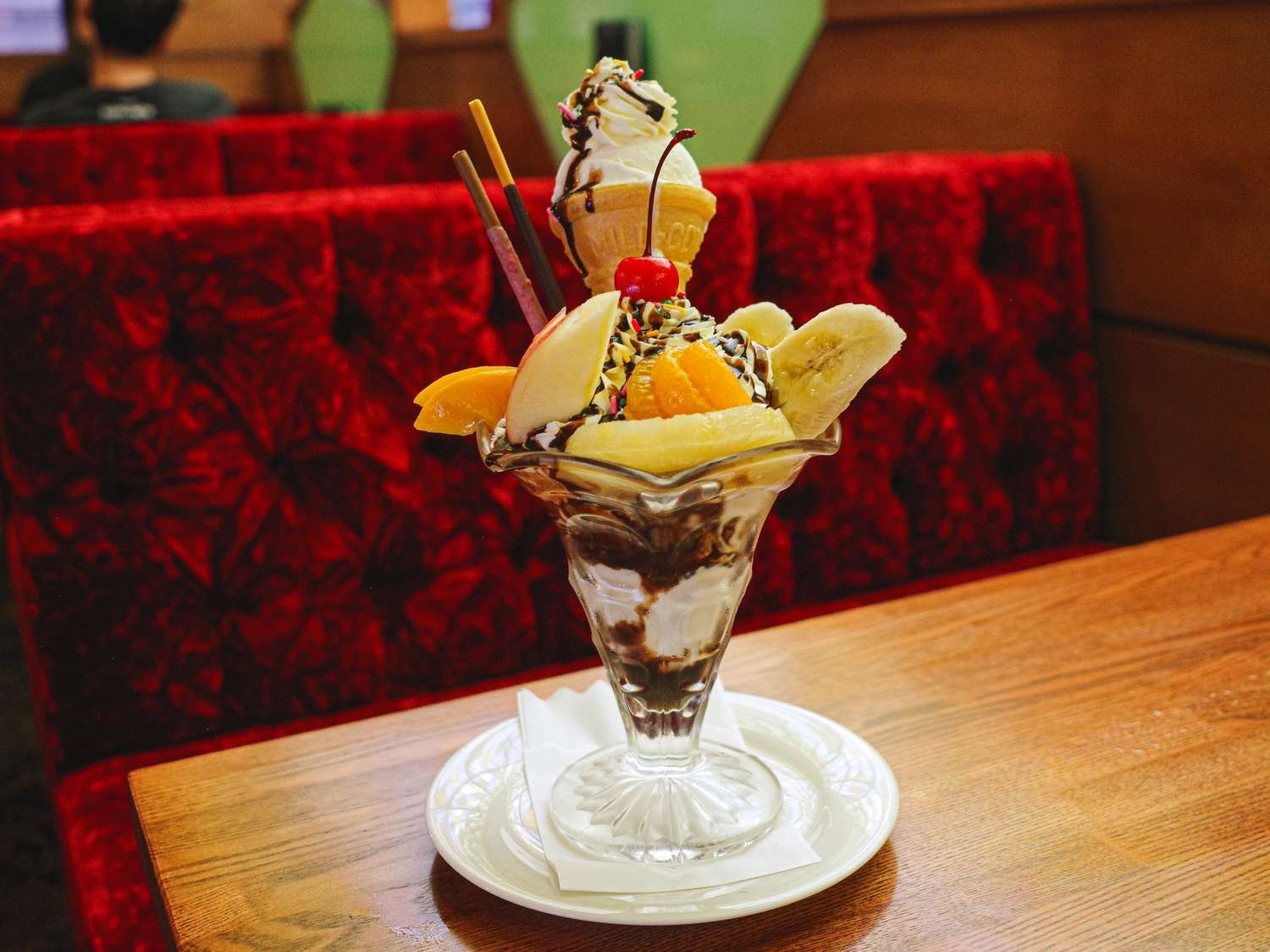
Tokyo’s Coffee Seibu is, for me, a prime example of what a kissaten looks, tastes, and feels like. Opened in 1964, it has maintained its retro charm through the years: There are tufted red crushed velvet seats and stained glass light fixtures that run across the ceiling, casting a yellow aura with speckled green and blue hues. The café specializes in super-stacked soft-serve parfaits piled high with sliced fruit, sticks of Pocky, an entirely separate ice cream cone topped with even more ice cream, chocolate syrup, whipped cream, and a bright red cherry. Eating one is like eating a sundae Jenga tower: One wrong move and the whole balancing act tumbles down. The aromas of coffee, toasted shokupan, and the faint scent of cigarettes wafting in from the smoking section transport me to another time, one where smoking indoors was still allowed in the US. The Showa-era salmon-colored phone sits by the entrance with its rotary dial on display for all to see, reminding me and anyone walking by that you once had to do a full 360° circle with your finger to dial a number.
Desserts
Coffee Jelly
Coffee, the Japanese way.
Kissaten Today
I love visiting kissaten in Tokyo, and whenever I travel to a different part of Japan, I make sure to explore the kissaten scene there as well. To me, they’re the ultimate caffeinated refuge. Inside one, I can melt into a booth and pretend that the modern conveniences of today don’t exist—no cellphone, no Instagram dumps. It feels like I’m peeking into a Japan from the past. And while I’m there, I get to eat something delicious that reminds me of an old version of myself (also lost to time) who was much less online.
As an American living in Japan, I wasn’t sure if my feelings were shared with locals more broadly, so I asked a friend who’s a Tokyo local for her thoughts. “I feel like people who go to kissaten have an ‘old soul’ and they are more of the ‘creative types,’” the friend, Megumi Koiwai, a 33-year-old Tokyoite, told me. “It’s a place to really unwind and read a newspaper, or manga, or anything analog.” Megumi occasionally visits kissaten but tends to gravitate toward the more modern “third-wave cafes” commonly seen around the world today—and she’s not alone. With the continued rise of new cafes, the younger generation has shifted its interest away from the slow pace of kissaten, opting instead for the sleekness of trendy coffee shops. Many old-school kissaten are family-run businesses: As the owners grow older, they often have no one to take over, and closing is the only option. Location can also be a contributing factor, especially in Tokyo’s older districts, where smaller stores are pushed out due to increasing rents, as real estate companies attempt to redevelop urban areas.
While some kissaten face the risk of being permanently lost to time, a devoted fanbase of both young and old—who show up for melon floats and strong black coffee—remains. Kissaten offers a peek into the past—with continued support, I hope they can stick around for the future. I know I don’t plan to stop going to kissaten anytime soon.
Serious Eats / Kiera Wright Ruiz
