

Why It Works
- Grinding whole spices releases their essential oils, resulting in a more vibrant and aromatic spice blend.
- Storing bharat in an airtight container in a cool, dark place protects the blend from light, moisture, and air exposure, preventing its volatile oils from dissipating and keeping its flavor potent for months.
At the heart of Levantine cooking is bharat, the all-purpose spice mix that gives so many of the Levant’s iconic dishes their signature flavor. The origin of the word baharat, as it’s known in classical Arabic, is up for debate. Some sources trace it to the Arabic word bahar, meaning “ocean,” a nod to the seaborne trade that carried spices across the region. Another theory suggests it stems from Bharat, the Sanskrit name for India, which in Arabic eventually came to signify “spices”—a reflection of the trade routes that carried spices like pepper, cinnamon, and cardamom from South Asia into the Levant. In Arabic, bharat can refer to spices in general, but depending on context, it also means the specific blend that anchors so much of the region’s cooking.
Anyone promising a single, “authentic” version of bharat probably hasn’t spent much time in Levantine kitchens or perhaps takes themselves a tad too seriously. There’s no definitive recipe for it. Bharat not only differs from shop to shop, but also from one household to the next. Case in point: My five aunts on my mom’s side each have their own version of the spice mix and, of course, each insists hers is the best.
Serious Eats / Amanda Suarez
What’s in Bharat?
So what exactly goes into bharat? The blend is sometimes sold as “seven spice” when the mixture happens to contain seven ingredients, although bharat doesn’t need to include that many. Most blends fall somewhere between five and seven spices. There are a few constants, but the rest varies. The non-negotiables are black pepper and cinnamon—pepper for its sharp, lingering heat, and cinnamon for the deep, rounded warmth that softens the final blend. In my household, we always add coriander, allspice, and cardamom—a trio that gives the blend citrusy brightness, gentle sweetness, and a cool, aromatic edge, respectively.
Other variations often include cloves, ginger, or turmeric. Cloves add an almost smoky sweetness; ginger brings a gentle, warming bite; and turmeric lends a hint of earthiness and a welcome golden hue. Some cooks slip in a touch of cumin, though my mom considers that addition sacrilegious, as she feels the assertively earthy flavor of cumin stands out too much to blend seamlessly with the rest of the spices. In some spice shops, you’ll even find ground dried rose petals blended in, adding a faint floral note without ever tipping into perfume territory.
The ratios of the spices can vary just as much as the ingredients themselves, shifting with each cook’s taste and memory. My version leans a little heavier on cinnamon, with equal parts coriander and allspice, a bit less cardamom, and black pepper in the smallest amount. I arrived at this balance by chasing the flavors I grew up with—the chicken in my mom’s musakhan, the spiced rice in maqlubeh, the filling for stuffed grape leaves—but it’s really a matter of preference and a bit of trial and error. The most important thing to keep in mind is that no one spice should dominate. The best blends come together into something new, tasting less like individual ingredients and more like a single, warm, and nuanced spice.
How to Make Bharat
When I make bharat, I try to start with whole spices whenever possible—black peppercorns, cardamom pods, coriander seeds, and even cinnamon sticks—because freshly grinding them brings out a livelier aroma and fuller flavor. A powerful spice grinder is especially important for cinnamon sticks, since the mixture shouldn’t be gritty. I usually make just enough to last about a week. After that, even well-stored spices start to lose some of their brightness. Using pre-ground spices, though, is perfectly fine, especially if that’s what makes it doable. If making a larger batch, store the spice blend in an airtight container in the pantry to protect it from light, moisture, and air, which will help prevent its volatile oils from dissipating and keep its flavor potent longer.
I’ll admit, I don’t always have a ready jar of bharat sitting in my cupboard. What I do always have, though, are the individual spices—so I can throw together a quick batch whenever I need it.
Serious Eats / Amanda Suarez
How to Use Bharat
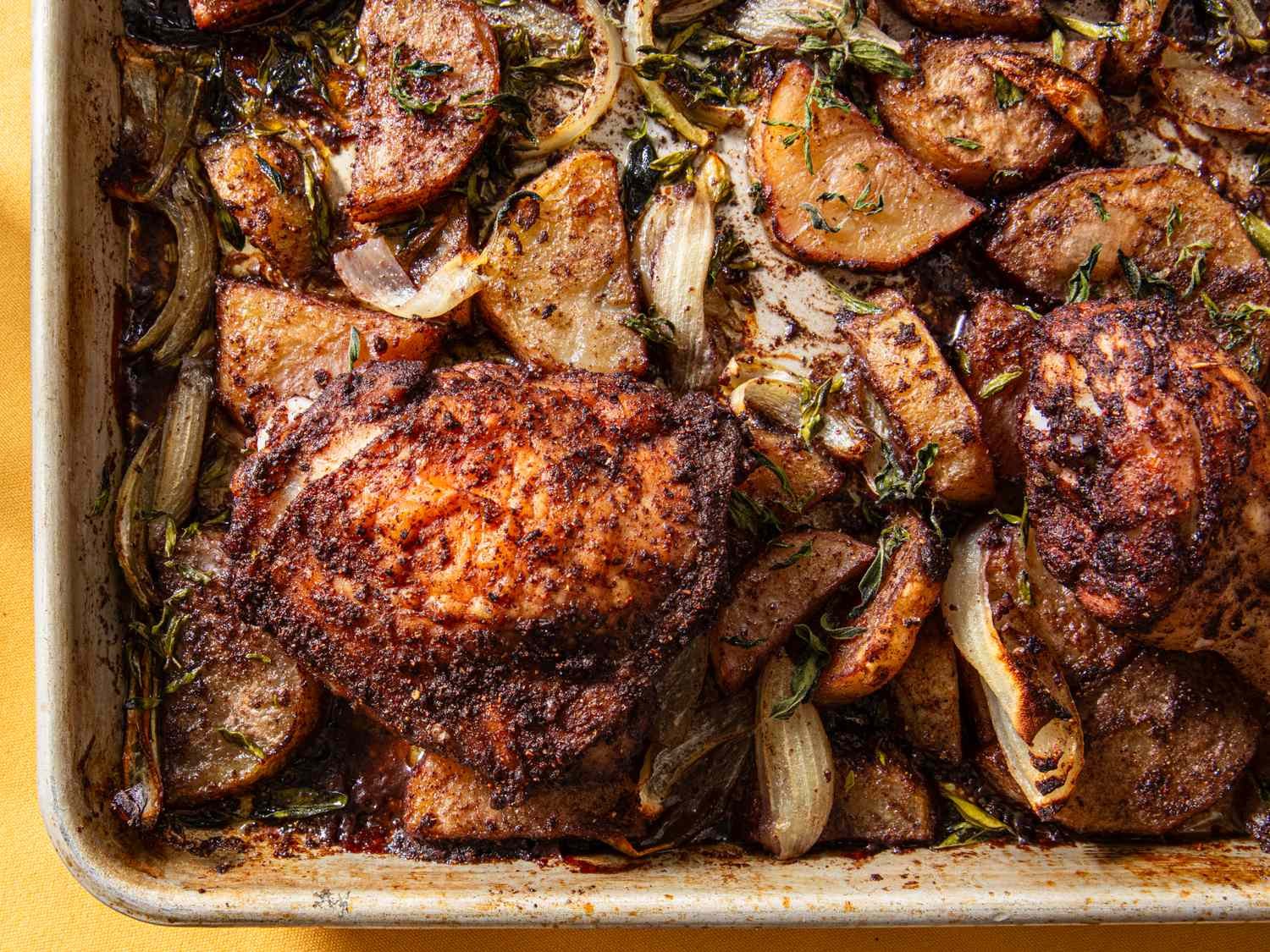
Bharat finds its way into countless Middle Eastern dishes—seasoning the rice in hashweh, flavoring kebabs, or used as a rub for chicken in musakhan. It’s just as good blended into ground beef and lamb for dishes like kibbeh or macarona bil laban. The flavor it adds is deep and aromatic, with woodsy notes and a soft, fragrant sweetness from the cinnamon that lingers gently throughout. Beyond traditional Levantine dishes, bharat is one of my go-to seasonings for simple sheet-pan chicken dishes, roasted potatoes, and even popcorn.
It’s also a seasoning that rewards experimentation. Add a dash to carrot cake or ginger molasses cookies, where its warm spices slip right in as if they’d always belonged.
How Allspice Found Its Way to the Levant
Truth be told, I sometimes play around with my own go-to bharat blend. I’ll occasionally skip the coriander or throw in a bit of ginger. But aside from the cinnamon and black pepper, I’ll always insist on including allspice. In the Levant, allspice is known as bhar helou, Arabic for sweet spice—so called because the berries resemble black peppercorns but are less sharp and biting.
Allspice comes from the dried berries of Pimenta dioica, a tree native to the Caribbean and parts of Central America. Today, it’s central in many Levantine kitchens.
Though native to the Caribbean, allspice began appearing in Europe in the early 17th century, carried across the Atlantic by Spanish and English colonial traders. From there, it entered the dense web of Mediterranean commerce, where European merchants traded goods with Ottoman markets. Through those routes, allspice likely reached the Levant.
In the US, allspice is often tied to Caribbean cooking—jerk chicken, Jamaican beef patties, and stews. But in the Levant, it’s also an everyday, indispensable spice. It’s arguably the spice I go through most in my kitchen. You’ll see it mixed into bharat or used on its own for meats, rice, and braises. Its flavor is layered and aromatic, with resinous, woodsy notes and a warm sweetness that recalls cinnamon and clove. Because its character is so multifaceted, some cooks even use allspice in place of bharat altogether. Personally, I can’t imagine bharat without it; whenever it’s missing from the mix, I find myself pining for the signature depth it brings.
The smell of bharat blooming in hot oil is one I make sure to experience almost every week. It’s a heady scent that fills the kitchen and lures people to follow its trail before the meal is even ready. Its aroma shaped my memories of the house I grew up in. This versatile, adaptable, and deeply personal spice blend truly defines the flavor of the region.
Serious Eats / Amanda Suarez
The Middle Eastern Spice Blend I Use to Perk up Chicken, Potatoes, and so Much More
Cook Mode
(Keep screen awake)
1 tablespoon whole coriander seeds or 2 1/4 teaspoons ground coriander
1 tablespoon whole allspice berries or 2 1/4 teaspoons ground allspice
1 tablespoon green cardamom pods or 2 teaspoons freshly ground cardamom
1 1/2 teaspoons peppercorns or 1 teaspoon black pepper
1 tablespoon ground cinnamon (see notes)
In a spice grinder or using a mortar and pestle, grind whole coriander, allspice, cardamom, and peppercorns until finely ground. Transfer to a small bowl. Add cinnamon and stir well to combine. Alternatively, combine pre-ground coriander, allspice, cardamom, black pepper, and cinnamon in a small bowl and stir well to combine. Use immediately or transfer spice mixture to an airtight container in a cool, dark place until ready to use.
Special Equipment
Spice grinder or mortar and pestle
Notes
For the best results, use high-quality ground cinnamon, or grind your own if you have a powerful spice grinder.
This recipe can easily be scaled up to make a larger batch.
The amount of bharat used per dish depends on personal preference and the dish itself. It’s traditionally used generously, especially in rice dishes and for seasoning ground meat.
Make-Ahead and Storage
Bharat can be stored in an airtight container in a cool, dark place, such as the pantry, for up to 6 months, though its flavor is most vibrant within the first week. Long-term storage will gradually mute the spices’ aroma and intensity.
