

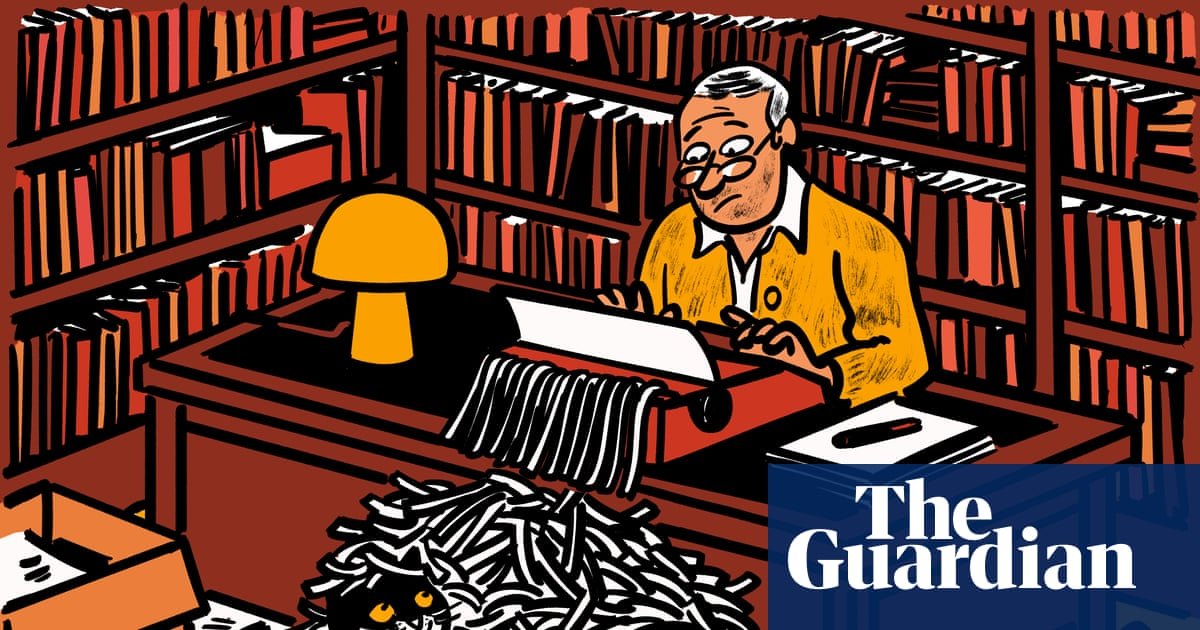
Getting rejected, especially if it happens repeatedly, is not a great experience. Someone is turning you down cold, taking a hard pass, telling you: “Nope.” I work as a writer, so I am no stranger to rejection. I started pitching story ideas and submitting manuscripts 50 years ago, when I graduated from college. In that time, I have had two novels rejected, as well as proposals for nonfiction books, short stories and numerous pitches for articles. Over the last 20 years, since turning my hand largely to personal essays and op-eds, I have been rejected even more. In a typical week, I get a rejection every few days – more than 100 times a year. Rejections accumulated over the course of my career run in the thousands. By now, I should have a PhD in rejection.
So is this feature to be a woe-is-me rant? Far from it. Because, finally, at the age of 73, I have accepted rejection.
How have I managed this? How have I equipped myself to take a setback in my stride – or even shrug it off?
Some context: By this stage in my life, just about everyone and their distant cousin has given me a thumbs-down. I’ve never kept score of my win-lose ratio – doing so would be deeply dispiriting.
A case in point: recently, a newspaper editor I work with nixed 20 submissions in a row before saying, “OK, I’ll take it,” to one. In 2016, no fewer than 50 book publishers vetoed my proposal for a memoir before one gave me the green light. A few years later, 25 literary agents declined a nonfiction book proposal. One editor to whom I frequently submitted work became so frustrated with my submissions that she asked me a question no editor had ever asked me before: would I please send her my potential guest essays less often? Say, once a month?
In my 20s, when starting out in my career, all rejections stung. I took them personally. It was not just my work being rejected, I felt, but me as a person.
No sooner would a manuscript be rejected than I would start to undergo what I’ve called the “seven stages of rejection”:
First, the shock. How could this happen? How could these people be blind to my talent?
Second, denial. Surely you’ve rejected the wrong person? This must be an administrative error.
Third, dismissal. What do any of you know? Who appointed you to hand down rulings on my labours? You’re stupid and your publication stinks. I reject your rejection.
Fourth, anger at those who rejected me, followed by anger at myself. Why do I do this to myself? Why do I let myself in for these slings and arrows from strangers rendering verdicts on my work? Am I a masochist or martyr?
Fifth, bargaining (preferably liberally seasoned with delusion). What will it take to convince you to recognise me as a once-in-a-generation talent?
Sixth, depression. I’m no good. What’s more, I’ll never be any good.
So it went through my 30s, 40s and 50s.
Of course, I was in excellent company. Tales of writers whose work was initially rejected are legion. Herman Melville’s Moby-Dick. Mary Shelley’s Frankenstein. James Joyce’s Dubliners. Vladimir Nabokov’s Lolita. Joseph Heller’s Catch-22. Almost every writer of repute was initially spurned. If they could overcome rejection, then maybe I could, too. Michael Jordan was dropped from his high school basketball team. Most US presidents over the last 60 years had previously lost elections of some sort: Lyndon B Johnson, Richard Nixon, Jimmy Carter, Bill Clinton, Ronald Reagan, George HW Bush, Barack Obama and Donald Trump. Sylvester Stallone estimates that his script for Rocky and his bid to be the film’s star were turned down 1,500 times. “I take rejection as someone blowing a bugle in my ear to wake me up and get going, rather than retreat,” he has said.
Then, as I reached my 60s and my 70s, I entered the seventh stage of rejection. Acceptance. Now, I better understand the many reasons why someone says no. For starters, an editor may have recently run a similar piece, or already have one in the pipeline, or just be contemplating something along the same lines for another contributor to pursue.
Or, less promisingly, my pitch is of limited interest. Or the editor believes I lack the credentials or stature to fit the bill. Or is no longer in the market for the wares I am peddling. Or was too distracted and read my submission too fast to appreciate its abundant merits.
Go ahead, call it an epiphany. Anything can be rejected, and for any reason, and there is pretty much nothing you can do about it. Certain rationales for rejection are forever beyond your control.
Others are within it. Let’s face it, my pitches and submissions may from time to time be ill-conceived. They may lack relevance and resonance, or the point I am struggling to articulate is insufficiently dramatised. Or I’m being flagrantly unoriginal. Or maybe something about my punctuation, particularly semicolons, was offensive.
The point is that, despite all my years of exertion and rejection, I have managed to get widely published. I’ve authored two books – my first when I was 51, my second, a memoir, at 65 – and more than 1,000 articles and essays. Those pieces have appeared in publications large and small, in local, national and global newspapers and magazines. My first op-ed ran in the New York Times when I was 26 – and I have now contributed to that publication, among others, for five decades.
Still, no bestsellers, no book signings at Barnes & Noble, no appearances on Oprah, no Ted Talks, no book awards, no Pulitzers, no Nobel, and no Presidential Medal of Freedom draped around my neck. But I can more readily accept rejection at 73, because my, admittedly modest, successes have cushioned the jolts of my many rejections. I can afford to be philosophical about it all now.
Rejection can be instructive, but only if you listen to what it’s trying to teach you. Otherwise, you will probably just keep taking rejection all wrong. So what lessons have I learned?
Here’s my advice. First, go over your rejected pitch. I mean, pore over it as if you were a monk transcribing ancient Greek in a medieval scriptorium. You may see it afresh and glean how to make it better. If you decide your idea is still up to snuff, terrific. Immediately send it off to another, presumably more discerning person for a second opinion. Recycling keeps your hopes alive. If, though, as I all too often do, you find your idea wanting, then tweak it or even completely overhaul it. I sometimes realise, much to my dismay, that my opening belongs at the end, or vice versa, or some variation thereof.
Rejections teach a writer to rely on his own judgment and to say in his heart of hearts, ‘To hell with you’
When you get down to it, rejection can do you a favour. It forces you to face objective reality. You find out, perhaps contrary to your longstanding expectations, that an entire universe exists outside your own head and the opinions of others might matter as much as yours. The market has spoken, much as voters do in an election, and its decision deserves some respect.
Rejection can also fortify your spirit. It knocks you down and defies you to get back on your feet. You learn humility because nothing better instils humility than being utterly humiliated. It can stiffen your resolve, too, because the more you are rejected, the more mightily you might strive to break through. Rejection gives you an education in the art of resilience, the capacity to bounce back from failure, an attribute essential to sustaining an entrepreneurial mindset.
By no means am I recommending rejection as a desired outcome or a stepping stone to success. But in the best of scenarios, rejection may inspire us to stay true to ourselves and fly closer to the sun. Rejection can prod you to believe you not only can do better but also should do better, have to do better, and will do better. “Rejections,” said the Nobel prize-winning novelist Saul Bellow, “teach a writer to rely on his own judgment and to say in his heart of hearts, ‘To hell with you.’”
And so it is that I now embrace rejection. Granted, it’s easier for me to confess my vulnerability and revel in my newfound change of heart than it is for writers decades younger than I.
Here’s what I told my daughter, Caroline, as she started her career as a freelance writer in her late 20s – but the advice, I think, would apply to how any and all of us choose to live our day-to-day lives. “Rejection is tough,” I wrote. “What I do – and what you may do – is pretty simple. First, write as well and as truly as you can. That’s always priority number one. Second, write about what matters to you and give it the time it needs to ferment. Third, stay productive – the more you create, the better your prospects. Always have something in development, whether you’re just daydreaming about it, taking notes about it or actually writing it. Fourth, keep at it. Fifth, as long as you have faith in yourself, it will pay off.”
If I’ve learned anything at all from getting older – and I must have picked up something by now – it’s that life can be a yes or a no. So the sooner you learn to adapt to no, the sooner you’ll have a shot at yes.
Bob Brody, a consultant and essayist, is a former New Yorker now living in Italy. He is the author of Playing Catch With Strangers: A Family Guy (Reluctantly) Comes of Age (Heliotrope Books)
