

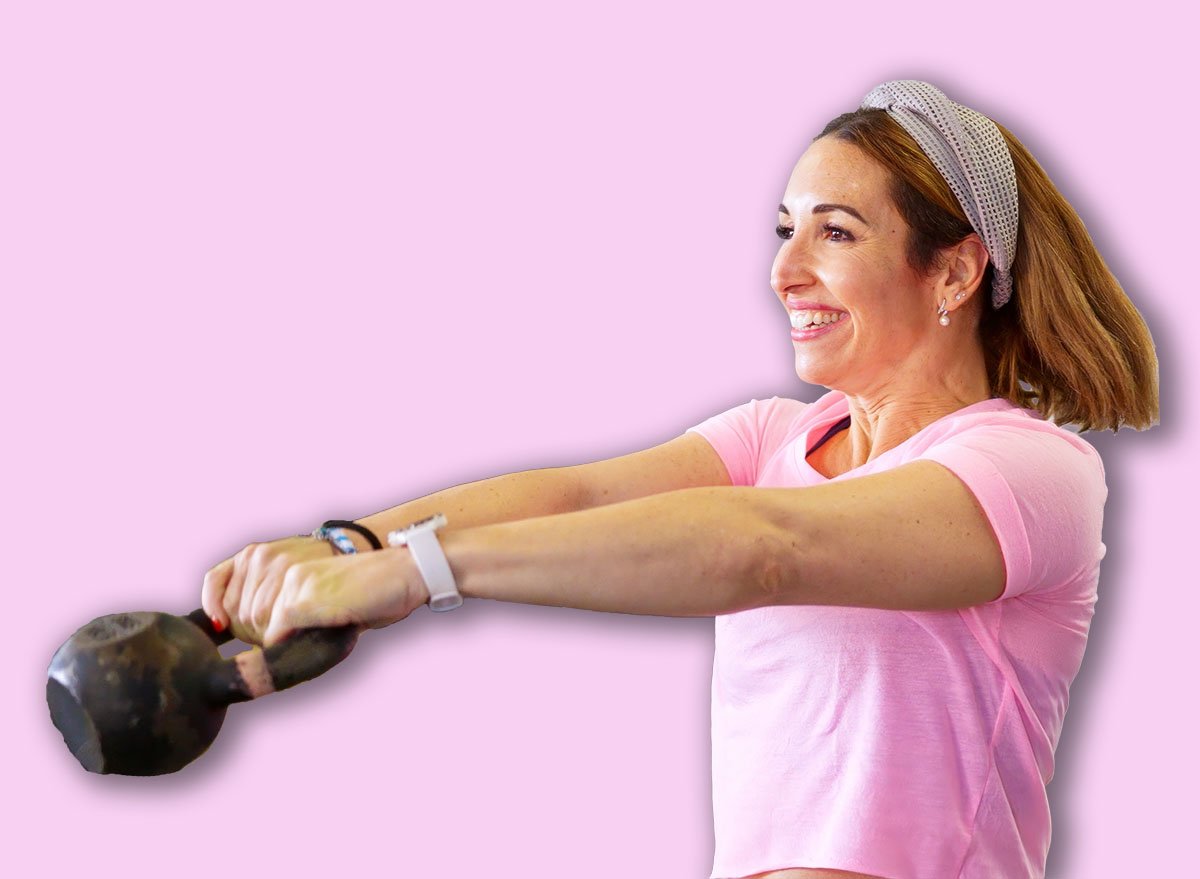
Your abs need more than crunches — these standing moves change everything after 55.
If your goal is to firm up your midsection, focusing solely on ab exercises can miss a big part of the picture. Your core responds best when it has to stabilize your body during movement, especially when your legs and arms are involved. That’s where standing exercises start to make a real difference. They challenge your core in a way that carries over into how your body holds tension throughout the day.
A lot of people default to floor-based routines when they want to target their midsection. That approach can help, but standing movements bring in a different layer of demand. Your core has to stay engaged while you lift, hinge, and shift your weight. The constant involvement adds up quickly and tends to translate better into how your body looks and feels outside of a workout.
From what I’ve seen working with clients, this approach tends to click because it feels more natural. You’re training your body in positions you use every day, and your core stays active the entire time. When that becomes consistent, your midsection starts to feel tighter and more supported without needing to chase endless reps.
These five standing exercises bring your core into full-body movement, so you’re building strength while firming your midsection. You’ll train your legs, upper body, and hips while your core stays engaged from start to finish. Stick with these, and you’ll start to notice that tension carries over into how you stand, move, and hold your posture.
Goblet Squats
Goblet squats bring your core and lower body together, helping build strength while keeping your torso upright. Holding the weight in front of your body keeps your core engaged as you move through the squat. That engagement helps tighten your midsection while your legs do the work. You’ll also notice how your posture stays more controlled from start to finish. Staying consistent here builds strength and awareness simultaneously. Over time, that shows up in how your body holds itself throughout the day.
Muscles Trained: Quadriceps, glutes, core, and upper back
How to Do It:
- Hold a dumbbell or kettlebell at chest height with both hands.
- Stand with your feet shoulder-width apart.
- Brace your core and keep your chest tall.
- Lower your hips down into a squat.
- Press through your feet to stand back up.
- Repeat for your reps.
Recommended Sets and Reps: Perform 3 sets of 8 to 12 reps. Rest for 45 to 60 seconds between each set.
Best Variations: Bodyweight squats, tempo squats, box squats
Form Tip: Keep the weight close to your chest to stay upright.
Bent-Over Dumbbell Rows
Bent-over rows challenge your core differently. You have to hold your position while your arms move, which keeps your midsection engaged the entire time. That steady tension helps build core strength while also working your upper body. You’ll feel your back and arms moving, but your core is what keeps everything in place. Staying controlled here makes a big difference. Over time, this helps your posture and midsection feel more connected.
Muscles Trained: Upper back, lats, biceps, and core
How to Do It:
- Hold a dumbbell in each hand.
- Hinge forward at your hips with a slight bend in your knees.
- Keep your back flat and core engaged.
- Pull the dumbbells toward your torso.
- Lower them back down with control.
- Repeat for your reps.
Recommended Sets and Reps: Perform 3 sets of 8 to 12 reps. Rest for 45 seconds between each set.
Best Variations: Single-arm rows, tempo rows, supported rows
Form Tip: Keep your torso steady as your arms move.
Dumbbell Push Press
The dumbbell push press brings your lower and upper body together through a single fluid movement. As you dip and drive the weight overhead, your core has to stay tight to transfer force. That connection helps build strength through your midsection while your shoulders and legs do the work. You’ll feel how everything has to move together to complete the rep. Staying controlled keeps the movement clean and effective. Over time, this builds strength that carries over into everyday movement.
Muscles Trained: Shoulders, triceps, quadriceps, and core
How to Do It:
- Hold a dumbbell in each hand at shoulder height.
- Stand with your feet hip-width apart.
- Dip slightly by bending your knees.
- Drive through your legs and press the weights overhead.
- Lower the weights back to your shoulders.
- Repeat for your reps.
Recommended Sets and Reps: Perform 3 sets of 6 to 10 reps. Rest for 60 seconds between each se.t
Best Variations: Single-arm push press, kettlebell push press, staggered stance push press
Form Tip: Brace your core before driving the weight overhead.
Kettlebell Swings
Kettlebell swings bring a dynamic element into your routine while still demanding strong core engagement. The movement comes from your hips, but your core has to stay tight to control the swing. That repeated effort builds strength and endurance through your midsection. You’ll feel your hips drive the movement while your core keeps everything in check. Staying controlled helps you get the most out of each rep. Over time, this builds power and stability together.
Muscles Trained: Glutes, hamstrings, core, and lower back
How to Do It:
- Stand with your feet slightly wider than hip-width.
- Hold a kettlebell with both hands.
- Hinge at your hips and swing the kettlebell back.
- Drive your hips forward to swing it upward.
- Let the kettlebell swing back down under control.
- Repeat for your reps.
Recommended Sets and Reps: Perform 3 sets of 12 to 15 reps. Rest for 45 to 60 seconds between each s.et
Best Variations: Lighter swings, slower tempo swings, dead stop swings
Form Tip: Use your hips to drive the movement, not your arms.
Dumbbell Step-Ups
Dumbbell step-ups tie everything together through a movement that challenges your balance and control. As you step up, your core has to stay engaged to keep you steady. That constant tension helps build strength through your midsection while your legs do the work. You’ll feel your body stabilize with each rep. Staying controlled keeps the movement smooth and effective. Over time, this builds strength that carries over into daily movement.
Muscles Trained: Quadriceps, glutes, hamstrings, and core
How to Do It:
- Hold a dumbbell in each hand.
- Stand in front of a sturdy step or platform.
- Place one foot on the step.
- Drive through that foot to step up.
- Bring your other foot up to meet it.
- Step back down with control.
Recommended Sets and Reps: Perform 3 sets of 8 to 12 reps per side. Rest for 45 seconds between each set.
Best Variations: Bodyweight step-ups, lower step height, slow tempo reps
Form Tip: Drive through your whole foot to stay balanced.
