

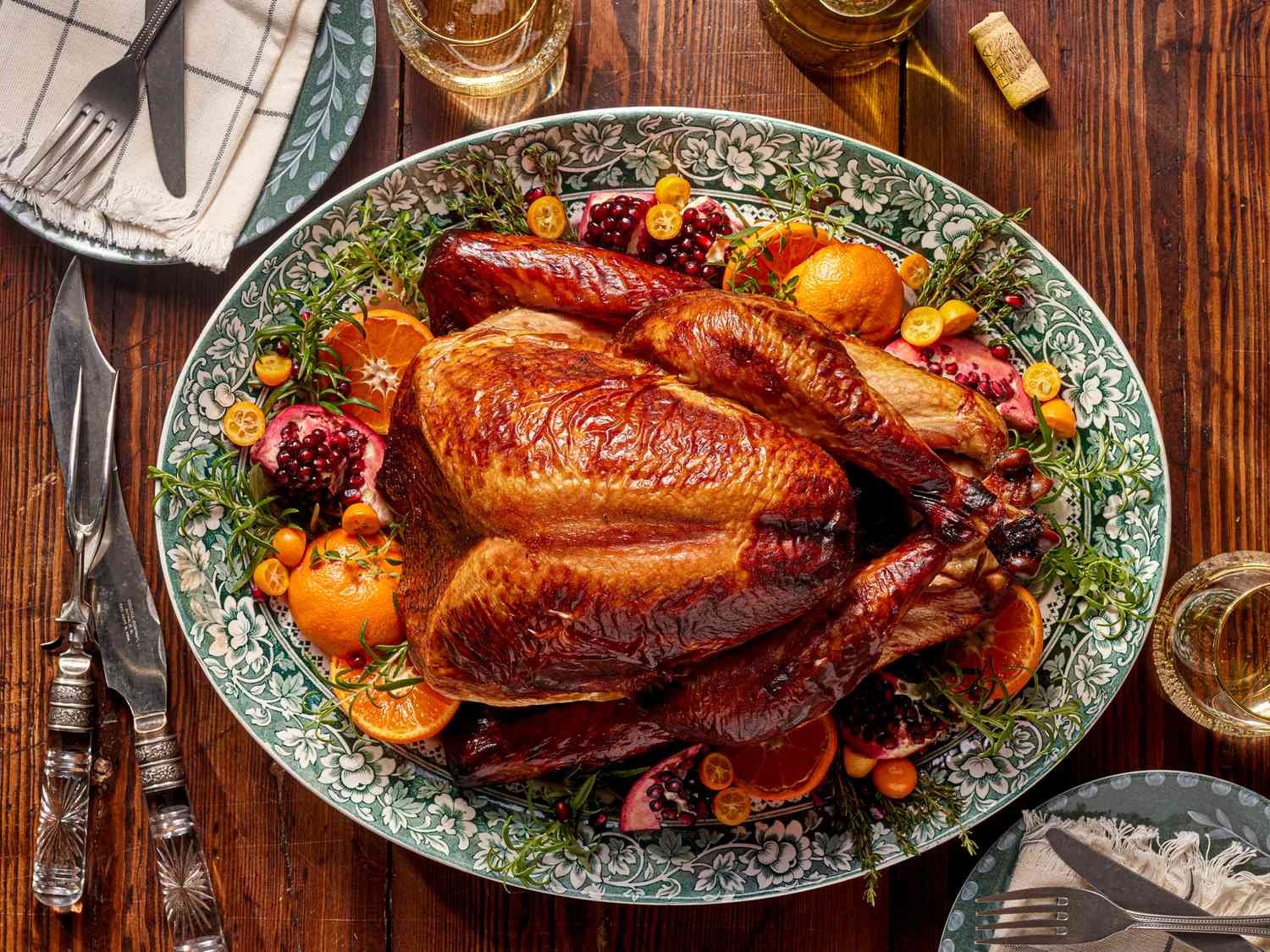
Basting won’t make your turkey juicier or its skin crispier—it just wastes time and drops your oven temperature. The real path to a perfect bird is dry brining with salt and a pinch of baking powder, which locks in moisture and delivers shatteringly crisp, evenly browned skin.
Every Thanksgiving, someone in an apron will swear that the secret to a juicy turkey with the crispiest skin lies in the ritual of basting. Every half hour, they pull the bird from the oven, tilt the pan, spoon the sizzling drippings over the skin, and admire the glossy finish with a sense of purpose. Unfortunately, it’s one of the least useful things you can do for your turkey.
Despite its reputation, basting doesn’t make your turkey juicier or its skin crispier. Those pan drippings don’t soak into the meat—they give it a surface treatment at best, but mostly slide off and sizzle away. To understand why, it helps to know what’s really going on inside that oven.
What Really Happens When You Baste
Basting won’t “add juice” to the meat. Once heat hits the turkey in the oven, its muscle fibers contract and set, meaning very little outside moisture is getting in. As Kenji points out in his turkey guide, what it does do is redeposit liquid fat, cooked proteins, and aromatic compounds on the skin. That can boost surface flavor, but not much deeper than that, and it does so unevenly—leading to blotchy, streaked browning. Plus, each time you open the oven to baste, you dump out a wave of heat, slowing the cooking process and throwing off your timing.
The other issue is that those pan drippings aren’t just pure fat. They also contain water-based juices rendered from the meat as it cooks. So every time you baste, you’re not only opening the oven and letting out a wave of heat, you’re also brushing water onto the bird’s skin. Water has a relatively low boiling point—212°F—which is far below the temperatures needed for browning. That added moisture cools the surface and delays crisping, since crisping requires dehydration, not rehydration.
Serious Eats / Fred Hardy
A little fat on the skin is a different story. A single slather of mayonnaise, a rub of oil or clarified butter, or even a one-time coating of pure poultry fat can absolutely help promote even browning and crisping. The key is to apply it once and leave it alone. Repeated basting, especially with watery pan juices, just keeps resetting the browning process—slowing down the cook, softening the skin, and working against the very result you’re after.
The Solution: Dry Brining
If you want juicy meat and evenly browned skin, skip the baster and start with a dry brine using little more than salt and time. Salting your turkey in advance sets off a slow, natural transformation:
- The salt draws out juices through osmosis.
- Those juices dissolve the salt, forming a concentrated brine right on the surface.
- That brine is reabsorbed, carrying salt deep into the meat.
- After about 24 hours uncovered in the fridge, the surface fully dries, which leads to better browning and crisping later.
As the salt works its way through, it breaks down some of the turkey’s muscle proteins. The loosened fibers retain more moisture during roasting, meaning the juices stay where you want them—inside the bird for deeply seasoned, tender meat without a messy bucket of liquid brine or any mid-roast interference.
Pro Tip: Add Baking Powder for Crispier Skin
For the crispiest skin imaginable, mix a little baking powder—not baking soda— into your salt rub before applying it to the turkey. It’s a trick borrowed from Kenji’s recipe for oven-fried Buffalo wings, and it works wonders here too. (I call for baking powder in the spice rub for my smoked turkey breast recipe as well.)
As a rough guideline, use about 1 teaspoon of baking powder per 1 tablespoon kosher salt for a whole turkey. The exact amount doesn’t have to be perfect but aim for enough to lightly blend through your dry brine mixture.
As the baking powder combines with the turkey’s surface moisture, it reacts to form microscopic bubbles. Those bubbles expand and harden in the oven, creating a delicate, shatteringly crisp crust. Meanwhile, the baking powder’s slightly alkaline pH encourages better browning and faster protein breakdown in the skin. Your turkey skin will blister and crunch—no deep-fryer or rotisserie required.
A 24- to 48-hour rest in the fridge after applying your salt-and-baking-powder mix is ideal. This dries out the surface and sets the stage for maximum crispiness once the heat hits.
Why This Combo Beats Basting Every Time
The dry-brine-plus-baking-powder combo gives you everything basting promises but can’t deliver:
- Deeper flavor and juicier meat, from the inside out.
- Even mahogany-brown skin, instead of streaks and patches.
- A truly crisp exterior, thanks to that subtle baking powder reaction.
- Predictable cooking, since you’re not constantly opening the oven door and letting heat escape.
For extra insurance, give the skin a one-time rub with oil, clarified butter, or pure poultry fat right before roasting. That thin, even coat helps conduct heat and intensify browning—once is plenty; no need to keep reapplying like with basting. Meanwhile, basting only delays cooking, softens the skin, and provides little more than a false sense of accomplishment.
