

Why It Works
- Salting the chicken in advance seasons it all the way to the bone and dries the skin, allowing the skin to brown instead of steam.
- First searing the chicken skin-side down crisps and browns the skin and renders fat, which is used to cook the tomatoes and onions, building a deeper flavor in the sauce base.
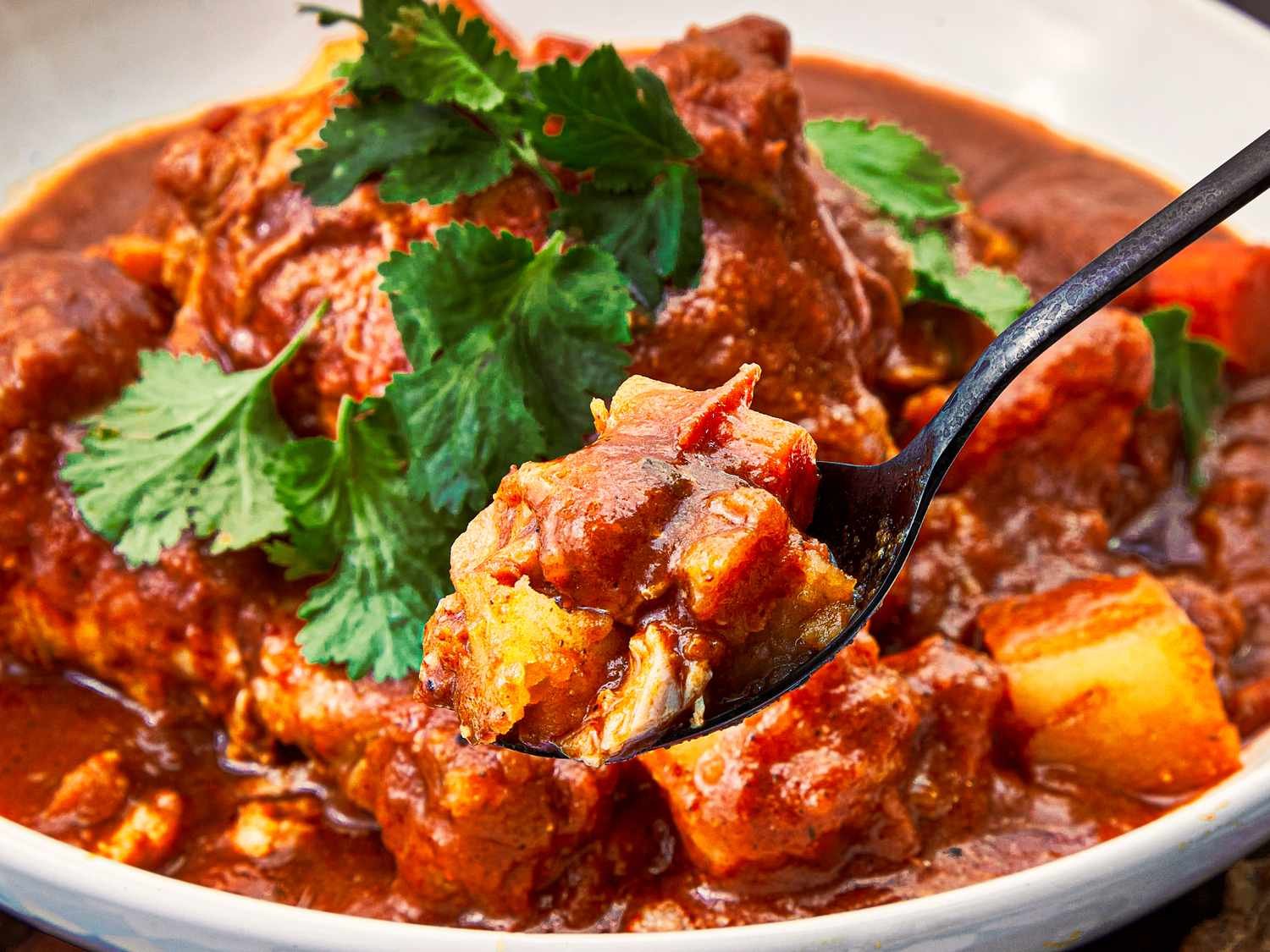
Across Latin America, cooks turn chicken, tomatoes, and spices into pollo guisado, a comforting stew that’s endlessly adaptable. Especially in Puerto Rico and the Dominican Republic, it’s a weeknight favorite that’s hearty enough to feed a family, simple enough to pull together with pantry staples, and flexible enough to welcome whatever vegetables or seasonings you have on hand. Some versions are briny with olives, others sweet with bell peppers. In this recipe, I lean savory, with inviting chunks of potatoes and carrots to accompany the meat. Whatever supporting ingredients you add, all versions share the same core: tender chicken simmered until it soaks up a deeply flavored tomato-based sauce.
I didn’t grow up with this dish, but once I stumbled across it several years ago, it quickly became a regular in my kitchen. What I love most is how flexible it is. There’s no single “right” way to make pollo guisado, so this version pulls from a few traditions to create something bright, herby, and a little spicy. It’s become a dish I cook for family gatherings or just for my fiancé and me on a weeknight.
Serious Eats / Lorena Masso
Getting the chicken right at the very beginning makes all the difference in the flavor of the final dish, and that starts with seasoning the meat at least 30 minutes before it hits the pot. There are a couple of reasons to salt the chicken in advance. First, it flavors the meat all the way to the bone. Second, it dries the skin so it can brown instead of steaming. In many versions of pollo guisado, the skin is removed and discarded, but doing that means losing out on a lot of flavor. By crisping the skin before braising, you keep it from turning rubbery and, more importantly, you render out its fat, which becomes the base for frying the onions and tomatoes.
From there, the sauce is built on a blend of tomato paste, garlic, dried chiles, and warm spices like cloves, coriander, and cumin. A touch of bouillon powder enhances the chicken flavor in the broth, adding deep savoriness. To pack in even more chicken flavor, the carcass (the remaining backbone and any bones after breaking down the chicken) can be added to the pot along with the browned pieces, where it slowly simmers until the meat is tender and infused with the sauce. Once the chicken is done, the meat is removed from the pot and the potatoes and carrots finish cooking in the reduced broth until they’re creamy and coated. The result is a stew with a glossy, velvety sauce that clings to every bite of meat and vegetable. All you need is a handful of cilantro and some crusty bread to mop up the pot.
Pollo Guisado Is Chicken Soup’s Richer, Bolder Cousin
Cook Mode
(Keep screen awake)
For the Chicken:
1 whole chicken (about 5 pounds), cut into 10 pieces (See note)
5 teaspoons Diamond Crystal kosher salt; for table salt, use half as much by volume
For the Sauce:
1 (6-ounce) can tomato paste
5 medium cloves garlic
5 dried árbol chiles (5 g), stems removed
3 whole cloves
1 tablespoon chicken bouillon powder
2 teaspoons whole black peppercorns
2 teaspoons sweet paprika
2 teaspoons ground coriander
1 teaspoon ground cumin
1 teaspoon dried marjoram or Mexican oregano
1 teaspoon dried thyme
1 quart (960 ml) homemade chicken stock or store-bought low-sodium chicken broth
For the Guisado:
2 tablespoons (30 ml) olive oil
1 small white onion (6 ounces; 170 g), cut into 1/4 inch dice
3 plum or Roma tomatoes (about 12 ounces; 340 g), cut into 1/4 inch dice
1 teaspoon Diamond Crystal kosher salt, plus more to taste; for table salt, use half as much by volume
2 russet potatoes (about 20 ounces; 580 g total), peeled and cut into 1-inch pieces
4 carrots (about 10 ounces; 280 g total), peeled and cut into 2-inch pieces
For Serving:
Crusty bread
Fresh cilantro leaves
Sprinkle chicken pieces evenly all over with 5 teaspoons kosher salt and transfer to a large plate. Refrigerate, uncovered, for at least 30 minutes and up to 24 hours.
Meanwhile, in a blender, blend tomato paste, garlic, chiles, cloves, chicken bouillon powder, black peppercorns, paprika, coriander, cumin, marjoram, thyme, and chicken stock until smooth, scraping down sides of bowl as needed, about 1 minute. Set aside.
Serious Eats / Lorena Masso
In a large stock pot or Dutch oven, heat oil over medium. Add half of the chicken pieces, skin-side down, in a single layer, and cook undisturbed until skin is light golden, about 6 minutes. Transfer to a plate. Repeat with the remaining pieces of chicken. Do not clean pot.
Serious Eats / Lorena Masso
Add onion, tomatoes, and salt to now-empty pot. Stir to coat in rendered chicken fat. Cook, stirring frequently, until onions begin to soften, about 2 minutes.
Serious Eats / Lorena Masso
Add chicken carcass ( the remaining backbone and any bones after breaking down the chicken), if using, and seared chicken pieces to pot. Add blended sauce to pot and, using tongs, flip meat and submerge to ensure it is thoroughly coated. Bring to a simmer over medium heat and reduce to low. Simmer until white meat registers 160°F (71 °C) with an instant-read thermometer and the dark meat registers 175 to 185°F (70 to 85 °C), about 30 minutes. Use tongs to remove chicken pieces as they reach temperature and transfer to a clean plate or bowl.
Serious Eats / Lorena Masso
Bring pot with remaining sauce to a boil over high heat, then reduce to medium-high to maintain a simmer and add potatoes and carrots. Cook, stirring occasionally, until vegetables are fork-tender and sauce has a velvety consistency, 12 to 18 minutes. Return chicken pieces to pot and simmer until chicken is coated and heated through. Season with salt to taste. Serve with crusty bread and cilantro.
Serious Eats / Lorena Masso
