

Why It Works
- Wrapping the springform pan in foil prevents water from seeping into the crust and making it soggy.
- Baking the cheesecake in a water bath surrounds the custard with gentle, even heat, which keeps the texture smooth and minimizes cracking.
- Cooling the cheesecake in stages—first in the oven, then at room temp, and finally in the fridge—lets the custard contract gradually, preventing sudden temperature shocks that can cause cracks.
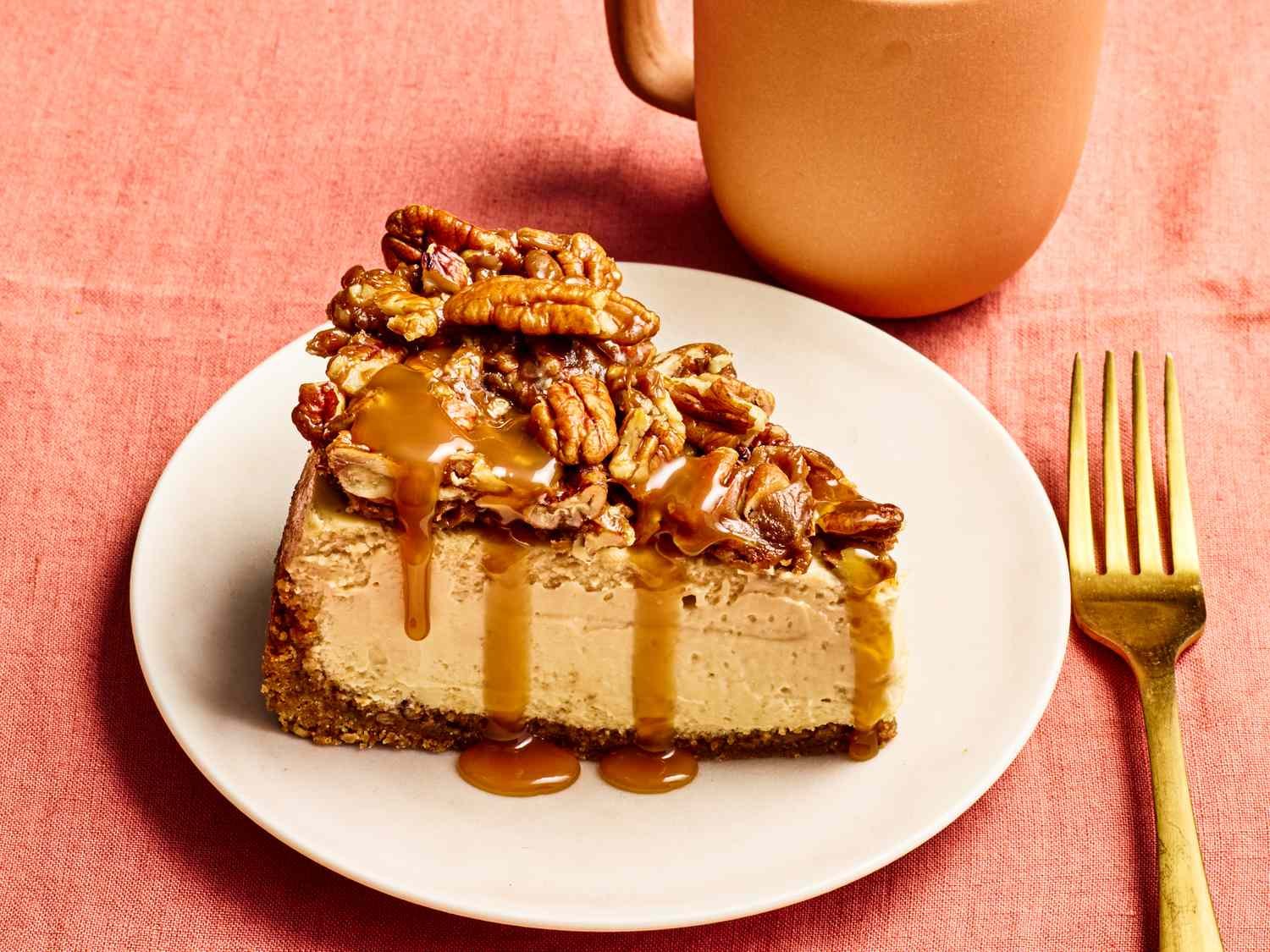
For most Americans, pecan pie is the heart of the Thanksgiving dessert table. Here, it’s reimagined in cheesecake form with a tangy, rich cream cheese base with a glossy, crunchy pecan and caramel topping. It’s tall, dramatic, and celebratory—a showpiece sure to draw every eye at the holiday table.
Building the Sturdy Graham Cracker–Pecan Crust
This recipe was developed by our colleague Melissa Gray-Streett in our Birmingham, Alabama, test kitchen, and her attention to detail makes all the difference. The crust sets the tone with buttery graham cracker crumbs blended with finely chopped toasted pecans. The nuts’ natural oils help bind the crumbs into a sturdier base than graham crackers alone, and carry the pecan flavor from top to bottom. The crust is prebaked to ensure a crunchy foundation that can hold a generous filling.
How to Ensure the Silkiest Cheesecake Filling
After the crust is made, the rich yet balanced cheesecake filling comes together with cream cheese, sugar, eggs, sour cream, and vanilla. The cream cheese serves as the flavor backbone, giving the dessert its richness and tangy flavor, while sour cream enhances the richness and provides an even sharper tang. Vanilla adds gentle warmth, and dark brown sugar deepens it all with a subtle molasses note.
To guarantee the dessert’s signature creamy texture, the cheesecake is baked gently in a water bath, a technique that surrounds the pan with steam and regulates the heat. This gentle, even cooking ensures the cheesecake bakes slowly at a consistent low temperature, keeping the filling smooth and preventing it from drying out or cracking.
Sudden temperature changes can cause a cheesecake to crack or even collapse. To prevent this, cooling happens in stages—first in the oven with the door ajar, then at room temperature, and finally in the refrigerator—so the custard adjusts gradually without stress.
Serious Eats / Morgan Hunt Ward, Prop Stylist: Julia Bayless, Food Stylist: Margaret Monroe Dickey
The Caramel and Pecan Crown
After the cheesecake has cooked and then set in the refrigerator comes the crowning glory: pecans tossed in a glossy caramel sauce. To get just the right soft, sliceable set for the caramel, the mixture of sugar, cream, butter, and corn syrup needs to simmer gently until it reaches 224°F—the thread stage in candy making. At this point, the sugars have dissolved and concentrated just enough to create a sauce that clings without turning brittle. Any hotter and the caramel would firm up too much once cooled; any cooler and it would remain thin, slipping off the cheesecake instead of blanketing it. Stirring in the pecans at this precise moment ensures they’re evenly coated, and as the mixture cools, the sauce thickens to the perfect gooey consistency for clean slicing. Once draped over the chilled cheesecake, the topping delivers a bite that’s both sticky and soft, with the deep caramel flavor wrapping around each crunchy, toasted pecan.
This celebratory dessert—abundant, golden, and glistening—is everything a Thanksgiving showpiece should be. It speaks to pecan pie lovers and cheesecake fans alike, uniting both in one unforgettable slice.
The recipe was developed by Melissa Gray-Streett; the headnote was written by Laila Ibrahim.
