

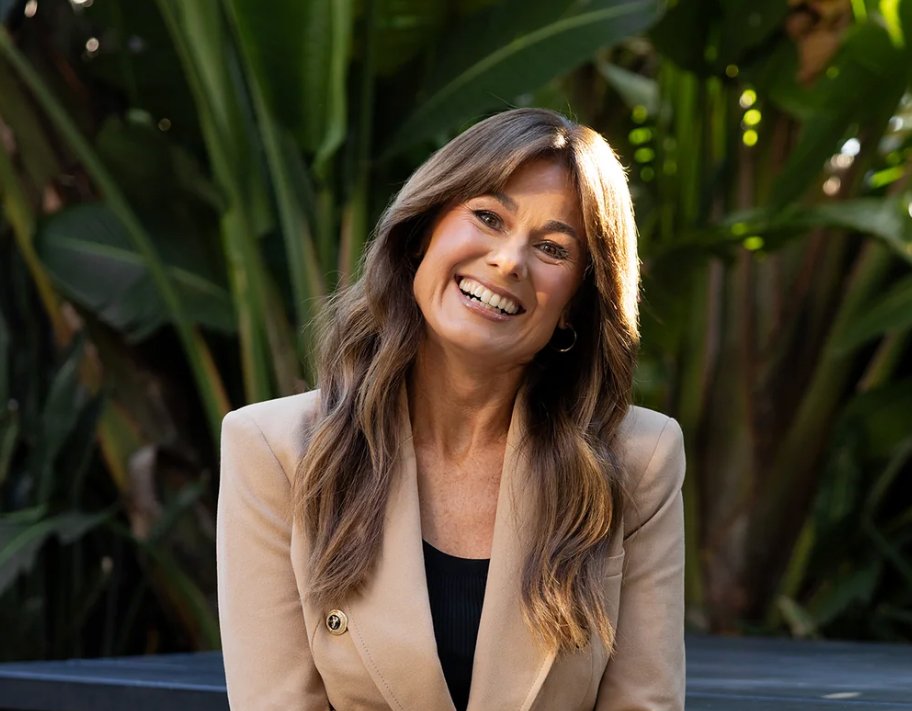
Libby Ellis, PhD, is a leading nutritional biochemist in Australasia, a 14-time bestselling author, respected international speaker and the founder and formulator of Bio Blends, a range of food-based supplements. With more than 25 years of clinical experience and a PhD in biochemistry, Ellis’ three-pillared approach explores the powerful interplay between nutrition, emotions and biochemistry. Through her books, courses and live events, she encourages people to take charge of their health with wisdom and compassion. She shares transformational insights with gentleness and care, promoting lasting change not only through knowledge but also by fostering a deeper understanding of the “why” behind how they feel. Her latest formulation for Bio Blends—Iconic Iron is being recognized as the ultimate iron solution due to the unique absorption mechanism of the ferritin-iron it contains coupled with the food-derived cofactors needed for iron metabolism.
Question: What inspired you to write your latest book Fix Iron First?
Answer: For more than two decades in clinical practice, I’ve sat with people who were exhausted, anxious, had brain fog, their hair falling out, or they simply didn’t feel like themselves. So often, their symptoms were attributed to stress or busy lives or “hormones.” Yet time and again, when we tested their iron levels, the real issue revealed itself. I wrote Fix Iron First because iron deficiency is incredibly common, profoundly misunderstood and woefully under-diagnosed. It’s almost as if other nutrients have become trendier and the impact of iron deficiency has been sidelined. I wanted to bring it back into the spotlight and offer clarity, compassion and practical guidance to anyone who feels they’ve tried everything, yet still know things are far from ideal.
Q: Why do you think that iron deficiency is the most common nutritional deficiency in the world?
Answer: Partly because our needs are high at certain life stages—especially for women across the menstruation years, pregnant women and growing children. A child needs more iron than an adult man and too many children are missing out on getting enough iron, which is crucial to their physical and cognitive development. Yet it’s also because modern diets and digestive challenges make it harder to absorb the iron we eat. Add in stress, inflammation, certain medications and dietary trends that reduce iron intake or uptake and it’s easy to see how so many people quietly slip into deficiency without realizing.
Question: How does iron deficiency affect the body?
Answer: Because every cell in the body requires iron, there’s nothing a deficiency doesn’t touch. Iron is essential for oxygen transport to cells, energy production and optimal brain function. When levels fall, the whole body feels it. People describe fatigue that rest doesn’t fix, breathlessness with simple activities, low mood, anxiousness, brain fog, irritability and a sense that their “spark” has disappeared. In children, it affects behavior, learning, appetite, sleep and immunity. Iron isn’t just about energy—it shapes how we think, feel and function every single day. Iron is needed to make numerous neurotransmitters including dopamine (motivation), GABA (calm), serotonin (contentment), melatonin (sleep). It’s also essential for thyroid hormone production and to convert the inactive thyroid hormone (T4) into the active, metabolism-driving one (T3).
Question: Please discuss the different types of iron.
Answer: There are two main types found in food:
• Haem iron, found in animal-derived foods, which is absorbed more efficiently.
• Non-haem iron, found in plant foods, which requires more steps and specific nutrients, like vitamin C, to be absorbed.
A lesser-known third category is ferritin-iron, the form found naturally inside legumes. This form, which I discuss extensively in the book, is found in concentrated form in a new wave of iron supplements. It’s highly bioavailable and without the side effects traditional, old-school iron supplements tend to generate. Ferritin-iron also has its own unique absorption mechanism that overcomes all of the usual iron absorption hurdles. This is why, after years of research and development, we’ve incorporated it into our Iconic Iron supplement, along with food-sourced co-factor nutrients needed for healthy iron metabolism.
Question: What are the reasons a person may be deficient in iron?
Answer: Iron deficiency tends to arise from one (or more) of the following:
• Not eating enough iron-rich foods
• Increased needs (pregnancy, menstruation, growth, athletic training)
• Poor absorption (gut inflammation, celiac disease or non-celiac gluten sensitivity)
• Medications that reduce stomach acid
• Parasites or gut infections
• Chronic blood loss
• High hepcidin levels, which block iron absorption—often from inflammation or training too close to meals It could be one factor but more often it’s a series of small contributors that accumulate over time.
Question: What are some ways for people to get more iron?
Answer: Prioritizing iron-rich foods is always the first step: red meats, offal, mussels, sardines, eggs, seaweed, parsley, legumes and leafy greens like kale are all options. Pair plant-derived, non-heme iron with vitamin C to enhance absorption and avoid tea, coffee and calcium around mealtimes. For many people, especially those with higher needs, targeted supplementation is also necessary—ideally in a gentle (on the gut), highly bioavailable form like ferritin-iron.
