

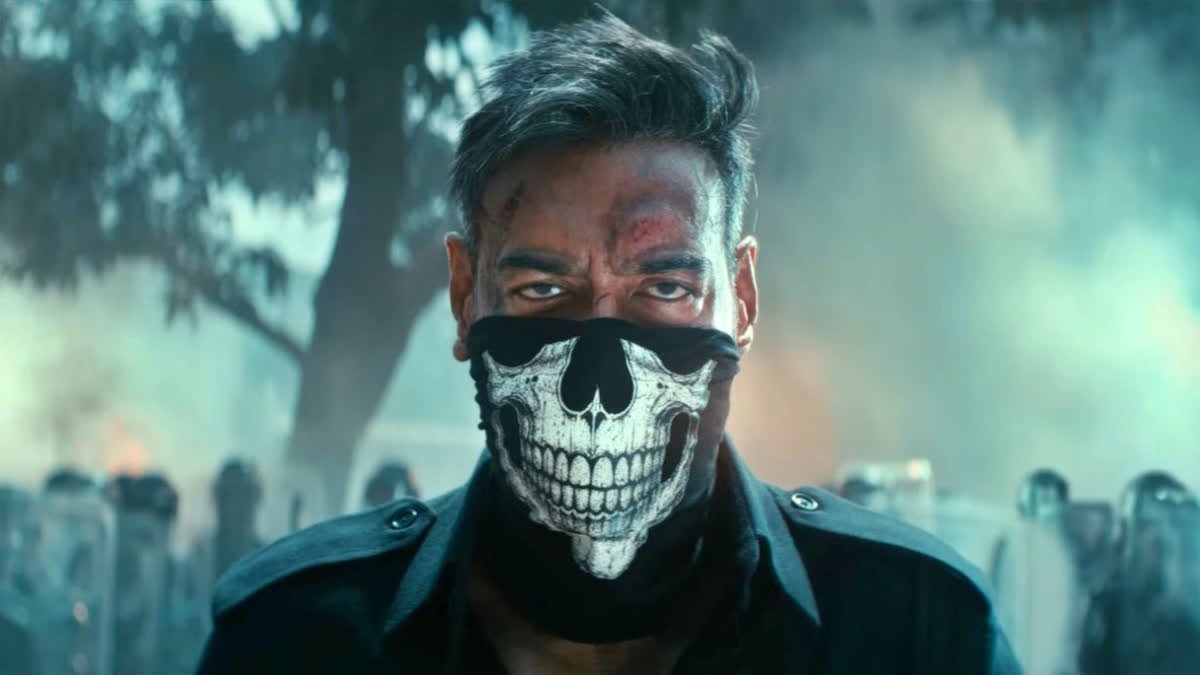
A teaser for Ajay Devgn’s upcoming film Chauhaan has sparked outrage in Kashmir, with many taking to social media to express their discontent. The teaser, which was released recently, depicts a violent incident involving pellet guns and a protest by youth. This has triggered a backlash, with many criticizing the film’s portrayal of pellet-hit victims.
Bollywood star Ajay Devgn’s film, set to release in October 2027, has invited criticism from the ruling party and social activists in Kashmir. A short teaser of the movie shows a youth being hit with pellet guns in his eyes, with Devgn’s character downplaying the severity of the injury, terming it as ‘limited damage’. The use of pellet shotguns by security forces for crowd control in Kashmir has resulted in thousands of severe ocular injuries, particularly during the 2016 unrest. A 2022 study published in the Indian Journal of Ophthalmology, which examined 777 patients with pellet gun-related ocular injuries, concluded that pellet guns cause significant ocular morbidity, although they are less fatal than traditional ballistic-based weapons.
National Conference spokesperson Imran Nabi Dar has slammed the movie teaser, stating that it is a propaganda that has put Goblean propaganda to shame. “This trash of a compilation is a propaganda that has put Goblean propaganda to shame. It is full of content that can incite violence in Kashmir. Mocking children and young people who lost their eyesight, some even their lives, and opening up old scars of their families is nothing short of a spiteful agenda against Kashmiris,” Dar posted on social media. “Take it down. Down with people who celebrate violence. @ajaydevgn, you are a disgrace,” he said.
Social activist Wajahat Farooq Bhat has expressed his disappointment, stating that cinema should stop reducing Kashmir to a perpetual battlefield and its people to props in stories of violence. “As a Kashmiri, I say this with conviction: enough is enough. For decades, we buried our loved ones, lived through bomb blasts, gunfire, curfews, fear, and uncertainty. There was nothing glamorous, heroic, or entertaining about that reality. It destroyed families, stole childhoods, and held an entire generation hostage. So please stop glorifying violence through fictional “alpha male” heroes and endless gunfights. That is not our story,” Bhat wrote on social media. “Kashmir today is striving to move forward. Over the past several years, we have witnessed greater peace, improved security, renewed hope, growing tourism, expanding opportunities, and a generation determined to build its future through education, innovation, entrepreneurship, and hard work, not through the shadows of conflict. Cinema shapes public perception. With that power comes responsibility. Stop reducing Kashmir to a perpetual battlefield and its people to props in stories of violence. Stop recycling the same narratives simply because conflict sells. We are tired of others profiting from our suffering while ignoring our progress,” he said.
Bhat further emphasized the need for a change in the narrative, stating, “If you truly want to tell the story of Kashmir, tell the story of resilience instead of rage, of rebuilding instead of destruction, of aspirations instead of ammunition, of ordinary people reclaiming their lives after decades of pain. The world has seen enough films about our wounds. It is time they saw our healing. Let Kashmir be known for its people, its culture, its aspirations, and its future—not as a permanent stage for violence and cinematic spectacle,” he added. Student activist Sahil Parray expressed concern over hate being spread through films, stating that “vilification of Kashmiris and laughing at pellet victims would sell tickets.” “How much more hatred are you gonna spread? Shame on you,” he posted on social media.
