

Twenty years ago and you’d be hard pressed to find a kettlebell anywhere, let alone a gym. Dumbbells ruled the free weight area and had been doing so for well over a century. Fast forward to today and kettlebells have staged a dramatic comeback, thanks in large part to the explosion of functional fitness training and the popularity of CrossFit. Suddenly, trainers everywhere were swinging cannonballs with handles as if traditional dumbbells had somehow become obsolete.
But have they?
Kettlebells vs. Dumbbells: What’s the Difference?
The truth is both kettlebells and dumbbells have their place in training. The problem begins when fitness trends start replacing logic, and nowhere is that more obvious than trainers who insist on using kettlebells exclusively for every client regardless of age, experience, ability, or training goal. That approach makes absolutely no sense.
Let’s start with the obvious difference: design.
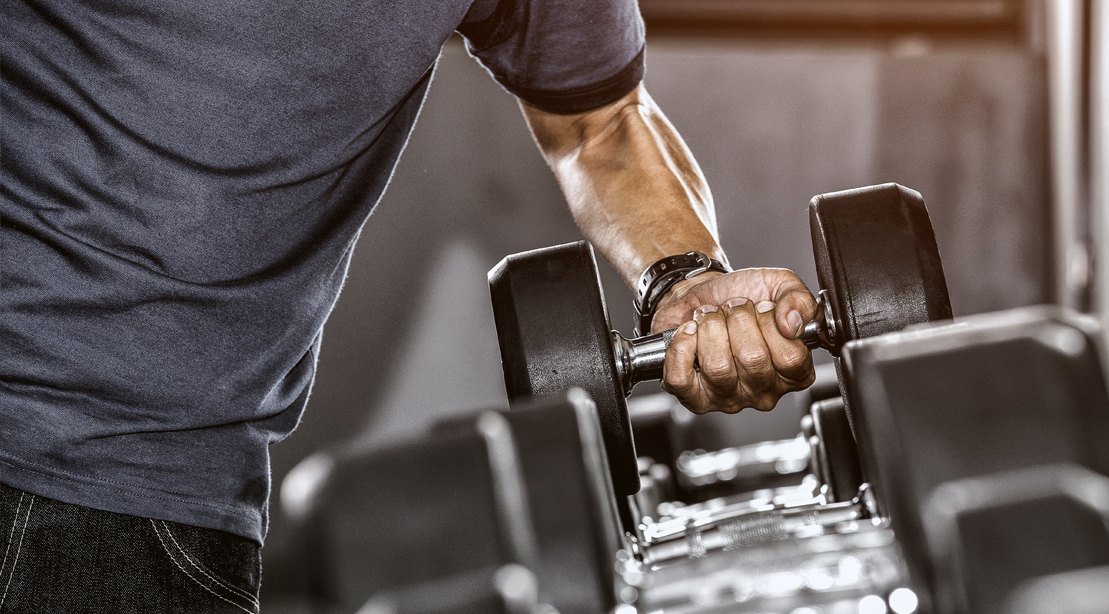
A dumbbell distributes weight evenly on both sides of the hand, placing the load directly in line with the wrist, forearm, and elbow. This makes dumbbells extremely stable and highly predictable during movement. A kettlebell, by contrast, positions the bulk of its weight several inches below the handle, shifting the center of gravity away from the hand. This creates instability and introduces a leverage challenge not present with conventional dumbbells.
That instability can be useful.It can also be problematic. The primary selling point of kettlebells revolves around dynamic movement patterns—swings, cleans, snatches, carries, presses, and rotational movements. Advocates argue these exercises build coordination, explosiveness, grip strength, cardiovascular conditioning, and what has become the favorite buzzword of the modern fitness industry: functionality.
Fair enough. But let’s address the 800-pound gorilla in the room. Swinging a heavy object violently between your legs and rapidly accelerating it upward is not exactly the safest exercise ever invented. Throw a half rotation in there and you future would seem bleak.
Poor technique can quickly place excessive strain on the lower back, shoulders, elbows, and wrists. For beginners especially, kettlebell swings often become less of a hip-driven athletic movement and more of an uncontrolled spinal event waiting to happen.
Dumbbells, on the other hand, remain beautifully simple for presses, curls, rows, raises, lunges, squats, etc.
The movement patterns are controlled, stable, intuitive, and scalable for virtually every population—young, old, beginner, advanced, male, female, athletic or sedentary. There is very little guesswork involved, and the risk of catastrophic technique failure is significantly reduced.
This matters. Particularly when the goal is not athletic performance, but simply building muscle, losing fat, improving strength, and staying healthy.
Azeemud-Deen Jacobs/peopleimages.com/Adobe Stock
Can Kettlebells Replace Dumbbells in Your Workout Program?
Absolutely. Can they replace dumbbells entirely? Not a chance.
For roughly 90 percent of lifters, there exists no measurable advantage to kettlebells over traditional dumbbell training when the goal is hypertrophy, general fitness, or strength development. In fact, dumbbells often provide superior exercise variety and more direct overload potential because weight increments are smaller and progression is easier to manage.
The Biggest Benefits of Kettlebell Training
Kettlebells shine best as supplemental tools. They work well for conditioning circuits, grip work, explosive hip training, carries, and certain athletic applications. But using them exclusively for every client, every workout, every goal? That’s not intelligent programming at all and you’d know it I second once applied. Lifting is the religion, not he implements.
The truth is the human body doesn’t care whether resistance comes from a kettlebell, dumbbell, barbell, machine, resistance band or climbing a mountain. Muscles respond to tension, fatigue, overload, and progressive adaptation.
So if your trainer insists kettlebells are somehow superior to dumbbells in all situations, smile politely. Then ask him why gyms have been full of world-class physiques for the last hundred years without anybody swinging a cast iron bowling ball across the room.
As with all modern physical implementations, remember, exhaust eh old school stuff first. Chances are, if you haven’t improved with that, you’re not going to.
