

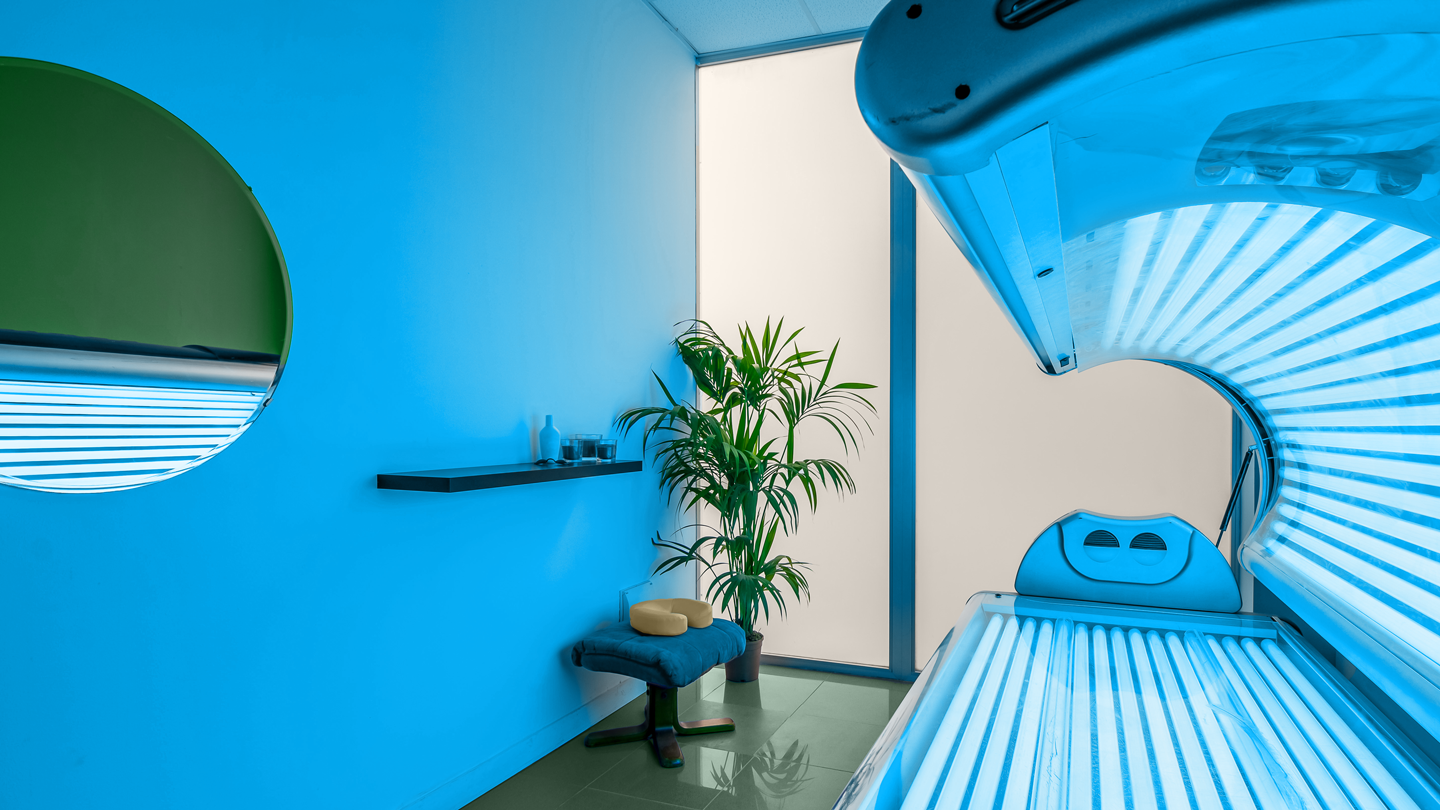
Despite growing awareness of the connection between tanning beds and skin cancer, devotees continue to use them to banish a wintry pallor. A new study put a specific number to the increased risk of the most deadly form of skin cancer, melanoma.
The research found tanning bed use led to a nearly threefold increased risk of melanoma, resulting from DNA damage to certain types of skin cells.
[1]
Exposure to ultraviolet (UV) light, such as from the sun or tanning beds, is one of the main risk factors for melanoma.
[2]
“Tanning bed patients had more mutations in their skin cells compared to their peers who were also being evaluated in a high-risk skin cancer clinic, despite no differences in other skin cancer risk factors,” says Pedram Gerami, MD, the study’s lead author and the director of the Skin Cancer Institute of Northwestern Medicine in Chicago.
The DNA damage also appeared in broader areas of the skin not normally exposed to the sun in patients using tanning beds, compared with those with outdoor sun exposure, he says.
Tanning Bed Users Have a Higher Risk for Skin-Cell Mutations
In the new study, researchers looked at the health records of about 3,000 self-reported tanning bed users ages 18 to 70, and compared them with about 3,000 patients of the same age without a tanning bed history.
They found that melanoma was diagnosed in 5 percent of tanning bed users, compared with 2 percent for non-users. Even after adjusting the data for age, sex, sunburn history, and family history, tanning bed use was associated with an overall 2.85-fold increase in melanoma risk.
The risk was highest (an 8-fold increase) for people who reported using tanning beds more than 200 times, Dr. Gerami says. Those reporting 10 to 50 uses had a 2-fold increase.
The study also performed single-cell DNA sequencing on 182 individual melanocytes — the skin cells that produce pigment — and found that cells from tanning-bed users carried about twice as many mutations (or gene changes that can lead to cancer) as those in the control group.
And, Gerami notes, those who used tanning beds had mutations in areas of the body typically protected from the sun, such as the lower back or buttocks.
“It demonstrates that tanning bed patients have an unusual distribution of melanomas compared to people who have had significant outdoor sun exposure, with tanning bed patients having relatively more melanomas in sun-protected body sites,” he says.
The research has limitations in the total number of patients enrolled, Gerami notes. “A larger study could increase the statistical power.”
What Is Melanoma?
Melanoma is a type of skin cancer that develops when melanocytes grow uncontrollably. While it’s not as common as other skin cancers, melanoma is considered more dangerous, as it’s more likely to spread to other parts of the body if it isn’t treated early.
[2]
In 2025, nearly 105,000 new melanoma cases were expected to be diagnosed in the United States, and more than 8,400 people were expected to die from the cancer.
“Regular tanning bed users should know that their risk for melanoma is significantly elevated,” says Nicholas Golda, MD, a dermatologist at U.S. Dermatology Partners in Lee’s Summit, Missouri, who specializes in skin cancer. Dr. Golda was not involved in the latest research.
What Does Melanoma Look Like?
Jason Miller, MD, a dermatologist specializing in skin cancer removal at Schweiger Dermatology Group in Freehold, New Jersey, says patients should pay attention to the ABCDE of mole changes:
- Asymmetry
- Borders that are irregular, jagged, or uneven
- Colors that change or appear irregular
- Diameter greater than a pencil eraser (about 6 millimeters)
- Evolving in size, shape, or color
“Any mole that is growing, that has thickened, has changed color, or has become painful, itchy, or bleeding should be examined by a dermatologist,” Golda says.
Also, tell your doctor about any new pigmented spots or unusual growths on your skin.
[3]
When caught early, melanoma has a 98 percent five-year survival rate.
[4]
Do the Results Apply to Sunbathing, Too?
“This research confirms what we have suspected for years: UV rays from tanning beds are different, and more dangerous, than those from standard sun exposure,” says Dr. Miller, who was not involved in the study.
Tanning beds emit 10 to 15 times more ultraviolet A (UVA) rays than the sun.
[5]
But both tanning beds and outdoor sunbathing can result in high amounts of UV exposure, which can increase skin cancer risk, Gerami says.
“The sun is important for our health and well-being, but should be encountered safely,” Miller says.
Most people get enough sun in their daily lives without needing to supplement it with indoor tanning devices, Golda adds.
How to Lower Your Melanoma Risk
If you regularly use tanning beds and haven’t noticed any skin changes, Gerami says this may give a “false impression” that they’re safe. But the devices damage skin cell DNA and increase the likelihood of an eventual melanoma diagnosis, he says. It just may take a few years for skin cancer to show up.
To protect yourself from melanoma, Miller says to stop using tanning beds. As the research demonstrates, no amount of tanning-bed use is safe, says Howard Sobel, MD, a clinical attending cosmetic dermatology surgeon at Lenox Hill Hospital in New York City. Dr. Sobel was not involved in the research.
If you’d like to add color to your skin, Sobel recommends using self-tanning lotions.
Here are some other ways to lower your UV exposure and melanoma risk:
[6]
- Apply a broad-spectrum sunscreen with SPF 30 or higher every day.
- Reapply sunscreen every two to three hours when you’re outdoors.
- Avoid midday sun.
- Wear sun-protective clothing.
- Stay in the shade as much as possible.
Visit your dermatologist for regular skin cancer checks and make note of any skin changes or suspicious lesions, Miller says.
“I tell my patients that I want to see any new spot that they are concerned about,” Golda says. “Nobody knows your skin like you do, so if you see that a mole is changing, even subtly, or a spot has started itching or bleeding, I want to have them come in for an examination. Being vigilant and catching cancer early provides the best opportunity to get the best possible outcomes.”
