

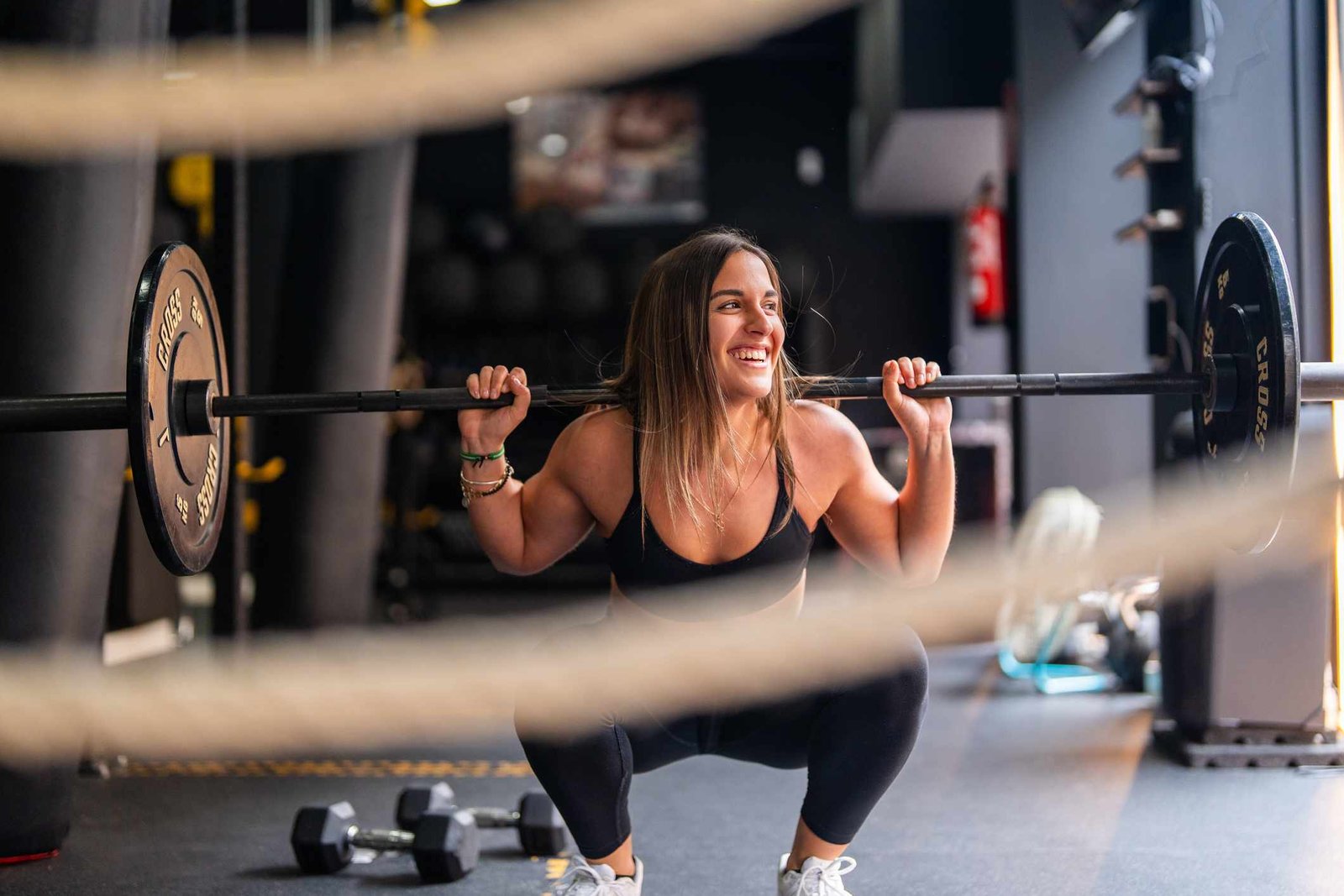
Squatting is a compound weight-lifting exercise that uses equipment such as barbells or dumbbells to help build muscle and strength. For women, the amount of weight to use depends on a number of variables, from training experience to mobility level, but does age factor in? Squat strength is highly individual, but there are a number of science-backed tips that can help you determine the optimal number to squat—and help you safely increase the amount of weight you lift over time.
Your age can play a role in how much you squat, but experts say your starting strength is highly variable among women, depending on training experience, training history, and body composition.
However, Blake Brightwell, CSCS, NSCA-CPT, RSCC*D, told Health that the general population should work to achieve a back squat equal to or greater than their bodyweight.
A woman who is new to lifting may initially squat around 40-60% of her body weight as she develops her technique and foundational strength, and then, with several months of consistent training, that often increases to approximately 60-80% of her body weight,” Kathleen Benson, CSSD, CPT, RDN at VNutrition, told Health. “Recreational lifters who have trained for a year or longer are able to squat around their body weight, while more experienced lifters may squat over 120% of their body weight. However, please note that these benchmarks are general reference points rather than strict standards.
Age doesn’t matter as much as your technique and training.
“Someone in their 40s with a lower body fat percentage could potentially squat way more than a 20-year-old with a higher body fat percentage and poor form, low muscle mass, and weak mechanics,” Danielle Gray, NASM-CPT, WFS, CES, Celebrity Trainer and CEO of Train Like A Gymnast, told Health.
From the age of 50 onwards, women have a higher risk of osteoporosis (a chronic disease that causes bones to progressively weaken over time), which puts them at greater risk of falls. However, research shows that strength training can significantly increase bone density in this age group.
“Studies show that moderate-intensity resistance training about three days per week can meaningfully support bone health,” Michael Richardson, MD, president of the Massachusetts Academy of Family Physicians, and founder of Bespoke Primary Care, a concierge primary care practice in Wellesley, Massachusetts, told Health.
“[Weight squats] build strength, but more importantly, they train a functional movement pattern that we rely on in day to day life,” said Richardson. “Being able to squat well helps with everyday actions like sitting, standing, and maintaining balance. This becomes increasingly important as we age and try to prevent falls.”
If you’re below the squatting benchmarks, there are ways to safely increase your strength and training load over time. You can start by improving your squatting ability, ankle and hip mobility, balance, hamstring and quad flexibility, and core stability.
“This can be done by doing different squat variations like deep goblet squats, single leg squats, animal flow, static and dynamic stretching, and isolated anti-flexion and rotation core exercises,” said Gray. “As your range of motion and mobility improve, your personal record (PR) will increase. This can also help prevent injuries.”
Studies show that strength gains through weighted exercises like squats have positive impacts on health and lifespan.
Total body strength and lean body mass (muscle, bone, and connective tissue) are directly correlated with longevity,” said Brightwell. “Since we lose strength and lean body mass as we age, the best insurance plan is to get as strong as possible at a young age and maintain as much of this strength and lean body mass as possible over the course of life.”
For example, squats and other strength-training exercises are important for building strength, bone density, and muscle mass, which aid mobility, prevent osteoporosis, and support independence later in life.
There are a number of expert-backed tips you can implement into your training program to safely increase your squat strength. If you’re new to weightlifting or want to achieve maximum strength benefits, you can also work with a certified personal trainer (CPT), who can teach you proper form and help you create a consistent routine.
- Be consistent: “It’s important to perform the movement two to three times per week with a 24-48 hour rest between training sessions,” said Brightwell.
- Increase your volume slowly: “For beginners, 2-3 sets of 8-15 repetitions is a great starting point, increasing the total volume (sets x repetitions x load) by 5-10% per week. It is recommended to only manipulate one of these variables per week.
- Push yourself: As for intensity, work close to technical failure, leaving 1-2 repetitions in the tank per set.
- Mind your form and recovery: “Attention to technique and recovery is absolutely important to increasing squat strength,” said Benson. “Maintaining proper squat form consistently, getting adequate rest between training sessions, and supporting training with nutrition— including adequate protein intake—can all help individuals increase strength over time.”
