

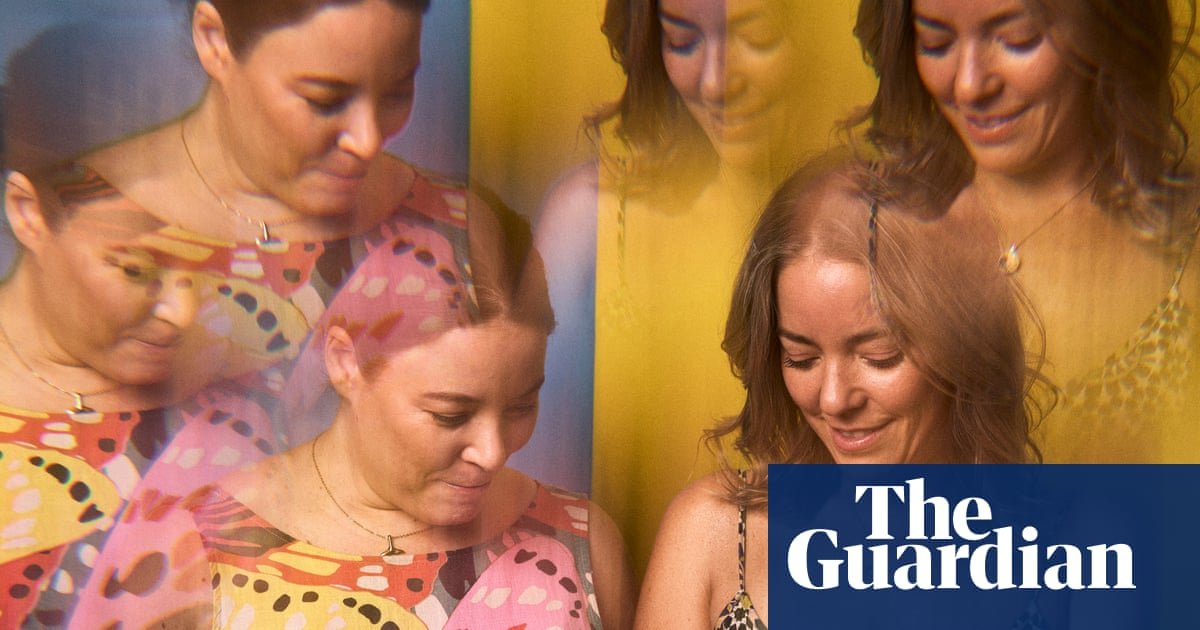
Helen Besgrove: My twin sister, Kirsty, and I have a very similar experience of synaesthesia in that our experiences of sounds, tastes, smells, words, noises and motion is very visual. Whether it’s a name, a personality, a sound or a smell – everything has a colour and a texture in our mind’s eye.
What’s interesting is that the colours and the textures Kirsty and I see can be very different. When I drink a glass of chardonnay, I get these swirls of custardy oil but Kirsty might describe the same wine as fuzzy or blobby. It’s the same with people’s personalities, which we both see as a coloured and textured aura around that person. My best friend Jenn’s personality is poo brown, which she hates. For Kirsty, Jenn’s personality is yellow and blue with a brown stripe in the middle.
We’ve always found it very jarring, hearing each other’s colours. On a family car trip to Queensland when we were about five years old we spent a good couple of hours with our mum going “what colour is the word Queensland? What colour is the word apple?”. The three of us saw different colours and textures for each and we spent hours arguing over who was right. Our dad and our brother didn’t say a thing. For years we assumed it was just their boy brains.
We were 19 when we first found out there was a word for our experiences – and that it was genetic rather than gendered. I was in the second year of my communications degree at Macquarie University, sitting in a radio production class. The person being interviewed on the radio described a piece of music being played as really silver. I couldn’t help but blurt out that it was a really strong yellow. The narrator on the radio went on to explain that it was a phenomenon called synaesthesia causing these colour associations. I left the class and immediately called my mum and Kirsty. We were all fascinated.
Helen and Kirsty Besgrove. Photograph: Rémi Chauvin/The Guardian
Around the same time, a university friend in the psychology department told me they were looking for synaesthetes to take part in a research project into the phenomenon. Kirsty and I were put in touch with Anina Rich, the cognitive neuroscientist leading the research, who was particularly interested in us because we were twins. Over the next few years, her study helped us to realise we had more than just auditory-visual synaesthesia..
Kirsty and I finished our research with Macquarie University 15 years ago, back in our twenties, but we’re still making new discoveries about our synaesthesia every day. Just a couple of months ago, I went wine tasting with a friend and realised that not everyone tastes some wines as spiky.
I used to work at the coffee brand Nespresso and one year I accidentally won the company’s Australian blind coffee taste test competition. Without really trying, I’d score 10 out of 10 on each round and ended up being flown to the grand final in Switzerland to compete with the top 20 tasters globally. All my fellow finalists had been studying coffee intensely to help them differentiate between the different blends. I just walked in and was able to differentiate straight away. I now realise that’s because my synaesthesia gives me more sensory stimuli, making the distinction easier. I guess it’s why I like wine and coffee tasting so much. I find it so nuanced and interesting. It also makes a great party trick.
Kirsty Neal: It’s hard to know how much my synaesthesia has affected my work as a doctor, because I’ve never known life without it. But it has definitely given me an excellent memory, which is helpful when so much of my job requires rapid-fire recollection of facts.
Helen and I were both freakishly good spellers from the age of three and could say words backwards with ease. I can now see that this is probably because letters and words come with an extra sense for us compared to most people. The word is just there in our mind’s eye. I scored highly in exams because I could pull the page up in my head and see all the notes in their various highlighted colours. When a rare condition comes up during my patient work now, I can immediately pull up facts about it because I can see the textbook, lecture or place I learned about it.
‘But for us it’s just normal. We don’t know any different.’ Photograph: Rémi Chauvin/The Guardian
My mirror-touch synaesthesia (where a person feels a physical or emotional sensation on their own body when they see another person being touched) means I can visualise and often feel a patient’s pain or symptoms. When I see a patient with a broken bone I literally feel a pain in my legs and my legs tingle. When someone says they’ve got a burning pain, my mind immediately goes to my own experience of burning pain. I can visualise my whole nerve. It’s yellow and on fire, with jagged edges all the way down to my toes.
Helen’s getting tingles in her feet right now, just hearing me talk about it. I don’t know how much of it is personality versus my synaesthesia, but I do end up spending probably too much time with my patients because of it.
The only time synaesthesia ever becomes a problem is when two words are the same colour. Michael and William are both dark reddy brown for me, so I get people with those names confused all the time. And neither Helen or I can do our lefts and rights because the concepts of left and right are different colours to the words “left” and “right”. For me, the word “left” is yellow but the concept of left is skin colour. If we’re driving and someone says go left, both of us have to ask them to point. We know what the word is but we have to manually process the meaning.
Learning about synaesthesia has been fascinating. Almost 20 years ago, I was talking to Anina about the way the taste of vinegar looks like a floaty purple cloud to me, and she pointed out that it may well come from my association with purple salt and vinegar chip packets – that’s one hypothesis her team has assessed in their research. It’s led me to wonder whether my alphabet colours come from the letters on the wall in my kindergarten classroom. Helen and I were in different classes, maybe that’s why hers are different.
Synaesthesia is a bit like sitting on a chair. Unless you tap into that feeling and go, “alright, there’s this pressure around my bottom and my legs,” you don’t actively process that information. It’s the same with my synaesthesia: I don’t tap into it and go “that’s orange” or “that’s blue” unless someone asks me to.
People often ask Helen and me what it’s like having synaesthesia and the truth is it’s the same as when they ask me what it’s like being a twin. It may or may not have given us an advantage on some things without us realising. But for us it’s just normal. We don’t know any different.
