

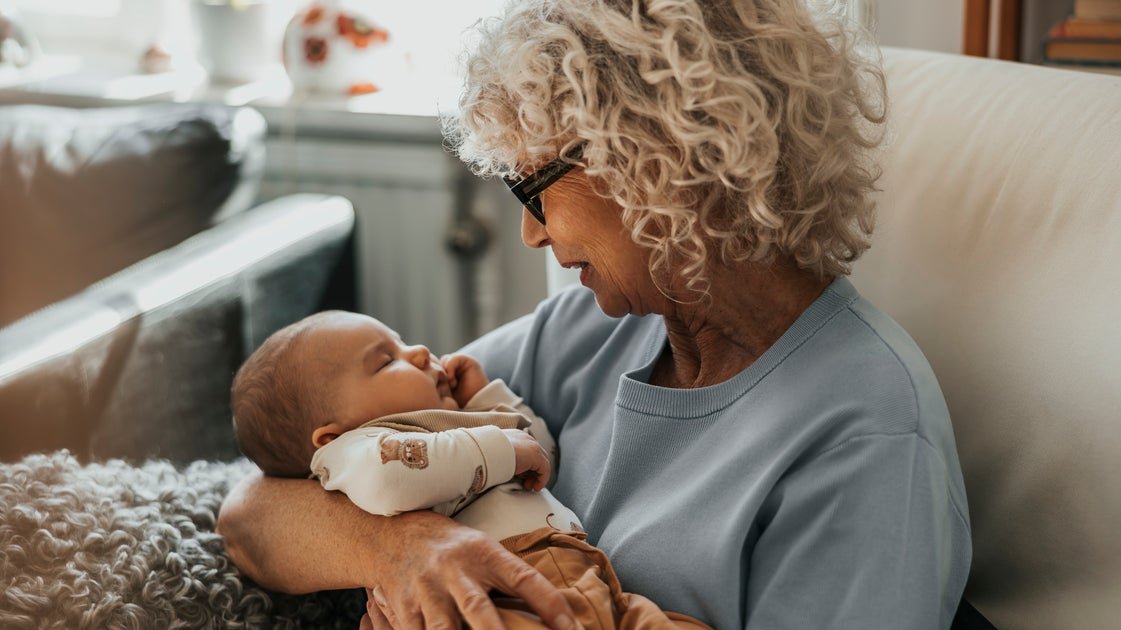
When you have a baby, everyone and their mom (literally) has an opinion on how you raise them. From screen time to feedings to sleeping habits, new parents hear it all, such as, “Wake them up from their nap, they won’t sleep tonight” ― or the opposing, “Don’t wake them up from their nap!”
It’s hard to know what you should do when it comes to caring for a tiny human, and it’s common for new parents to reach out to their parents for support, guidance and for some much-needed grandparent babysitting breaks. And while both parents and grandparents want what’s best for the baby, their views on what exactly is best can really differ.
Parenting guidance and baby safety regulations are continually changing to account for new research and innovation, but it can be hard for grandparents to let go of how they raised their own kids decades ago for many reasons.
“We all, as humans, have some degree of survivorship bias and perhaps some defensiveness related to making specific parenting choices that we now recommend against,” Dr. Krupa Playforth, a pediatrician, founder of The Pediatrician Mom and author of “Eyes, Knees, Boundaries, Please!,” told HuffPost via email. “I think that all of us are sensitive to the idea of our parenting choices being judged, and there’s an implicit judgment when grandparents are told that the way they did things is now considered unsafe.”
Even still, some of what was done in 1990 and even 2000 is now not the safest way to care for a baby. Below, doctors and pediatricians correct the incorrect baby health beliefs they hear over and over from now-grandparents:
Babies should not sleep on their stomachs.
Years ago, it was thought that putting a baby on their stomach to sleep was healthiest and safest, but research now shows that this kind of sleeping actually raises the risk of Sudden Infant Death Syndrome or SIDS, said Dr. Beth Oller, a family medicine physician in Kansas.
“That kind of prompted the ‘Back to Sleep campaign,’” said Dr. Michael Glazier, the chief medical officer for Bluebird Kids Health. The Back to Sleep campaign promoted back sleeping as the safest way for babies to sleep.
“The Back To Sleep campaign, first released in 1994, reduced the risk of SIDS in infants by 50% in just the first few years,” Dr. Lauren Hughes, a pediatrician, owner of Bloom Pediatrics in Kansas and a medical communicator on social media, told HuffPost via email. “All pediatricians recommend infants be put on their back to sleep because it’s safer.”
It’s also common for the grandparent generation to put items in the crib (stuffed animals, bumpers, a pillow) with the baby, “and our recommendations now, on the safety front is, please don’t overcrowd that crib,” said Glazier. “They just need a firm mattress, and that’s it.”
Kids are resilient and learn to sleep on their backs, Glazier noted.
Rice cereal does not need to go in the baby’s bottle.
It’s also common for grandparents to encourage new parents to add rice cereal to the baby’s bottle, according to Oller. This was a common practice when the now-grandparents were raising their own kids decades ago, but is no longer recommended.
Many grandparents think this will help the baby sleep better, but Oller said that isn’t true. “What drives babies in those first especially four to six months to wake up at night is their need for calories,” Oller said.
Babies wake up in the middle of the night because they’re hungry and craving calories, but there are virtually no calories in rice cereal, Oller said. “So it’s not going to keep them sleeping longer.”
“The other thing is, when you’re doing rice cereal, if you’re doing that in a formula, you’re having to use a bottle that has a much bigger hole in the nipple,” Oller explained.
This will lead to a faster flow and could be a potential choking hazard. “So not only does it not keep them full or help them sleep through the night, but it also can be a negative thing,” said Oller.
Tony Anderson via Getty Images
Some of the baby-raising advice that grandparents followed decades ago is now outdated.
Babies also don’t need fever-reducing medication before vaccine appointments.
Parents used to be told to give babies fever-reducing medication like Tylenol before bringing them in for their vaccine appointments as a way to keep kids from feeling lousy after shots, but that is no longer the recommended guidance, said Dr. Leslie Treece, a pediatrician in Tennessee.
New research emerged that found that giving a baby fever-reducers before vaccines can actually blunt the immune response to the shot, “meaning, [the shots] might not work as well,” Oller explained.
“It’s not like, if you did [give your baby a fever-reducing medication], we cannot vaccinate or shouldn’t vaccinate your kids today, that’s not it at all,” said Oller. “But it used to just go without saying that if your kiddo was going to a vaccine appointment, you pre-medicated them so that they didn’t have any side effects afterward.”
“It’s not current guidance anymore, and it was when this generation of adults were children, and so grandparents often tell them, ‘Give [babies] Tylenol before their shots,’” Treece said, stressing that it’s best not to.
Toddlers don’t need shoes to learn to walk.
“I think the one that always is first and foremost for me that grandparents bring up is the idea that toddlers need shoes to learn how to walk,” Glazier said. “Once upon a time, I think, driven by the shoe industry, primarily, there was this conception that they need a shoe that provides structure to be able to help kids learn to walk. … Kids in all walks of life in all countries across the world learn to walk, regardless of shoes or not.”
Shoes are an accessory for kids when they’re learning to walk, not a necessity. Glazier said he tends to only recommend certain shoes for certain situations, such as soft-soled shoes or socks when kids are learning to walk, and are outside or at a playground where they could step on a sharp stick or rock.
“But inside at home, barefoot’s great,” Glazier noted.
You can’t ‘spoil’ a baby by holding them ‘too much.’
“I think another one you hear is, ‘Don’t pick your baby up all the time. Don’t hold them all the time. You’re going to spoil them,’” Oller said. “There’s no such thing as spoiling a baby with too much love or attention,.”
Crying is the only way babies can communicate with people, “and they need emotional security. They need the trust,” Oller said. “But I think the thought used to be a baby is going to be ‘more demanding’ if you respond to its needs immediately, and if you pick a baby up — but so, so not true.”
Babies less than 12 months old should not have honey as a cough medicine.
It’s common and recommended for parents to give children 1 and older honey as a cough medication, but this isn’t true for younger babies.
“The truth is, honey for older age kids is a good cough medicine, but we don’t recommend honey in the first 12 months of life because there is a fear that honey can have botulism spores in it, and since infant immune systems are still developing, they are more susceptible to that than older kids who are easily able to fight it off,” Glazier explained.
These spores can grow in a baby’s digestive system and lead to infant botulism, which causes weakness, constipation, choking and, in rare cases, death.
They also should not wear jackets in car seats.
The grandparent generation commonly leaves a baby’s coat on when putting them in their car seat, but newer guidance shows that it’s safer to take off a baby’s coat before putting them in their car seat, Treece said.
“Coats compress,” Treece explained. While the car seat straps may seem tight enough over a jacket, if the coat compresses, it leaves room for the baby to move around in the car seat and even slip out from the straps if there is a car crash.
“It just creates an unsafe experience because they need for those straps to be well-fitted,” Treece added.
It’s a better idea to put a blanket on top of the car seats straps once the baby is buckled in.
If you need help, your pediatrician can help you establish boundaries with grandparents.
Grandparents who repeatedly tell you to let your baby sleep with their favorite stuffy or that you’re “spoiling” them by holding them too much aren’t trying to do harm. They also want to raise a happy, healthy child — but sometimes, it’s necessary to set boundaries to ensure your child is safe.
“Remember that you are the parent, and at the end of the day, your role is to advocate for your kid,” Playforth said. “It’s OK to push back against what the grandparents are saying, and you may have to let go of having their approval.”
Approaching these tough conversations from a compassionate standpoint, and recognizing that everyone caring for the baby wants to raise a thriving and healthy child is a more helpful than being combative, she said.
If your parent just won’t listen and insists on putting your baby in their car seat with their winter jacket, for example, lean on the pros and tell them your pediatrician said it’s unsafe.
“Let your pediatrician be the bad guy if you need to,” Playforth said. “We don’t mind. If you’re getting a lot of push back from grandparents around boundaries guidelines ― especially safety-related guidelines ― you can always say, ‘This is what the pediatrician recommended, and we trust them. This is the way we are doing things.’”
Raising a healthy and happy kid, and a responsible and caring adult isn’t about obsessing over the latest fad on social media or comparing your newborn’s growth compared to your neighbor’s baby, but is instead about all of the emotional and physical health basics that doctors recommend.
“For physical health, it’s the boring unsexy basics: eating a balanced diet, getting adequate sleep, washing your hands, moving your body daily, and staying up-to-date on routine checkups and vaccines,” Hughes said.
“For emotional and mental health, the biggest and best predictor is having a parent who is themselves emotionally and mentally healthy. So, taking care of yourself as a parent is one of the best things you can do for your child,” added Hughes.
And, let your kids be kids, Hughes said. Meaning, let them play, explore and get dirty.
