

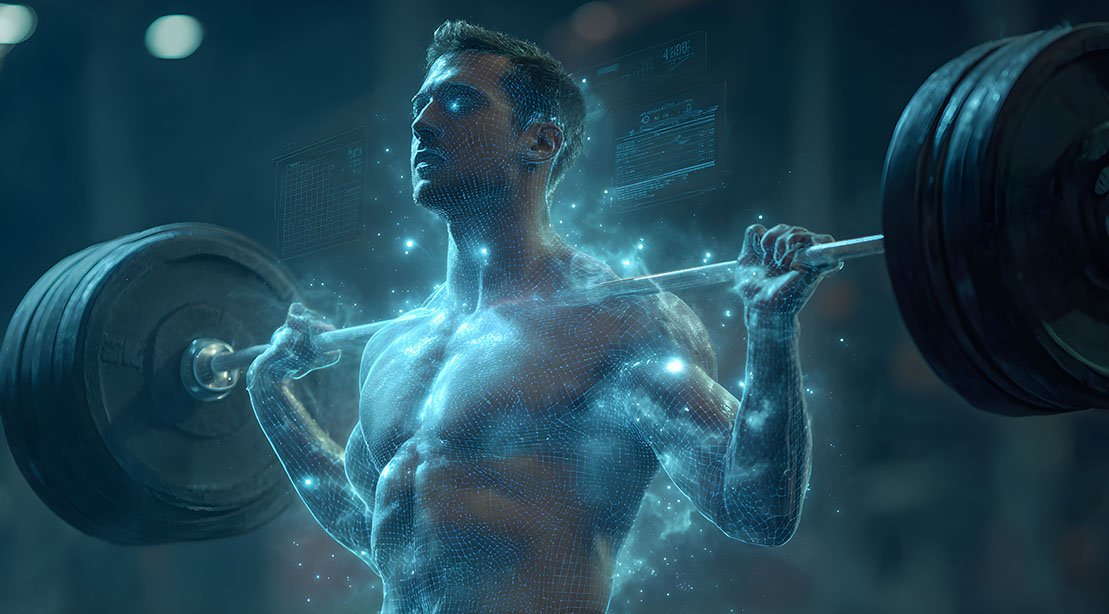
There was a time when I thought more was better. More volume. More intensity. More hours in the gym. More suffering. That mindset is still everywhere. It is worn like a badge of honor. But at the highest levels of performance, it stops working. Not because effort does not matter, but because effort without structure is inefficient.
I do not see training as something you survive. I see it as something you engineer. That shift changes everything.
The athletes who are separating themselves today are not just working harder. They are working with more intention. They are aligning training with physiology instead of fighting against it. They are measuring what matters and adjusting accordingly.
This is where performance is going. Not toward more chaos, but toward more control. Not toward guesswork, but toward rigor.
There are four tools I see showing up more and more in that conversation. Not as shortcuts, but as ways to refine the margins. NAD+ therapy. Peptides. Continuous glucose monitoring. And advanced sleep tracking.
On their own, they are useful. Together, they create something far more powerful. A system.
Olga Gorkun
Recharging from Within
Every rep you perform depends on energy at the cellular level.
NAD+ is central to that process. It supports mitochondrial function, DNA repair, and how efficiently your body produces ATP. The problem is that NAD+ declines over time. Age plays a role, but so does stress and sustained training demand.
You do not always feel that decline in a dramatic way. It shows up in small ways that add up. Slower recovery. Less endurance. Mental fatigue that is harder to shake.
That is where NAD+ support comes in. Some athletes use intravenous therapy, while others rely on oral precursors, compounds the body converts into NAD+. The most common are NMN (nicotinamide mononucleotide) and NR (nicotinamide riboside), both forms of vitamin B3 that act as building blocks for NAD+ production. The goal is not just more energy. It is better for energy production.
There is also growing interest in how NAD+ interacts with longevity pathways, especially sirtuins: proteins that regulate cellular repair, inflammation, and metabolic efficiency. NAD+ essentially fuels these pathways, influencing how well your body adapts to stress at the cellular level.
That said, this is not a shortcut. If your training is unstructured and your recovery is poor, NAD+ will not fix that. It is a tool. It works best when the foundation is already in place.
Targeting Recovery with Peptides
If NAD+ supports energy, peptides influence instruction.
They are short chains of amino acids that signal specific processes in the body. Tissue repair. Inflammation control. Hormone release. Their value comes from how targeted they are.
In high level training, recovery is often the limiting factor. Not effort. Peptides like BPC 157 are often used for soft tissue repair, especially in tendons and ligaments. TB 500 is associated with cellular migration and regeneration. Protocols like CJC 1295 with Ipamorelin are used to stimulate natural growth hormone release.
The appeal is obvious. Recover faster. Maintain consistency. Train at a higher level for longer. But this is also where people make mistakes.
These compounds are not universally regulated. Quality varies. Dosing matters. Long term safety is still being studied. Without proper oversight, what is meant to be precise becomes inconsistent.
I look at peptides the same way I look at training. They require structure. They require restraint. They require discipline.
Fueling with Real-Time Feedback
Nutrition has always mattered. What has changed is how we measure it.
Continuous glucose monitors give you real time feedback on how your body responds to food, training, and stress. What you learn quickly is that there is no universal response.
Two people can eat the same meal and get completely different outcomes. One stays stable. The other spikes and crashes. That matters.
Those fluctuations affect energy, recovery, and focus. When you can see that data in real time, you stop guessing. You start adjusting.
Carbohydrate timing becomes more precise. Foods that do not work for you become obvious. You begin to build a system that matches your physiology instead of following a generic plan.This is not about restriction. It is about awareness. It is about making better decisions with better information.
PeopleImages
Sleep Is Not Passive
If there is one area where most people still fall short, it is sleep. Not because they do not value it, but because they do not measure it.
Wearable technology has changed that. You can now track sleep stages, heart rate variability, resting heart rate, and overall recovery. That data tells you whether your body is actually adapting to your training.
Sleep is where the real work happens. Growth hormone release. Tissue repair. Nervous system recovery. When sleep is poor, performance drops. Strength, coordination, and focus all suffer. Injury risk increases.
I do not look at sleep as something that just happens. I look at it as a variable I can improve. When you start tracking it, your mindset shifts. You stop asking if you slept enough. You start asking if you recovered properly.
Building a System
What makes these tools powerful is not using them in isolation. It is how they work together.
You might see low recovery scores and look at your sleep data. That leads you to your nutrition. Your glucose data shows instability late at night. You adjust your intake. Sleep improves. Recovery improves. Performance follows.
That is a system, and it is not about adding more. It is about refining what is already there.
Performance becomes something you iterate. You assess, adjust, and execute. Then you repeat.
Srdjan/AdobeStock
The Reality
None of this replaces the basics. No therapy or device can compensate for poor training structure, inconsistent nutrition, or chronic sleep deprivation. The athletes who benefit from these tools are not beginners. They are the ones who have already built discipline into their routine.
There is also a mental side to this. Data is powerful, but it can become overwhelming if you let it control you. The goal is not perfection. It is progress.
Use the data. Do not become dependent on it.
The Standard
I do not believe in doing more for the sake of doing more. I believe in doing things well. Repeatedly. With intention.
There is a science to building the body. There is an art to executing that process every day.
The difference is not effort. It is standards.
Rigor. Discipline. Results.
