

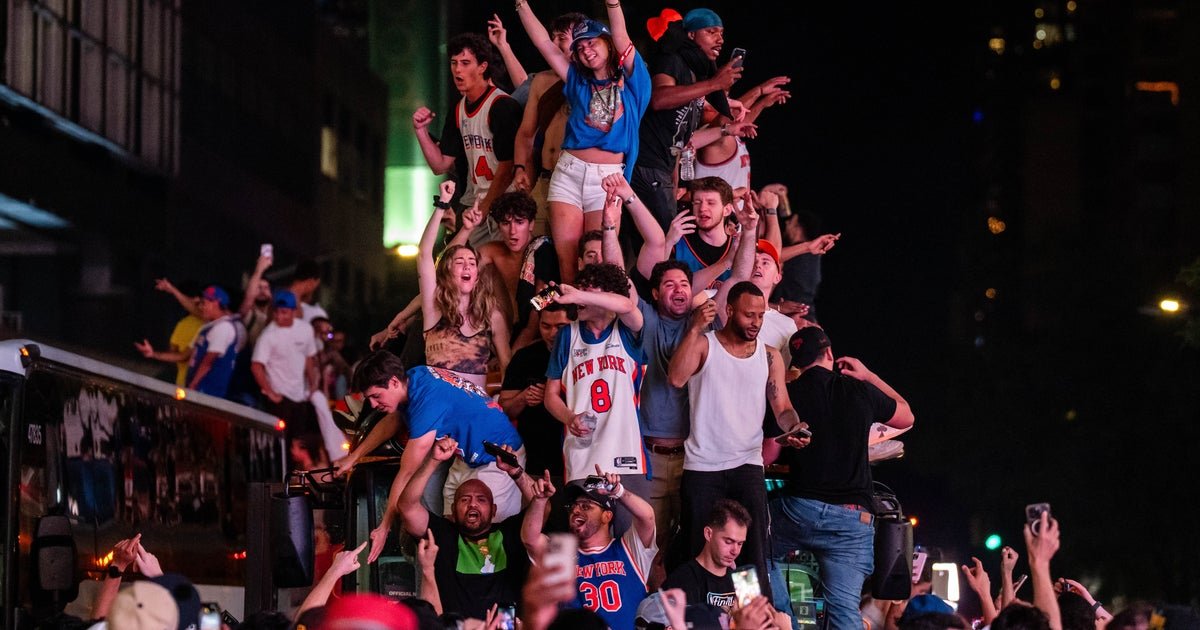
Have you ever felt chills ripple through your body as a stadium erupts in cheers, cried while singing along with strangers at a concert or been swept up in the energy of a protest? There’s an electric, bigger-than-yourself feeling that comes when emotions sync up in a group and ordinary moments start to feel extraordinary.
It turns out there’s a sociological term for this kind of experience: collective effervescence. And its impact is greater than people even realize.
So how exactly does collective effervescence work? Below, experts break down what you should know about it.
What is collective effervescence?
“Collective effervescence is an experience that we sometimes have when we’re in a crowd of people when there’s a strong feeling of connection to others and a feeling of sacredness, that something special is happening,” said Shira Gabriel, a psychology professor at SUNY University at Buffalo who is working on a book about the power of collective effervescence.
This kind of transcendent experience of social unity can occur at concerts, protests, sporting events, church, festivals and other types of communal events or shared rituals. The term and concept collective effervescence was coined by French sociologist Émile Durkheim in the early 20th century.
“In his classic studies of Indigenous and religious ceremonies, Durkheim observed that when people come together in collective gatherings, the intensity of their shared participation produces powerful emotional currents that transcend individual experience,” said Jarrett Robert Rose, an assistant professor in the community and behavioral health program and department of sociology at SUNY Polytechnic Institute. “These heightened states of excitement and solidarity give rise to distinct patterns of social behavior, interaction and emotion, as well as the creation of cultural symbols and meanings.”
Basically, he explored how group experiences in ritual contexts create social bonds, values, norms and behaviors that extend beyond the initial gathering.
“When individuals come together in highly charged group experiences, they become entrained with one another ― emotions are intensified, a sense of togetherness emerges and feelings of solidarity or membership take shape,” Rose said. “Scholars have shown that this heightened arousal not only produces a sense of group belonging but also generates the ethical norms, affective repertoires, cognitive frameworks and behavioral orientations that guide human conduct within that group.”
Dimensions via Getty Images
You can experience collective effervescence at concerts, sporting events, religious gatherings, protests and more.
How does collective effervescence impact people?
In moments of collective effervescence, people experience powerful emotions ― think: crying at a concert as the crowd sings along to a particular song together.
“I think that kind of thing is beautiful and something you should let yourself experience,” Gabriel said. “In this very difficult and divided world, it’s great to find these moments where you feel a connection, feel that life is special, that there’s something sacred happening and tap into something larger than yourself.”
She recommended taking note of these emotional moments and consider seeking out more opportunities for this kind of powerful experience.
“There’s evidence that having these experiences of collective effervescence projects all kinds of positive outcomes for us as individuals and for society,” Gabriel said. “Humans are pack animals. We need other people, and we need to feel not just as if we have friends and close relationships but as if we’re embedded in a larger society in order to feel happy and healthy and to have the resources necessary to be kind to one another.”
To that end, she emphasized that people shouldn’t feel guilty about indulging their desire to spend a lot of money on concert tickets or to attend a football match.
“A lot of people, when they hear or read about loneliness, there’s a lot of emphasis on finding close relationships and bonds and being a member of small groups,” Gabriel noted. “But there’s also a separate, very important human need to feel as if we are a member of some kind of broad society and have a place in them.”
A notable aspect of collective effervescence is the way it leaves people with a strong sense of connection to their community and humanity ― which persists long past the actual event.
“Our research shows people feeling as if their lives have meaning, being more likely to donate to charity, experiencing fewer symptoms of anxiety and depression and feeling a sense of spirituality in their lives weeks and even months later,” Gabriel said.
Rose similarly pointed to sociologist Randall Collins’ framework for understanding collective effervescence and its positive outcomes ― including group solidarity, which he described as “a heightened sense of belonging and membership” and “emotional energy, defined as ‘a feeling of confidence, elation, strength, enthusiasm and initiative in taking action.’”
Are there any downsides to collective effervescence?
“We haven’t found any downsides to feeling collective effervescence in the moment for an individual’s psychological well being,” Gabriel said. “However, sometimes there might be cases where someone is in a crowd of people engaged in a behavior that is negative towards other people or has negative long-term consequences.”
She noted that individuals might be more likely to do extreme or negative things when they’re caught up in the moment and part of a group.
“An example that tends to stand out would be something like Jan. 6, where people were probably feeling a lot of collective effervescence and connection to the other people there,” Gabriel noted. “We don’t have data on this, but it certainly seems that people were feeling that way and might have engaged in behaviors as a group that they wouldn’t have on their own as individuals.”
That kind of example is a rarity, however, she emphasized.
“Research shows that crowds are actually more likely to engage in pro-social behavior and help other people,” Gabriel explained. “Most crowds are actually really supportive and positive. So examples like Jan. 6 are the exception, rather than the rule.”
Rose also pointed to the potential for emotional energy in a collective setting to turn negative and lead to anger and conflict.
“Another downside of the manifestation of amplified emotional energies amongst groups engaging in highly entrained ceremonies or rituals is that the morality, cognitive schema and type of solidarity engendered could be those that are detrimental to particular groups in society,” he said, pointing to acts of violence or terrorism. “Sometimes the things that we hold ‘sacred’ ― or near and dear to our hearts and emotions ― are diametrically opposed to others’ opinions or personal moralities.”
He offered examples like Boston sports fans proudly sporting their team attire in the middle of the Bronx and even an episode of “Curb Your Enthusiasm” centered around Larry David and a fellow Jewish friend’s enjoyment of a Palestinian restaurant.
″[T]he wearing of a particular piece of clothing, or the use of certain words or language, may evoke disgust or outrage, while at the same time, for others, it may showcase membership in a collective that instigates solidarity, friendly conversation, similar attitudes, and fun and excitement,” Rose said.
How can people seek out collective effervescence in their lives?
Although there are rare potential downsides, both Gabriel and Rose believe collective effervescence is generally a positive experience that people should seek out in their lives.
“In a world of isolation and loneliness, as well as constant rumination on the self via social media, comparison, it can actually be incredibly beneficial to ‘leave the self behind’ for a little while we’re entrained on something larger than the self,” Rose said, noting that collective effervescence has been compared to an altered state of consciousness. “This can be incredibly refreshing, and provide distance from the monotony (or prison) of the self and the mind. If there is one thing that artificial intelligence cannot mimic, it’s real, organic, energizing collective effervescence.”
He emphasized that collective gatherings offer a profound sense of togetherness that fosters strong bonds, identities, emotional energy and sense of morality. That’s why people should take advantage of opportunities to join the crowds at things like sporting events, concerts, festivals, political rallies, national holidays, religious or military ceremonies or even flash mobs or dance experiences.
“I would advise people to look out for opportunities that fit with what they already like,” Gabriel said. “So if you enjoy live music, go to concerts. Avoid the urge that we all have to just cuddle up at home because it feels easier than heading out to do different things.”
She recommended pushing yourself to try different communal things and then examining how you feel afterwards.
“Not every event is for every person, and so if you leave an event and get home and feel bad, then that’s not the right one for you,” Gabiel said. “And that’s OK. You can find things that fit for you.”
Whether you’re introverted or just hate standing in a tight crowd, you can still find examples that work for you.
“There are these really cool activities in a lot of big cities where people just get together to read,” Gabriel said. “They don’t even talk. People just get together at the park and all read together.”
Even just watching your favorite show live on TV can fill a need to feel collective effervescence sometimes, she added.
“The crowd is not there in your house but you are watching the episode with millions of other people around the world ― and it can feel cool to be part of that moment,” Gabriel noted. “So don’t feel guilty about your desires to be into what Taylor Swift is doing or think you’re lazy for spending some of your Sunday watching football. I would argue that you are filling a deep, fundamental and largely unconscious need ― and you should give yourself credit for taking care of yourself in such a lovely way.”
The original version of this story was published on HuffPost at an earlier date.
