

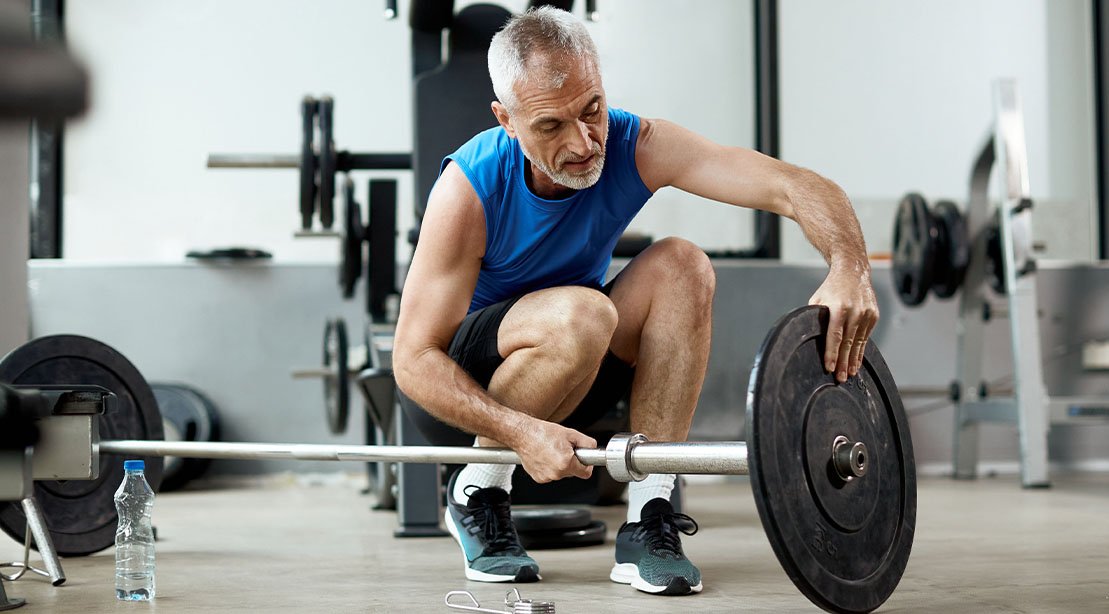
Ask almost anyone how to stay young, and they’ll rattle off skincare products, fad diets, or the latest “longevity pill.” What few realize, yet what science now makes unmistakably clear, is that the most powerful anti-aging intervention doesn’t come in a bottle or capsule at all. It comes from a barbell. A major epidemiological study published in JAMA Network Open that tracked more than 115,000 adults over age 65 for nearly eight years found that those who did strength training at least twice weekly had up to 30 % lower risk of dying during the follow-up period compared with those who didn’t, even when aerobic exercise and other health behaviors were accounted for. This survival benefit was consistent independent of how much walking or cycling participants reported doing.
That’s not longevity marketing copy—that’s real-world science.
Svitlana/Adobe Stock
Muscle: The Lifespan Predictor We’ve Ignored
Muscle isn’t vanity. It is biology. Multiple longitudinal cohort studies have found that grip strength and overall muscular strength predict all-cause mortality more powerfully than many traditional health markers, including blood pressure and cholesterol. A large prospective cohort of adults aged 20 to 80 showed that men with higher measured muscular strength experienced significantly lower all-cause and cardiovascular mortality over long-term follow-up.
Even among the oldest old, adults over age 90 from 27 European countries, greater muscle strength was associated with lower mortality risk, controlling for age, sex, and health status. More than half of study participants died during the follow-up period, but those with stronger grip strength were less likely to die in that time frame, suggesting a dose-response relationship between strength and survival. In younger cohorts, similar patterns emerge. In a massive analysis of the U.S. National Health and Nutrition Examination Survey (NHANES), low muscle strength was independently linked with a ~65 % greater risk of all-cause mortality compared with individuals with higher strength, even after adjusting for age, sex, chronic disease, and lifestyle factors.
Put simply: Being stronger predicts living longer. The magnitude of these associations rivals, and sometimes exceeds, classic risk factors like smoking and obesity.
Strength Training Counters the Aging Process at Its Core
As we age, muscle mass and strength naturally decline, a process called sarcopenia. Beginning in our 30s, adults can lose 1-3 % of muscle mass per year, accelerating in later decades. Sarcopenia isn’t cosmetic; it’s a core driver of frailty, falls, metabolic disorders, and loss of independence.
The good news? This process is not inevitable.
Strength training is one of the most robust interventions to counteract sarcopenia. A recent systematic review of randomized controlled trials in older adults with sarcopenia found consistent improvements in muscle mass and strength with resistance training programs, sometimes in as little as six to 16 weeks, compared with non-training controls.
These aren’t subtle changes. Participants in these trials show statistically significant increases in functional metrics like grip strength, chair-stand performance, and skeletal muscle mass, all of which are directly linked to better survival, mobility, and quality of life as people age.
Strength Is Medicine for the Metabolic System
Muscle is not inert flesh: It’s an endocrine organ.
Resistance training triggers the release of myokines, hormones produced by contracting muscle that regulate inflammation, glucose metabolism, and fat storage. This plays a direct role in reducing the risk of type 2 diabetes, cardiovascular disease, and metabolic syndrome, all major causes of mortality. Multiple mechanistic studies confirm that strength training improves insulin sensitivity, lowers blood pressure, and favorably alters lipid profiles.
Unlike many interventions that target only one system, strength training simultaneously tunes multiple biological pathways—metabolism, immune regulation, nervous system function, and even cellular repair processes associated with aging.
Ollyy / Shutterstock
Brain Strength: Lifting for Cognitive Longevity
Physical strength training doesn’t just build muscle; it stimulates the brain.
Coordinating complex lifts engages motor planning, balance, and proprioception. Emerging research ties resistance exercise with improvements in executive function and slower cognitive decline later in life. While the exact mechanisms are still being explored by neuroscientists, animal and human trials suggest that strength training increases neurotrophic factors, biochemicals that promote neuronal health and plasticity.
This means strength training is both a physical and cognitive investment in aging well, protecting not just the body you live in, but the brain you live with.
The Myth of Extremes vs. the Power of Consistency
Modern fitness culture is awash in extremes: high-intensity interval training, metabolic conditioning, gram-perfect macros, and wearable metrics that count every heartbeat.
None of these rival the systemic impact of strength training.
While cardio remains valuable for heart health and endurance, it cannot substitute for the anabolic stimulus that resistance training provides to muscle tissue. Studies find that even modest amounts of strength training, and I’m talking as little as twice weekly, confer longevity benefits independent of aerobic activity.
Forty-five minutes with dumbbells or suspension bands can outweigh hours on a treadmill when it comes to preserving functional body systems.
How much longer do you want to let time dictate your health?
PeopleImages
Recovery: The Secret Anti-Aging Ingredient
Strength training works by applying stress. What transforms that stress into lasting benefit happens between workouts.
Recovery, facilitated by sleep, nutrition, and metabolic balance, is where adaptation occurs. Muscle hypertrophy, hormonal regulation, immune recalibration, and neural repair all happen during rest. Inadequate recovery isn’t performance failure; it’s a longevity failure.
This is why anti-aging strategies that focus solely on biomarkers or supplements without considering recovery miss the point. Resistance training, paired with intelligent recovery, recalibrates the body’s response to stress, a core driver of biological aging.
A Lifelong Prescription: Strength as a Habit, Not a Phase
Perhaps the most remarkable aspect of strength training is its universality and adaptability.
From age 25 to 95, humans can gain strength, improve muscle quality, and enhance functional performance with appropriate training. There is no age cutoff; only a choice to act. Older adults starting resistance training programs show significant gains in strength, balance, gait speed, and quality of life — outcomes directly linked to reduced mortality and better health span.
Strength isn’t an elite domain. It is accessible to anyone willing to progress deliberately, from chair rises and resistance bands to barbells and kettlebells.
Conclusion: The Medicine We Already Hold
Here’s the paradox of modern aging: The most powerful anti-aging therapy isn’t a patent, a pill, or a superfood, it’s a movement prescription.
Strength training is the closest thing we have to a universal longevity drug, with benefits that are measurable, replicable, and supported by decades of peer reviewed science. It improves not just muscle but metabolism, bone health, cognitive resilience, immune function, and mortality risk.
The prescription is simple:
- Lift consistently.
- Progress intelligently.
- Rest strategically.
Do that over decades, and aging stops being a passive decline. It becomes a process you engineer.
Strength training isn’t vanity. It is medicine in motion. It is longevity in action.
Rigor. Discipline. Results.
