

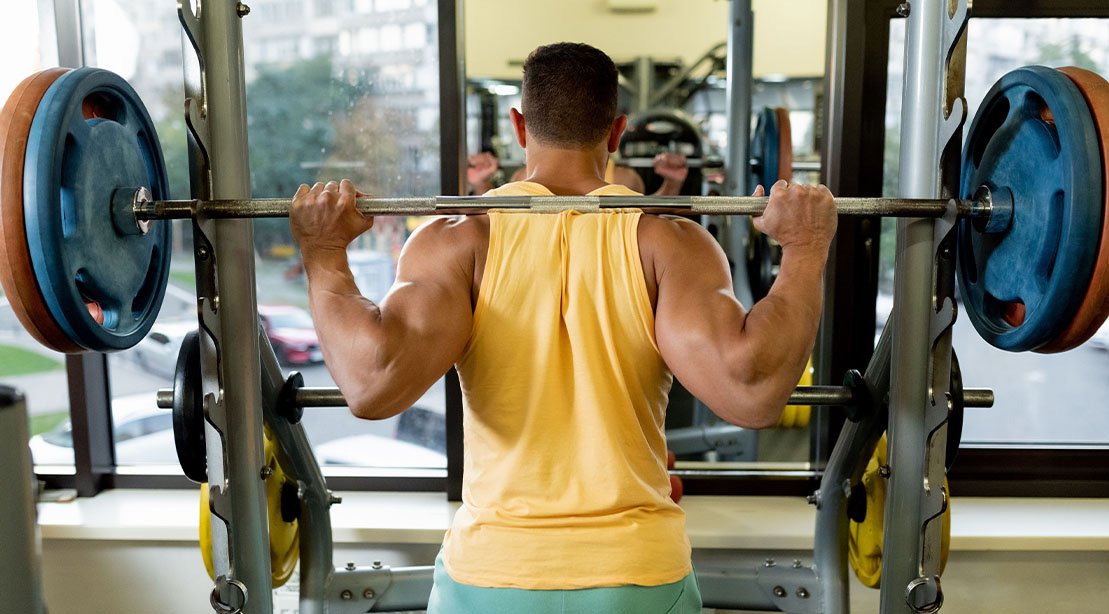
Your shoulder mobility often determines the quality of your barbell back squat. If getting under the bar feels tight, awkward, or painful, that’s not just “bad shoulder mobility,” it’s your body telling you something is wrong.
While setting up your barbell back squat, you need to:
- Create tension through your upper back
- Lock the bar into a stable position
- Find a grip that doesn’t hurt your wrists or shoulders
Suppose the setup feels off; compensations may occur, like elbows flaring, wrist pain, chest collapsing, or the bar position not feeling right before you squat. Most lifters try to push through it—widen their grip, or suck it up. But the real problem is a lack of mobility where it counts: the shoulders, upper back, and surrounding tissues.
The 5 best shoulder mobility exercises are not just about increasing flexibility but also about developing the mobility and positioning necessary to control the barbell before you squat.
How to Test Your Back Squat Setup (Quick Self-Assessment)
A simple barbell test to identify shoulder tightness, elbow flare, and upper-back weakness. Nothing fancy here, as all you need is a barbell. Step under an empty bar and set up like you’re about to back squat.
Now check:
- Hands just outside shoulder width (or your normal grip)
- Wrists relatively neutral, not cranked back
- Elbows slightly down and in, not flared high
- Chest tall without overextending the upper back
- Bar sitting firmly across your upper back
- Hold this position for 10–15 seconds.
Now that you’re there, watch for and feel for anterior shoulder discomfort, elbow discomfort, or elbows drifting up and out, wrist pain, or the chest collapsing. If you can’t hold this position without pain, your setup is off—and loading it will only make it worse.
What Proper Back Squat Positioning Should Feel Like
A good squat starts with a great setup. And a great setup is built more than just where you place your hands. To own the bar position, you need:
- Shoulder external rotation: Having adequate external rotation allows your hands to get into position without forcing your wrists or elbows to compensate.
- Thoracic extension: Your upper back needs to stay tall to support the bar.
- Lat and pec length: Tight lats and pecs pull your shoulders forward, limiting your ability to create a stable “shelf.”
- Scapular retraction and depression: These movements lock the bar into your upper back, preventing it from moving.
- Wrist positioning and tolerance: Your hands guide the bar, nothing more, nothing less.
Miss one of these, and your squat is on unstable ground before you begin. Next, we’ll tell you what to do about it.
The 5 Best Shoulder Mobility Exercises for Squats
The exercises below serve two purposes. First, if you’re having trouble getting a barbell on your back, these will help. Second, these exercises serve as a preventive maintenance to keep or even enhance your shoulder mobility.
Band Face Pull With External Rotation
A banded face-pull variation in which you pull toward your face and finish by externally rotating your shoulders, bringing your hands up and back.
Why Lifters Need It for the Back Squat
A solid back squat begins with a tight upper back and externally rotated shoulders. When you lack sufficient external rotation, you can’t create a stable shelf, your elbows flare out, and the barbell’s position isn’t solid. This exercise develops the combination of scapular retraction and external rotation needed for improved upper-body positioning.
How to Do It
- Anchor a looped resistance band at face height or just below.
- Grab with both hands, shoulder-width apart, palms facing down.
- Pull the band toward your face, leading with your elbows.
- As the band reaches your face, rotate your hands up and back.
- Finish in the goal post position and lower with control.
Programming Suggestions: Do 2 sets of 10-12 reps before squatting and include in your general warm-up for 1-3 sets of 10-12 reps.
External Rotation With Elbow on Knee
A controlled external rotation drill is performed with the elbow supported on the knee to isolate the rotator cuff.
Why Lifters Need It for the Back Squat
This exercise targets the range where lifters may struggle with their grip on the bar. Forcing shoulder external rotation when you lack it causes elbows to be out of position and wrists to rebel. This drill develops control within the critical range of motion your setup relies on.
How to Do It
- Sit tall on the weight bench with your elbow resting on your knee.
- Hold a light dumbbell in one hand with the elbow bent at 90 degrees.
- Rotate the forearm upward while keeping the elbow fixed.
- Move and lower with control for desired reps.
Programming Suggestions: Before squatting, perform 2 sets of 8–10 reps per side.
TRX Face Pull to Y (Eccentric Overload)
A TRX exercise combining a face pull with a Y raise, emphasizing a slow eccentric phase on the Y raise.
Why Lifters Need It for the Back Squat
Face Pull to Y builds strength and control through an extended range of motion. First, strengthen external rotation using only your body weight; then, the eccentric Y improves upper back strength and posture.
How to Do It
- Position your feet at your desired intensity and grip the handles with an overhand grip.
- Pull into a face pull position with your elbows at shoulder height and pause.
- Transition into an overhead Y raise.
- Slowly lower back down, and reset and repeat.
Programming Suggestions: Before squatting, perform 2–3 sets of 6–8 reps, emphasizing a slow lowering.
TRX Deep Squat Breathing with Lat Stretch
A deep squat hold using TRX support, combined with overhead reach and deep belly breathing.
Why Lifters Need It for the Back Squat
Tight lats limit your ability to get under the bar and maintain thoracic extension that’s needed to create a stable shelf. With the deep squat with belly breathing, you develop shoulder mobility, lat length, and proper squat positioning all at once.
How to Do It
- Hold TRX straps at shoulder height and sink into a deep squat.
- Your torso should be over your thighs.
- The arms should be overhead, feeling a stretch in your lats.
- Take a deep breath, feeling your belly pushing into your thighs.
- Breath out and repeat.
Programming Suggestions: Perform 1-2 sets of 6 breaths before hitting the barbell.
Pec Stretch with Lift-Off
A wall-based pec stretch where both arms are supported against the wall, followed by a controlled lift-off. This exercise adds active control to a traditional chest stretch.
Why Lifters Need It for the Back Squat
Tight pecs pull your shoulders forward into internal rotation, making it harder to position your hands properly, keep the elbows down, and form the tight upper back shelf needed for the barbell. The pec stretch with lift-off does two things: opens the front of the shoulder and trains control within the new range. Tight pecs also contribute to poor shoulder mechanics and scapula positioning, which can limit proper setup and stability.
How to Do It
- Stand facing a wall with one arm in the goal post position, and the other bent with the hand resting on the wall.
- Gently push your torso away from the wall until you feel a stretch in your chest for a few reps.
- At the end range, rotate your forearm off the wall.
- Hold for 2–3 seconds, then return to the wall.
- Repeat for controlled reps, then switch sides.
Programming Suggestions: 1–2 sets of 5 lift-offs per side, pairing with face pulls for better carryover.
Common Back Squat Mistakes (And How to Fix Them)
Most back squat issues don’t begin during the descent; they happen before you even unrack the bar. Here’s what can go wrong, and how to fix it.
Gripping Too Narrow Without Earning the Position
A narrow grip will create upper-back tightness, but only if your shoulders can handle it. Forcing it leads to elbow flare, wrist pain, and a compromised setup.
Fix: Widen your grip until you’re able to keep wrists neutral and elbows down. Then, gradually narrow your grip as you improve shoulder external rotation and thoracic extension.
Letting the Wrists Carry the Load
If your wrists are cranked back and taking the pressure, your upper back cannot do its job.
Fix: Think “hands hook, back supports,” by pulling your elbows down and in and driving your upper back into the bar.
Flaring the Elbows
Excessively flaring the elbows pulls the upper back out of position, making it harder to create a stable shelf.
Fix: Bring your elbows down and slightly toward your ribs, not straight back or cranked high. Think about pointing your elbows toward the floor behind you.
Lack Of Upper-Back Tension
If you’re not actively pulling the bar into your back, you’re missing the foundation of a strong squat.
Fix: Squeeze your shoulder blades together and down, then pull the bar into your traps like you’re trying to bend it over your back.
The Wrapup
If your shoulders protest during the barbell back squat, the problem isn’t the lift itself; it’s the setup. The focus then shifts to improving mobility and control so you can get under the bar without compensating. Because a squat doesn’t start when you bend at the hips and knees, it begins the moment you take the bar out of the rack. Own your upper body positioning, and everything that follows will get stronger.
