

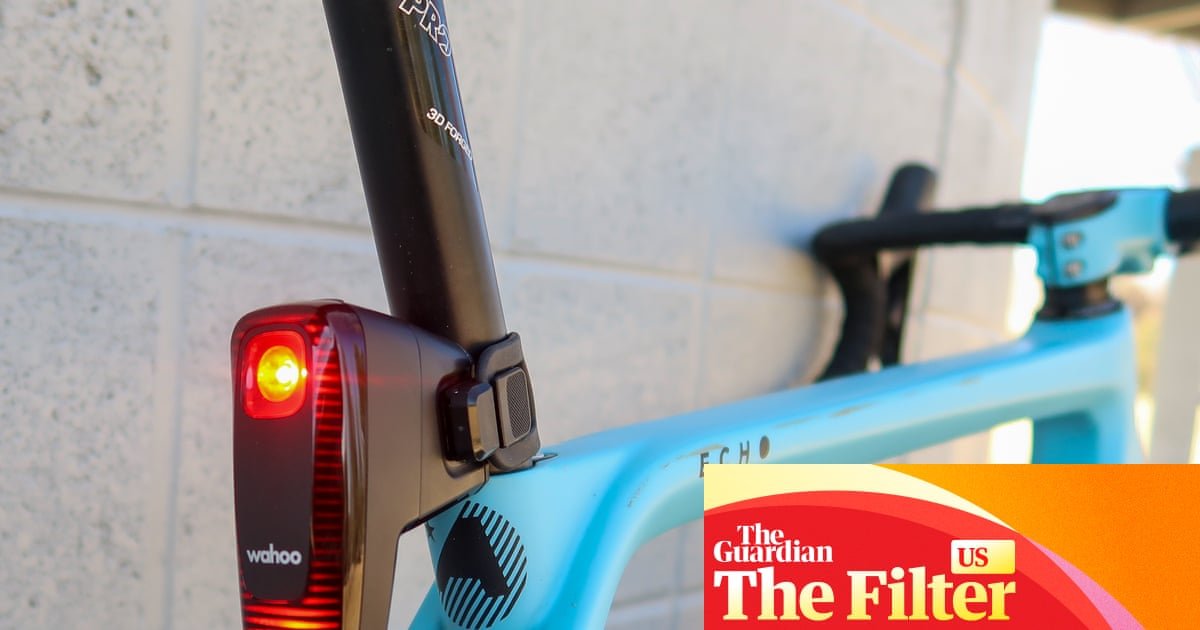
A bike helmet may protect you in a crash, but lights can help prevent one from happening in the first place. Evidence suggests bike lights can improve rider visibility in traffic, particularly in bright or shifting light, where cyclists can otherwise blend into the background.
The Guardian’s journalism is independent. We will earn a commission if you buy something through an affiliate link. Learn more.
That’s why bike lights broadly fall into two categories: high-output headlamps to illuminate the road at night, and daytime running lights to make you more visible to motorists at all hours. Whether you ride to work daily or every now and then for exercise, owning a high-quality light is one of the cheapest investments you can make in two-wheeled safety. Modern LED lights provide impressive brightness and all-day battery life for very little cost or weight penalty, plus convenient charging with the same USB cable your phone uses.
We’ve tested options for city streets, suburban roads, and even several higher-tech options for open roads, such as radar-equipped rear lights, for enthusiasts who find themselves mingling with cars at high speed.
At a glance
$84.99 at Thunder Mountain Bikes $16.99 at Amazon$143.99 at Amazon$41.29 at Amazon$44.99 at Amazon$34.99 at Back Country$299.99 at Walmart
Why you should trust me
I’ve been riding bikes for 30 years, and testing bikes and cycling gear professionally for more than a decade, with a focus on long-term durability and real-world performance. My reviews have appeared in Outside, Bicycling, and more than a dozen other cycling publications.
I ride year-round, often hitting the road before sunrise or finishing after sunset, so bike lights are not optional equipment for me; they’re part of my daily setup. Over the years, I’ve used everything from basic commuter blinkers to blinding spotlights designed for tearing down mountain trails in complete darkness, giving me a broad perspective on what matters in daily use.
How I tested
Photograph: Josh Patterson/The Guardian
I tested these bike lights in the conditions most riders actually encounter: early-morning commutes, evening road rides, mixed urban traffic, stretches of unlit roads and bike paths.
For front lights, I evaluated beam shape as carefully as brightness. A well-designed headlight beam should light the road evenly, without a harsh hotspot that washes out detail directly ahead of the rider. Light should spill light to the sides for good peripheral vision, so you can track movement at the edge of the road and see into corners. I rode on poorly lit streets and open roads to gauge how clearly each light revealed pavement seams, potholes, debris and other surface changes. I also compared high-output settings to determine whether the stated runtimes matched real-world situations: will the highest setting get you to work and back? All the maximum runtimes listed are as measured.
For rear lights, visibility from multiple angles was a key test criteria. I assessed how noticeable each light appeared from directly behind, as well as from offset positions in traffic.
For all the lights tested, I paid close attention to ease of mounting and removal, repeatedly taking them on and off to see how the mounts held up over time. I evaluated how intuitive the buttons and interface felt with gloves on, and whether battery indicators were clear at a glance. I also rode with them in the rain and through winter conditions to get a sense of their real-world weather resistance. The goal was not to find the brightest lights available, but the most reliable and effective options for everyday riding across a range of budgets and uses.
Best daytime front and rear combo
Trek Ion 100 R and Flare R City Light Set
Trek
Ion 100 R and Flare R City Light Set
from $84.99
Trek Ion 100 R and Flare R City Light Set$84.99 at Thunder Mountain Bikes $84.99 at Mad Dog Cycles
This compact combo from Trek provides a dependable daytime running setup for commuters and recreational riders who want a simple system that works without fuss. Note that it’s only designed to make you visible in traffic, not lighting dark roadways.
Why we love them
Trek strikes a practical balance between brightness, beam shape, and ease of use. The Ion 100 R delivers a focused beam with an effective daytime flash mode without feeling overly harsh.
Rather than topping spec charts in distance or illumination, the Flare R City rear light has a wide-angle lens that considerably improves side visibility in traffic. In testing, it remained clearly visible from offset angles, which matters at intersections and when vehicles approach from adjacent lanes.
Both lights use simple rubber strap mounts that fit most handlebars and seatposts, and hold their position securely over rough pavement. Unlike many competitors, they provide built-in battery gauges for a quick visual check before a ride without cycling through modes or connecting to an app.
It’s a shame that …
The Ion 100 R does not provide enough output for sustained night riding on dark roads – you’ll need a more powerful headlight for that.
Key specs
Front max output: 100 lumens
Rear max output: 35 lumens
Max runtime:
Front: 24 hours (5LM low steady) / 11 hours (100LM day flash)
Rear: 24 hours (2LM night flash) / 10 hours (35LM day flash)
Charging: USB-C
Water resistance: IP46 rating (protected against dust ingress and strong water spray)
Weight (combined): 80g
Mount: Flexible rubber strap system
Trek
Ion 100 R and Flare R City Light Set
from $84.99
Best budget combo
Ascher Ultra Bright USB Rechargeable Bike Light Combo
Ascher
Ultra Bright USB Rechargeable Bike Light Combo
$16.99
Ascher Ultra Bright USB Rechargeable Bike Light Combo$16.99 at Amazon
If you’re considering forgoing lights entirely due to cost, skip a pizza night and buy these. They don’t compete with premium lights in light output or weather resistance, but for short commutes, campus riding, and occasional evening use, Ascher’s lights provide functional lighting at an accessible price.
Why we love them
The appeal here is bang for the buck. The front light provides adequate brightness for well-lit streets and neighborhood riding, but not enough output for unlit roadways, and the rear light offers multiple flash modes that are easy to spot in traffic.
Both units are compact and lightweight, making them easy to remove for charging or to prevent theft. The silicone strap mounts install in seconds and fit a wide range of handlebars and seatposts without tools. USB recharging, seldom found at this price point, makes regular use more practical and eliminates the waste of disposable batteries.
For riders outfitting a second bike, students commuting short distances, or anyone who simply needs an affordable way to be seen by cars, this set covers the essentials.
It’s a shame that …
Though it’s plenty bright, the front light lacks the refined beam shape of premium models, and the mounts can shift slightly on rough pavement. An IPX4 weather resistance rating means it’s suited for splashes, but not sustained downpours.
Key specs
Front max output: 200 lumens
Rear max output: 100 lumens
Max runtime: Up to 6 hours (steady mode)
Charging: Micro-USB
Water resistance: IPX4 rating (water resistant to splashes, not submersion)
Weight (combined): 195 g
Mount: Silicone strap system
Ascher
Ultra Bright USB Rechargeable Bike Light Combo
$16.99
Best headlight
NiteRider Lumina Pro 1550
NiteRider
Lumina Pro 1550
from $143.99
NiteRider Lumina Pro 1550$143.99 at Amazon$159.99 at Back Country
For riders who regularly ride unlit streets after dark, the NiteRider Lumina Pro 1550 delivers a strong, well-shaped beam and dependable runtime in a self-contained unit that is easy to mount and remove.
Why we love it
With brightness approaching that of a car’s headlamps, this light delivers far more than typical commuter headlights, but raw output is only one of the reasons we loved this light. The Lumina Pro 1550 combines its high output with a beam pattern that balances throw and peripheral illumination. On unlit roads, it projected forward enough to spot pavement seams and debris even at high speeds, while still casting useful light to the sides.
In testing, output remained consistent through most of the charge, and reduced brightness modes allow riders to extend runtime when full power is unnecessary. Daytime flash modes also make this a viable option for riders who want one light to cover both conspicuity during the day and true illumination at night. The handlebar mount felt secure over rough pavement and didn’t rotate downward under repeated impacts.
It’s a shame that …
At higher output settings, battery life drops quickly, lasting just 45 minutes on its highest setting, (as it does with most high-lumen lights). Riders planning very long night rides may need to manage output carefully or stop to recharge.
Key specs
Max output: 1,550 lumens
Max runtime: Up to 18 hours (low mode)
Charging: USB-C
Water resistance: IP66 rating (protected against dust and water spray from any direction)
Weight: 193g
Mount: Quick-release handlebar mount
NiteRider
Lumina Pro 1550
from $143.99
Best budget headlight
Cygolite Metro Plus 800
Cygolite
Metro Plus 800
from $41.29
Photograph: Josh Patterson/The Guardian$41.29 at Amazon$60.45 at Walmart
The Cygolite Metro Plus 800 is the perfect choice for riders who want enough light output for regular night riding without climbing into double-digit price territory.
Why we love it
At 800 lumens, this light is comfortably bright enough for unlit bike paths and neighborhood roads while remaining compact enough to stow in a backpack when not in use. Multiple steady and flash settings allow riders to conserve battery on well-lit streets or during the day. This versatility separates it from many entry-level peers.
The included mount installs quickly and removes just as easily for charging, making it well-suited to riders who bring their light inside at work or school.
It’s a shame that …
It charges using the older micro-USB standard rather than USB-C, and the runtime drops significantly at maximum output. Riders who frequently ride at higher speeds on completely dark roads may want more power and longer run times.
Key specs
Max output: 800 lumens
Max runtime: Up to 100 hours (flash mode)
Charging: Micro-USB
Water resistance: IP64 rating (protected against dust and water spray from any direction)
Weight: 140g
Mount: Tool-free handlebar mount
Cygolite
Metro Plus 800
from $41.29
Best tail light
Magicshine Seemee 300 Smart Taillight
Magicshine
Seemee 300 Smart Taillight
from $44.99
Magicshine Seemee 300 Smart Taillight$44.99 at Amazon$54.99 at Magicshine
Until recently, the advanced features found in the Magicshine Seemee 300 Smart Taillight were largely reserved for significantly more expensive rear lights. It combines high output, brake-sensing functionality and wide-angle visibility in a compact unit that feels purpose-built for traffic-heavy riding.
Why we love it
When you brake, the light automatically senses you slowing down and increases in brightness, mimicking a car’s brake light to tell drivers behind you that you’re decelerating. Few lights at this price point can pull this trick, elevating the Seemee 300 beyond basic blinkers.
The beam pattern is equally impressive. Rather than projecting a narrow rear-facing spotlight, the Seemee 300 spreads illumination outward, improving side visibility at intersections when making turns. This broad field of illumination makes you more noticeable in traffic than similar lights with comparable lumen ratings.
A wide range of flash and steady modes include lower-output options that significantly extend battery life for daily commuting.
It’s a shame that …
Rough pavement can occasionally trigger the brake sensor, spiking brightness as you hit bumps. All the modes and smart features create a short learning curve, compared with simpler one-button lights. Riders who prioritize simplicity over added functionality may prefer a more basic taillight.
Key specs
Max output: 300 lumens
Max runtime: Up to 200 hours (eco flash mode)
Charging: USB-C
Water resistance: IPX6 rating (protected against powerful water spray)
Weight: 80g
Mount: Seatpost strap mount
Magicshine
Seemee 300 Smart Taillight
from $44.99
Best budget tail light
NiteRider Vmax+ 180 Taillight
NiteRider
Vmax+ 180 Taillight
from $34.99
Photograph: The Guardian$34.99 at Back Country$38.98 at Amazon
For riders who want durability and dependable output without paying for brake sensing or radar integration, the NiteRider Vmax+ 180 Taillight is a practical and confidence-inspiring choice from a known brand.
Why we love it
NiteRider has been producing bike lights for decades, and the Vmax+ 180 reflects that experience. The 180-lumen output is more than sufficient for daytime conspicuity and nighttime riding in traffic, and the flash patterns are clean and easy to distinguish from a distance.
Runtime is another strength: it can run for up to 24 hours in a steady-on mode, and several flash modes extend that to multiple days. That means daily commuters can charge once or twice a week, rather than after every ride.
At just 59 grams, the light feels lightweight but not fragile. The strap mount fits a wide range of seatpost diameters and held position securely during testing. USB-C charging and a two-hour recharge time add modern convenience at this price point.
It’s a shame that …
It lacks the brake-sensing functionality and wide-angle beam found on some newer smart taillights.
Key specs:
Max output: 180 lumens
Max runtime: Up to 24 hours (low steady)
Charging: USB-C
Water resistance: IP66 rating (protected against dust and water spray from any direction)
Weight: 59g
Mount: Seatpost strap mount
NiteRider
Vmax+ 180 Taillight
from $34.99
Best radar light
Garmin Varia Rearview Radar 820
Garmin
Varia Rearview Radar 820
from $299.99
Photograph: The Guardian$299.99 at Walmart$299.99 at Scheels
Rearview radar taillights use radar to detect incoming vehicles and warn you before they rip past. While this tech has been around for roughly a decade, it remains largely a higher-end accessory aimed at serious road riders. While expensive, the Garmin Varia represents a significant step forward for this segment.
Why we love it
The Garmin Varia RTL820 detects vehicles approaching up to 190 yards away, and signals both an audio and visual alert. When paired with compatible Garmin bike computers, smartwatches, or the Varia phone app, it can even distinguish between vehicle size and relative approach speed.
Same-speed tracking, when the radar continues monitoring vehicles that settle in behind you, is particularly useful on long, open stretches of road. Instead of repeatedly glancing over your shoulder, you can wait for a passing alert before moving right to prepare for the overtake in a controlled way.
As you’d expect at this price, it also senses braking and includes a variety of different flash modes, including an ultra-low setting to avoid blinding riders behind you in a peloton. In day flash mode, the RTL820 runs for up to 24 hours, and in radar-only mode, it can last up to 30 hours – a substantial upgrade from its predecessors.
It’s a shame that …
High cost remains a significant barrier, especially when paired with an expensive cycling computer. In dense urban environments with constant traffic, alerts can also become frequent enough to feel less useful than on open roads.
Key specs
Max output: 100 lumens (day flash mode)
Max runtime: Up to 24 hours (day flash) / 30 hours (radar-only mode)
Charging: USB-C
Water resistance: IPX7 rating (protected against temporary immersion in water)
Weight: 90g
Mount: Seatpost mount
Garmin
Varia Rearview Radar 820
from $299.99
Best of the rest
Magicshine Seemee 150 Front Rear Smart Bike Light Set
Magicshine
Seemee 150 Front Rear Smart Bike Light Set
from $49.39
Photograph: Josh Patterson/The Guardian$49.39 at Amazon$69.99 at Magicshine
With 150 lumens front and rear, this compact combo delivers more raw brightness than many entry-level daytime sets. The rear light projects a broad beam to improve awareness in traffic, and both units offer multiple flash and steady modes for daytime conspicuity. USB-C charging uses the cables you already own, and the overall system is lightweight and easy to mount.
It didn’t make the final cut because … it lacks the clear battery gauges and integrated side lighting of our top pick, and its beam shaping is not as purpose-built for daytime urban visibility.
Key specs
Front max output: 150 lumens
Rear max output: 150 lumens
Max runtime: Up to 30 hours (low mode)
Charging: USB-C
Water resistance: IPX6 rating (protected against powerful water spray)
Weight (combined): 112g
Mount: Strap mounts
Magicshine
Seemee 150 Front Rear Smart Bike Light Set
from $49.39
Knog Blinder 900
Photograph: Josh Patterson/The Guardian$89.99 at Amazon
At 900 lumens, the Knog Blinder 900 provides enough illumination and forward reach to function as a primary headlight for most commuters and recreational riders, while remaining small enough for daily commuting setups. The build quality feels premium for this price, and Knog’s flexible mounting system fits a wide range of handlebar diameters.
It didn’t make the final cut because … it does not match the overall brightness and extended runtime flexibility of our top headlight pick for sustained night riding.
Key specs
Max output: 900 lumens
Max runtime: Up to 120 hours (eco flash mode)
Charging: USB-C
Water resistance: IP67 rating (dust-tight and protected against temporary immersion in water)
Weight: 167g
Mount: Silicone strap mount
Cygolite Hypershot 350
Cyoglite
Hypershot 350
from $41.60
Photograph: Josh Patterson/The Guardian$41.60 at Amazon$59.95 at REI
This is one of the brightest standalone rear lights in this guide, making it especially noticeable in daylight traffic. Riders who prioritize sheer brightness will appreciate how attention-grabbing its flash patterns are, particularly on busy roads. Multiple steady and flash modes include lower-output settings that extend runtime for daily use, the mount is straightforward and secure, and the unit feels durable enough for regular commuting.
It didn’t make the final cut because … it lacks the brake-sensing functionality and the wider beam shaping of our top tail light pick, and it uses micro-USB rather than USB-C charging.
Key specs
Max output: 350 lumens
Max runtime: Up to 200 hours (flash mode)
Charging: Micro-USB
Water resistance: IP64 rating (protected against dust and water spray from any direction)
Weight: 70g
Mount: Seatpost strap mount
Cyoglite
Hypershot 350
from $41.60
Wahoo TRACKR Radar
Wahoo
TRACKR Radar
from $219.99
Photograph: Josh Patterson/The Guardian$219.99 at Dialed Cycling Lab $244.95 at Amazon
Prior to the release of Garmin’s latest Varia model, this was my preferred radar taillight, and it’s still a fine option for safer cycling on open roads. It combines vehicle detection with a bright rear light in a compact, USB-C rechargeable unit. Detection range is competitive, alerts integrate cleanly with cycling computers, and it also connects via Bluetooth to compatible devices such as smartphones.
It didn’t make the final cut because… Garmin’s newest Varia offers more refined vehicle tracking, longer maximum battery life and broader ecosystem compatibility.
Key specs
Max output: 53 lumens
Max runtime: Up to 20 hours (flash mode)
Charging: USB-C
Water resistance: IPX7 rating (protected against temporary immersion in water)
Weight: 99g
Mount: Quarter-turn seatpost mount
Wahoo
TRACKR Radar
from $219.99
What you need to know about the best bike lights
Photograph: Anastasiia Stiahailo/500px/Getty Images/500px Plus
Do I need to use bike lights during the day?
Yes. Daytime running lights significantly improve visibility in traffic, especially in bright sun, shade transitions and at intersections. Many modern front and rear lights include high-contrast flash patterns designed specifically to increase detection distance in the daytime.
Are bike lights required by law?
Specific requirements vary by state, but most require a white front light and red rear reflector or light are required when riding after dark. Check with your local regulations to be sure, but even where not required, lights are strongly recommended both day and night.
For riding on city streets and suburban roads at night, 400 to 800 lumens is usually sufficient. Higher outputs, such as 1,200 lumens or more, are better suited to fast riding on unlit rural roads.
For daytime running lights, raw lumen numbers matter less than beam shape and flash pattern. A well-designed 100-lumen light with an effective daytime flash can be more noticeable than a brighter light with a narrow beam.
Photograph: ollo/Getty Images
Do I need both a front and rear light?
Yes. Most riders benefit from running both lights at all times, not just after dark. Front lights help you see and be seen by oncoming traffic, especially at intersections. Rear lights are critical for visibility from behind, where the majority of serious collisions occur. Even during the day, a flashing rear light significantly improves visibility in traffic.
What water-resistance rating should I look for?
Fair-weather riders can get away with a IPX4 rating, which can handle light rain and road spray. Year-round commuters should look for IPX6 or IPX7 ratings, which provide stronger protection against more severe downpours.
Steady vs flash mode: which light mode is better?
During the day, flash modes are generally more noticeable. Pulsing or irregular flash patterns help draw attention in bright conditions and increase detection distance. At night, steady front lights provide more consistent illumination of the road surface.
Rear lights can be used in either steady or flash mode, though many riders prefer flash during the day and steady at night. If you ride in a group, look for a lower-intensity steady or “peloton” mode to avoid blinding riders behind you.
How long should bike light batteries last?
For daily commuting, a front light should ideally last at least two to three hours on a medium setting, and a rear light should provide double-digit hours in flash mode. Longer runtimes reduce the need for constant recharging.
Are radar bike lights worth it?
It largely depends on where you ride. Rearview radar lights detect vehicles approaching from behind and provide an alert before they pass. For high-mileage road cyclists, this added awareness can reduce surprise overtakes and lower the need for frequent shoulder checks. They are less useful for short urban commutes with constant traffic.
I ride several thousand miles on the road each year, and have come to rely on radar. It consistently alerts me to approaching vehicles before I hear them, reducing the low-level tension that can build on quieter roads and allowing me to focus on holding a steady line.
