

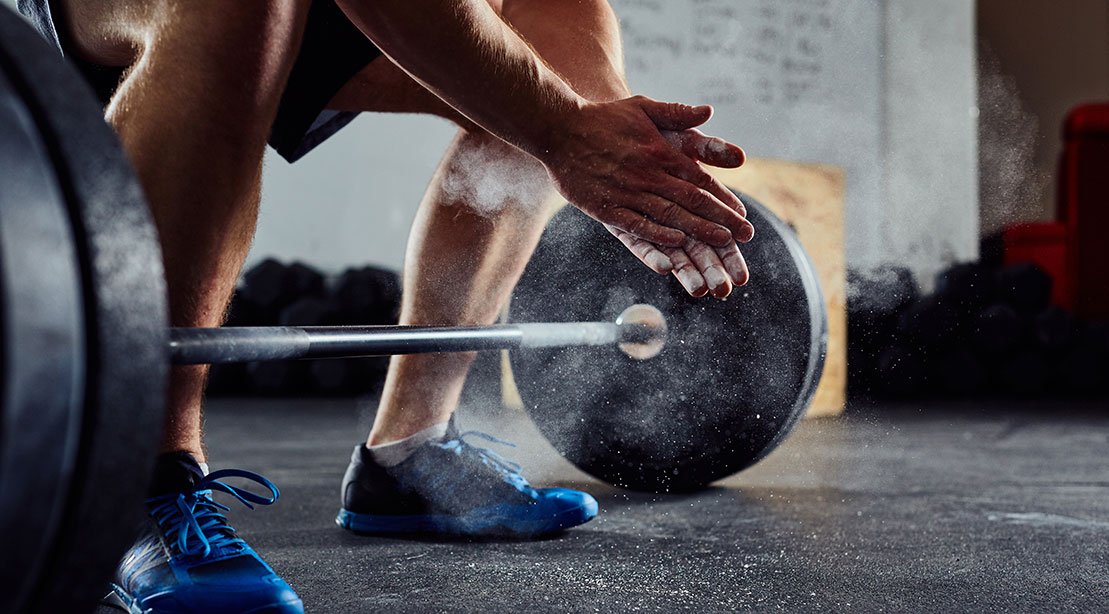
There’s no lift more satisfying than gripping and ripping a deadlift. It’s you versus the barbell, and you either move it or you don’t. It’s arguably the king of the gym because every muscle from head to toe works in unison to overcome gravity.
It never tickles. It’s raw. It’s heavy, and it’s primal.
Lifters at the top of their deadlift game are massive human beings. So, somewhere along the way, our eyes tell us that if you want to be big, you have to deadlift. But here’s an uncomfortable question to consider: Are we confusing brutal effort with optimal hypertrophy?
There’s no doubt that deadlifts enhance strength. They light up your hamstrings, glutes, and lower and upper back, test your grip, and humble your ego fast. But when the goal shifts from strength to muscle, the conversation gets more nuanced.
Here, we’ll sort through the science and a few myths to answer the question: Are deadlifts overrated for building muscle?
How Deadlifts Became the ‘King’ of Lifts
Powerlifting culture helped elevate the deadlift to legendary status. Alongside the squat and bench press, it became one of the “Big Three.” For decades, the mantra was simple: Big lifts build big bodies.
You look at elite powerlifters with massive backs, thick glutes, and meaty hamstrings, ripping huge weights from the floor, and assume they are big because they deadlift. “Of course,” explains Jay Ashman of Ashman Strength System. “Deadlifts build some muscle, as all lifting does.”
But here’s where things get fuzzy. Powerlifters train for maximal strength. Bodybuilders train for maximal hypertrophy. Those aren’t the same physiological targets, even if there’s some overlap.
Deadlifts are brutally hard, but difficulty doesn’t always equal muscle growth. Deadlifts create enormous systemic fatigue, tax your nervous system, grip, lower back, and conditioning. ‘From a biomechanical standpoint,’ explains Gareth Sapstead, MSc, CSCS, founder of Elite Physique Training, and author of the new book . “The deadlift is a high-force, high-fatigue, and low-ROM hinge.”
But somewhere along the way, lifters started equating greater fatigue with greater growth. Then, without question, that belief stuck, but fatigue is not the same as a hypertrophy stimulus, but that’s why we need to look deeper.
What are Deadlifts Good For?
If your hamstrings aren’t sore and you’re not exhausted, did you even deadlift? The conventional deadlift hits many muscles, but the focus is on the glutes and hamstrings, lower and upper back, forearms, and grip. When we switch from the strength to the muscle lens, things get interesting.
Deadlifts produce enormous force, but they distribute that tension across many muscles, with several working isometrically, which favors strength development.
But building muscle thrives on:
- High mechanical tension in a muscle through a large range of motion
- Sufficient volume
- Proximity to failure
- Recoverable stimulus
Deadlifts are limited by:
- Grip fatigue
- Lower back fatigue
- Cardiovascular strain
- Lack of an eccentric contraction
The lowering phase is a major driver of hypertrophy, but with conventional deadlifts, it’s almost nonexistent. “ We have direct evidence of hypertrophy,” explains Dr. Allan Bacon, Fitness and Nutrition Coach. “With hinge variations like straight-leg deadlifts and RDLs. For the conventional deadlift, the best evidence is supportive rather than definitive for hypertrophy.”
Deadlifts are explosive off the floor and often reset between reps, which is great for building strength but less effective for building hypertrophy-focused tension. “That doesn’t make conventional deadlifts useless, “ explains Sapstead. They’re excellent for general strength, skill, and coordination, and loading the posterior chain at high force outputs.”
Nastasic / Getty
Deadlifts vs Hypertrophy: What the Science Really Says
Science doesn’t hold all the answers in the weight room; otherwise, bro science wouldn’t exist. But what science does is point you in the right direction, and here it is:
Compound Lifts Grow Muscle
A systematic review in Sports Medicine found that multi-joint exercises such as deadlifts, squats, presses, and rows are effective for hypertrophy because they recruit many muscles and allow high loading. When volume and effort are equal, they offer no advantage over single-joint movements.
Stimulus vs. Fatigue
Deadlifts place heavy stress on multiple systems, such as neuromuscular, grip, and lower back, but your ability to recover from multiple heavy deadlift sets is limited. A study on concurrent training suggests that exercise order and the type of fatigue produced influence adaptation. Heavy lifts can reduce the quality of subsequent work, limiting volume and hypertrophy potential in later sets or sessions.
Eccentric Loading Drives Growth
A key driver of hypertrophy is eccentric tension, as well as total time under tension. The deadlift’s concentric emphasis, a rapid lift followed by a controlled but often limited lowering, doesn’t produce as much eccentric stress. A 2014 review noted that eccentric training elicits greater hypertrophic responses when programmed well.
Volume and Effort Predict Hypertrophy: A series of meta-analyses indicates that total weekly volume and proximity to failure are strong predictors of hypertrophy, regardless of load or exercise selection.” Taking deadlifts to failure is a bad idea, “ says Ashman. “You would be smarter to use DL for building strength and other hinge exercises like RDLs to build muscle.”
The Other Side Of The Coin: “Current research shows,” explains Dr. Mike T. Nelson, CSCS, CISSN. “That volume (weight × sets × reps) is the main factor driving muscle growth, and deadlifts let you accumulate much more volume simply because the weight is considerably heavier.” Nelson goes on to explain that 15 studies found a graded dose-response relationship, in which each additional weekly set led to a measurable increase in muscle hypertrophy—making total volume the most important training variable for muscle growth.
Deadlifts contribute to muscle growth, but here’s the trade-off: their massive systemic demand often limits how much hypertrophy-specific work you can do afterward. Next is how deadlifts shine.
Where Deadlifts Actually Shine
Deadlifts aren’t useless for muscle, but like any tool in the gym, they’re better suited for certain jobs than others. So far, you have read how deadlifts fall short, but understanding where they shine can help you program them with a clearer intent.
Posterior Chain Strength and Thickness
Few exercises strengthen the back half of the body like heavy deadlifts. Your glutes, hamstrings, and spinal erectors work together to extend the hips and stabilize the spine. Over time, this can contribute to a thicker backside and stronger hinge pattern.
Full-Body Tension and Athletic Carryover
Deadlifts teach your body to generate force from the ground up. Your core braces, your lats engage, your traps fire, and your grip takes a beating. It’s coordinated full-body tension translates well to athletic performance and other major lifts.
Efficient Strength Builder
If time is limited and you want one lift that targets multiple muscles at once, deadlifts deliver. They’re highly effective for building total-body strength, which is why they remain a staple in powerlifting and strength training programs.
Hero Images / Getty
Best Deadlift Alternatives for Muscle Growth (Hypertrophy Focus)
When the goal is size, it’s beneficial to rotate exercises that provide tension with less overall fatigue. “EMG and hypertrophy data show,” says Sapstead. “That RDLs, hip thrusts, leg curls, split squats, and hack squats outperform floor deadlifts for building posterior size.”
Here are a few hypertrophy-friendly alternatives that promote posterior-chain growth without the heavy recovery demands of heavy deadlifts.
Romanian Deadlift Variations
Starting from the top and emphasizing the hip hinge and slow eccentric, RDLs maintain continuous tension on the hamstrings and glutes throughout the movement. Because the load is lighter and the range of motion is longer, lifters can perform more high-quality reps.
Hip Thrusts
If glute development is your goal, hip thrusts should be a priority. Research shows that hip thrusts strongly activate the glutes, especially at full hip extension—where they perform their best work.
Leg Press and Hack Squats
While deadlifts train the lower body, they are not optimal for quad hypertrophy. Exercises like the leg press or hack squat let lifters focus on the quads while supporting the torso.
But what if you unquestioningly believe deadlifts are the holy grail of lower-body muscle? Next up serves as a warning of what might happen.
What Happens When You’re Primary Exercise Focus is On Deadlifts?
During my deadlifting heyday, I neglected squats and single-leg work because I thought all that was needed was to pull heavy. As a result, my legs stayed skinny. Besides having the blinkers on, here’s what tends to happen when you think deadlifting is all you need for lower-body size.
Chronic Fatigue Outpaces Stimulus
Heavy deadlifts are extremely taxing on the nervous system, grip, and lower back. When lifters focus too much on them, they often build up more fatigue than actual muscle stimulation. The outcome? Training sessions become intense, but the muscles you’re trying to develop don’t receive enough quality volume to grow.
Hypertrophy Volume Gets Cut Short
Muscle requires consistent, repeatable volume throughout the week, but deadlifts can quickly eat into that. After a few heavy sets, lifters often become too exhausted to push accessory exercises. Over time, the program shifts to being deadlift-focused rather than hypertrophy-oriented, restricting overall progress.
The Lower Back Becomes the Weak Link
Another common issue is that the lower back becomes the limiting factor, not the muscles you want to grow. Instead of pushing the glutes or hamstrings close to failure, many sets end early because the erectors fatigue first. When that happens, the target muscles never receive the full hypertrophy stimulus they’re capable of handling.
PR Chasing Replaces Muscle Building
The culture surrounding deadlifts often encourages performance over muscle. The focus shifts toward adding plates rather than accumulating quality hypertrophy work. While strength and size overlap, they are not the same goals. Deadlifts can be part of a solid hypertrophy plan. However, when lifters make them the main focus of muscle building, they often end up sacrificing key factors that promote size.
Final Verdict: Are Deadlifts Overrated?
Yes—and no.
Deadlifts build strength, develop the posterior chain, reinforce powerful hip extension, and train the body to produce force from the ground up. But when the goal is to maximize hypertrophy, deadlifts may not always provide the best return on investment.
Deadlifts create enormous systemic fatigue and often fail because grip or lower-back endurance gives out first. That makes it difficult to accumulate the high-quality volume needed to drive muscle growth across multiple muscle groups. Lifters aiming to increase size should incorporate deadlifts as part of a comprehensive hypertrophy plan, but not make them the main focus.
Building muscle isn’t about crowning a single “king” lift but about doing enough quality work consistently over time.
