

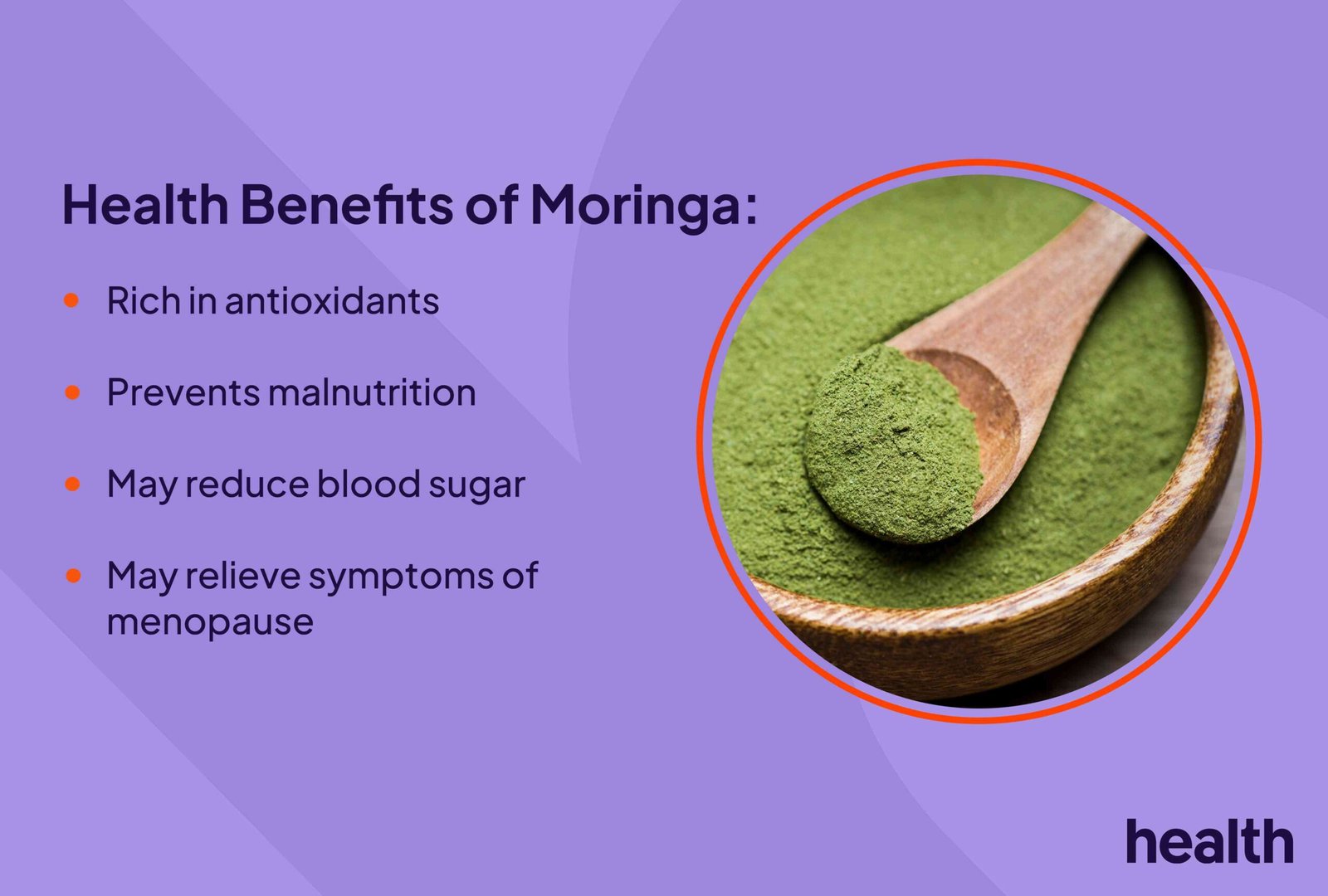
Moringa (Moringa oleifera), also known as the drumstick, horseradish, or ben oil tree, is a medicinal plant that may support digestion, blood sugar, and heart health.
Antioxidants help counteract oxidative stress, an imbalance of antioxidants and free radicals in your cells that can contribute to aging and disease.
The moringa tree is rich in phenolic compounds, which have antioxidant and anti-inflammatory properties. Phenolic compounds like flavonoids may fight inflammation and protect against disease.
Moringa is a source of fiber, which is essential for healthy digestion.
Fiber adds bulk to your diet, helping you feel full and regulating bowel movements. It also helps maintain the balance of helpful and harmful gut bacteria.
The pods of the moringa plant also contain niaziridin, a compound that can help your digestive system absorb vitamins and minerals from food.
In a small study, people with diabetes who took 20 grams of moringa leaf powder daily saw small improvements in blood sugar control.
There is not enough research to know how effective moringa is for blood sugar management.
The antioxidant and anti-inflammatory compounds in moringa may protect against brain inflammation and cell damage.
Inflammation can increase the risk of conditions like Alzheimer’s and Parkinson’s disease. The flavonoids and phenolic acids in moringa may have neuroprotective (brain-protective) effects.
Moringa may relieve menopause symptoms, such as hot flashes, night sweats, and mood changes.
When there is an imbalance of antioxidants and free radicals in your body, you may experience hot flashes. Oxidative stress can also increase night sweats. Moringa may help decrease the severity of hot flashes due to the plant’s effect on oxidative stress.
Moringa contains natural compounds like isothiocyanates and quercetin that protect the heart. Animal studies have shown that these compounds may relax blood vessels, which helps improve blood flow.
Moringa can also lower cholesterol and triglycerides in animals. Both high cholesterol and triglycerides can increase heart disease risk.
More human research is needed to confirm the effects of moringa on the heart.
Moringa oil may treat eczema and reduce inflammation, thanks to its antioxidant profile.
Moringa seeds are also used in skincare products to help with scarring, acne, and pigmentation. Its vitamins and minerals have anti-aging properties and support skin elasticity.
The moringa plant can address malnutrition, which occurs when you do not get enough nutrients or energy. Moringa leaves and seeds are rich in vitamins C and A, healthy fats, and fiber.
One small study found that moringa leaf powder increased body mass index (BMI) among people with human immunodeficiency virus (HIV) who received antiretroviral therapy.
BMI is a biased and outdated metric, but the results still suggest moringa can improve nutritional intake and status.
Moringa leaves and pods are commonly eaten in recipes in parts of India and Africa. The powdered form is more common in the United States.
Each 2-teaspoon serving (4 grams) of moringa powder has the following nutrients:
- Calories: 15
- Fat: 0 grams (g), or 0% of the Daily Value (DV)
- Sodium: 0 milligrams (mg), or 0% of the DV
- Carbohydrates: 2 g, or 0.73% of the DV
- Fiber: 1 g, or 3.57% of the DV
- Added sugars: 0 g, or 0% of the DV
- Protein: 1 g, or 2% of the DV
Supplement Considerations
You can find the moringa plant in capsule, tablet, or powdered form. You can take it as a standalone supplement or add moringa to other supplements.
Eating moringa leaves and seeds is generally safe, but some people experience side effects. Consuming moringa can cause diarrhea and increase the risk of toxicity at doses of 70 grams or higher.
Be cautious of what part of the moringa tree you consume. The root and root bark contain alkaloids that can be toxic and cause nausea, vomiting, and, in extreme cases, paralysis. Eating only the leaves, fruit, and seeds can lower this risk.
Moringa may interact with some drugs, so it is important to talk to a healthcare provider before adding it to your diet.
Taking moringa as a supplement or powder may also be unsafe during pregnancy. It may help with milk production, but research is limited.
People with hypothyroidism should also use caution with it, as it might reduce thyroid hormone levels.
The moringa plant has an earthy flavor that can be delicious in sweet or savory dishes. Here are some options for adding moringa to your diet:
- Add the powder to soups and stews.
- Blend moringa powder into oatmeal or smoothies.
- Eat moringa pods when they are immature for a tender texture.
- Make tea with moringa leaves.
- Use the powder in your favorite pasta recipe.
