

Crunches not cutting it after 60? Try these 5 moves instead.
Belly fat is usually the first place people notice a change in their body composition, and the hardest place to see it come off. It builds gradually with less daily movement, a drop in muscle over time, and calorie intake that doesn’t quite match output. Once it settles in, doing a few sets of crunches here and there rarely moves the needle.
What is proven to help is getting your body moving and burning more energy while keeping your muscles engaged. When you use bigger movements that engage your legs, core, and upper body, your heart rate goes up and stays higher for longer. That’s what drives change across your entire body, including your midsection.
There’s also a consistency piece that matters just as much. These types of bodyweight movements are easy to repeat, don’t require equipment, and can be adjusted to match how you feel on a given day. Stay with them long enough, and you’ll start to notice your midsection tightening up along with improvements in how you move and feel.
Incline Mountain Climbers
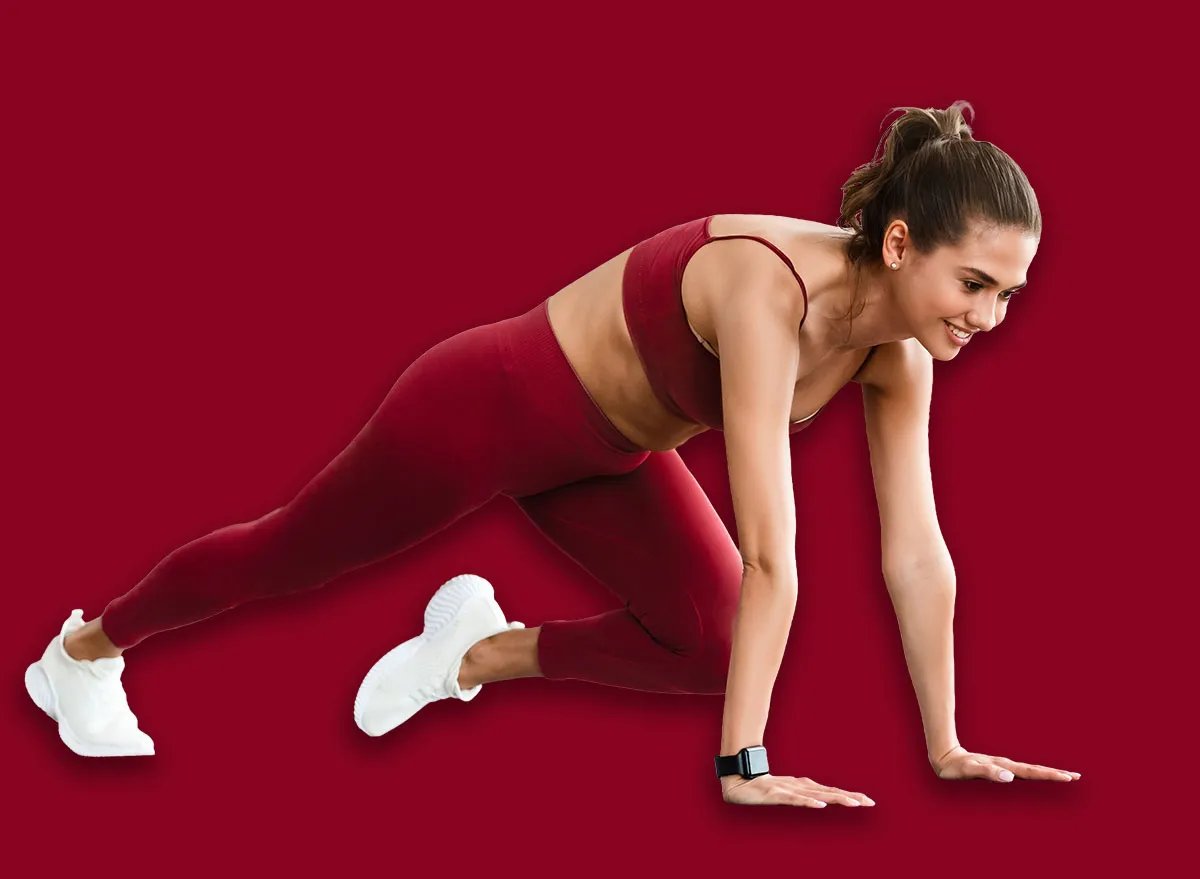
Incline mountain climbers take pressure off your wrists and lower back while still giving you the benefits of a full-body movement. Elevating your hands makes it easier to maintain a good position, helping your core stay engaged throughout. When you find a steady rhythm, your heart rate climbs quickly and stays elevated. Keep the pace controlled, and you’ll feel your core working along with your legs.
Muscles Trained: Core, shoulders, hip flexors, legs
How to Do It:
- Place your hands on a bench, step, or sturdy surface.
- Step your feet back into a plank position.
- Drive one knee toward your chest.
- Switch legs in a steady rhythm.
- Keep your core engaged and your hips stable.
Recommended Sets and Reps: Perform 3 sets of 30 to 45 seconds. Rest for 30 seconds between each set.
Best Variations: Slower pace climbers, high knee drive, pause between switches
Form Tip: Keep your hips level and avoid bouncing up and down.
Cross-Body Mountain Climbers
Adding a cross-body motion brings your obliques into play and gives your core a bit more to handle. Each rep requires you to control rotation while maintaining a steady pace. When you stay controlled, your midsection has to stay engaged to keep everything aligned. It doesn’t take long before you feel your core working harder than it would with a straight up and down motion.
Muscles Trained: Core, obliques, shoulders, hip flexors
How to Do It:
- Start in a plank position with your hands elevated or on the floor.
- Drive one knee toward the opposite elbow.
- Return to the starting position.
- Alternate sides in a steady rhythm.
- Keep your core tight throughout.
Recommended Sets and Reps: Perform 3 sets of 30 to 45 seconds. Rest for 30 seconds between each set.
Best Variations: Slower tempo, pause at the top, elevated hands
Form Tip: Control the twist instead of rushing through each rep.
Walking Intervals
Walking intervals give you a simple way to increase calorie burn without beating up your joints. Shifting between a comfortable pace and a faster walk keeps your heart rate fluctuating, which helps you stay active for longer stretches. When you pick up the pace, focus on your stride and arm swing to keep things smooth. Over time, this becomes one of the easiest ways to stay consistent.
Muscles Trained: Glutes, hamstrings, calves, core
How to Do It:
- Start with a steady, comfortable walking pace.
- Increase your speed for a set period.
- Return to a slower pace to recover.
- Repeat the cycle for your planned duration.
- Stay tall and keep your stride natural.
Recommended Sets and Reps: Perform 6 to 10 intervals of 30 seconds fast walking and 60 seconds easy walking. Rest as needed between intervals.
Best Variations: Incline walking, longer intervals, brisk continuous walking
Form Tip: Walk with purpose and keep your posture tall.
Alternating Lunges
Alternating lunges bring your lower body into the mix while still challenging your balance and coordination. Each step requires control as you lower and push back up, which keeps your muscles engaged the entire time. When you stay steady and avoid rushing, your legs and core work together to keep you balanced. That combination helps drive more overall effort compared to staying in one place.
Muscles Trained: Quadriceps, glutes, hamstrings, core
How to Do It:
- Stand tall with your feet together.
- Step forward with one leg into a lunge.
- Lower your back knee toward the ground.
- Push through your front foot to return to standing.
- Alternate legs with each rep.
Recommended Sets and Reps: Perform 3 sets of 8 to 10 reps per leg. Rest for 45 seconds between each set.
Best Variations: Reverse lunges, stationary lunges, shorter step lunges
Form Tip: Keep your torso upright and control the descent.
Jump Squats
Jump squats add a bit of power and intensity, which helps drive your heart rate up quickly. Even a small jump is enough to challenge your legs and get your body working harder. When you land softly and reset between reps, you keep the movement controlled and reduce stress on your joints. This is one to build into gradually if it’s been a while since you’ve jumped.
Muscles Trained: Quadriceps, glutes, calves
How to Do It:
- Stand with your feet shoulder-width apart.
- Lower into a squat position.
- Drive through your feet and jump upward.
- Land softly with your knees slightly bent.
- Reset and repeat.
Recommended Sets and Reps: Perform 3 sets of 6 to 10 reps. Rest for 60 seconds between each set.
Best Variations: Low-impact squat to calf raise, assisted jump squats, slower tempo squats
Form Tip: Land softly and stay balanced through your feet.
The Approach That Brings It Together
Shutterstock
This is where things start to click or fall off. The exercises themselves help, but the real change comes from how often you show up and how much effort you put into each session. These movements work because they’re simple enough to repeat and challenging enough to get your body working. Stay with them, keep your pace honest, and give your body time to respond.
- Keep your effort steady: You should feel like you’re working, but still able to keep moving without stopping.
- Stay consistent throughout the week: A few sessions spread out will take you further than a single hard workout.
- Control your pace: Rushing through reps detracts from how much your muscles are actually working.
- Stay active outside of workouts: Daily movement adds up and supports your overall progress.
- Pay attention to recovery: Getting enough rest helps you come back ready to move again.
Stick with it, keep it simple, and give it a few weeks. That’s when most people start to notice their energy improving, along with changes in how their bodies feel.
