

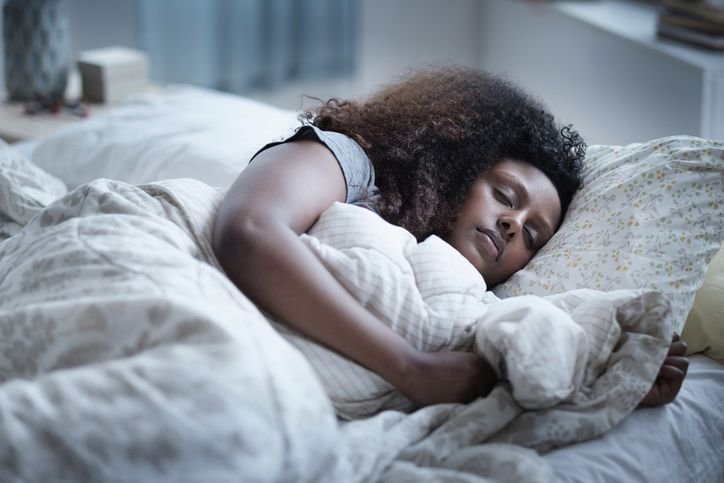
You might be sleeping too much—also known as oversleeping—due to causes like sleep disorders, mental health, and physical health conditions. Oversleeping means sleeping for nine or more hours within 24 hours.
Oversleeping could be the result of sleep disorders, such as:
- Circadian rhythm sleep-wake disorders: These disorders are related to misalignments between sleep-wake cycles and light-darkness cycles.
- Hypersomnolence disorder or hypersomnia: You are excessively sleepy but also tend to sleep for longer periods.
- Narcolepsy: You feel the need to sleep or fall asleep throughout the day.
- Obstructive sleep apnea (OSA): This condition causes interruptions in breathing while you are asleep. OSA can lead to snoring or breathing pauses.
- Restless leg syndrome (RLS): Tingling, creeping, burning, or other sensations in your legs cause a strong urge to move them.
Prolonged sleep might be due to anxiety or depression. Both mental health conditions can contribute to sleepiness.
Conditions that affect your physical health may make it hard for you to stay awake for longer, such as:
- Diabetes
- Fibromyalgia, which causes musculoskeletal pain and fatigue
- Hypothyroidism (an underactive thyroid)
- Chronic (ongoing) pain
When you are feeling sick, it’s common to sleep longer than usual. People with respiratory infections—like the flu, a cold, or COVID-19—often sleep for longer periods. However, the sleep is not necessarily restful.
Some medications can make you sleep longer than normal because of sedating effects or drowsiness.
Examples include:
Stopping the use of some illicit or illegal drugs can result in excessive sleepiness. These effects may occur with stimulating drugs like amphetamine or cocaine.
Alcohol has sedating effects, so it can make you drowsy and sleepy. Alcohol use is also a cause of excessive daytime sleepiness (EDS), which makes it hard to stay awake. You may fall asleep without meaning to or when you are not supposed to.
Oversleeping can initially result from sleep deficits. You may sleep too much within one or more 24-hour periods to make up for the sleep you lost because of a hectic day, week, or month—called sleep debt.
Some environmental factors can contribute to oversleeping. They cause you to not get enough sleep beyond your waking hours.
Examples include:
- Limited time for sleep due to the nature of certain jobs (e.g., being a caregiver)
- Not leaving adequate time in schedules for sleep
- Shift work that goes against the typical circadian rhythm
How much sleep you need depends on several factors, including your age.
In general, people need the following amounts of sleep:
Age
Number of Hours of Sleep
4 months to 1 year
12-16
1-2 years
11-14
3-5 years
10-13
6-12
9-12
13-18
8-10
18 years and older
7-8
If you are sleeping too much, you may notice other symptoms, such as:
- Anxiety
- Appetite loss
- Delayed speech or thinking
- Feeling confused when you wake up
- Forgetfulness
- Irritation
- Lack of energy
- Napping during the day but still feeling drowsy
- Restfulness
- Trouble waking up
Oversleeping does not cause conditions like diabetes and heart disease. However, it may increase your risk.
A higher risk of death from any cause has also been linked to oversleeping. The risk of dying from heart disease and stroke is increased with longer sleep times.
The risk of death has been shown to increase with each extra hour of sleep as follows:
- Nine hours with a 14% higher risk
- 10 hours with a 30% higher risk
- 11 hours with a 47% higher risk
Treatment depends on what’s causing you to oversleep. For example, treating cold and flu symptoms may allow you to return to a regular sleep schedule. A doctor might prescribe a stimulant or sodium oxybate to help with wakefulness if EDS is the cause.
A sleep diary can help log how long you sleep and how you feel after waking up. It can also help you log any factors that may affect your sleep, like medications or food.
You could also use a fitness tracker with sleep-tracking capabilities to monitor aspects of sleep like deep or rapid eye movement (REM) sleep.
There’s no need to stress about sleeping in on a weekend. Look out for more acute changes, like normally sleeping for eight hours, then suddenly sleeping for 11 hours a night.
Seek medical attention if you think the reason you are sleeping so much could be a sign of an underlying condition. Figuring it out and treating it could help you start logging more healthy sleep.
Health.com uses only high-quality sources, including peer-reviewed studies, to support the facts within our articles. Read our editorial process to learn more about how we fact-check and keep our content accurate, reliable, and trustworthy.
Noh JW, Kim J, Lee Y, Kwon YD. Factors related to oversleeping in Korean young adults, with a focus on sociodemographic factors. Int J Environ Res Public Health. 2022;19(17):10485. doi:10.3390/ijerph191710485
MedlinePlus. Sleep disorders.
American Psychiatric Association. What are sleep disorders?
Chervin RD. Approach to the patient with excessive daytime sleepiness. In: Scammell TE, Eichler AF, eds. UpToDate. UpToDate; 2025.
Merrill RM. Mental health conditions according to stress and sleep disorders. Int J Environ Res Public Health. 2022;19(13):7957. doi:10.3390/ijerph19137957
MedlinePlus. Drowsiness.
Lasselin J, Ingre M, Regenbogen C, et al. Sleep during naturally occurring respiratory infections: A pilot study. Brain Behav Immun. 2019;79:236-243. doi:10.1016/j.bbi.2019.02.006
Centers for Disease Control and Prevention. NIOSH training for nurses on shift work and long work hours.
National Heart, Lung, and Blood Institute. How much sleep is enough?
National Heart, Lung, and Blood Institute. How much sleep is enough?
MedlinePlus. Idiopathic hypersomnia.
Kwok CS, Kontopantelis E, Kuligowski G, et al. Self‐reported sleep duration and quality and cardiovascular disease and mortality: A dose‐response meta‐analysis. JAHA. 2018;7(15):e008552. doi:10.1161/JAHA.118.008552
Singh B, Goyal A, Patel BC. C-reactive protein: Clinical relevance and interpretation. In: StatPearls. StatPearls Publishing; 2025.
Gupta K, Nagalli S, Kalra R, et al. Sleep duration, baseline cardiovascular risk, inflammation and incident cardiovascular mortality in ambulatory U.S. adults: National health and nutrition examination survey. Am J Prev Cardiol. 2021;8:100246. doi:10.1016/j.ajpc.2021.100246
National Heart, Lung, and Blood Institute. Sleep diary.
MedlinePlus. Changing your sleep habits.
MedlinePlus. Vitamin B12 deficiency anemia.
National Institutes of Health: Office of Dietary Supplements. Vitamin B12 – fact sheet for health professionals.
