

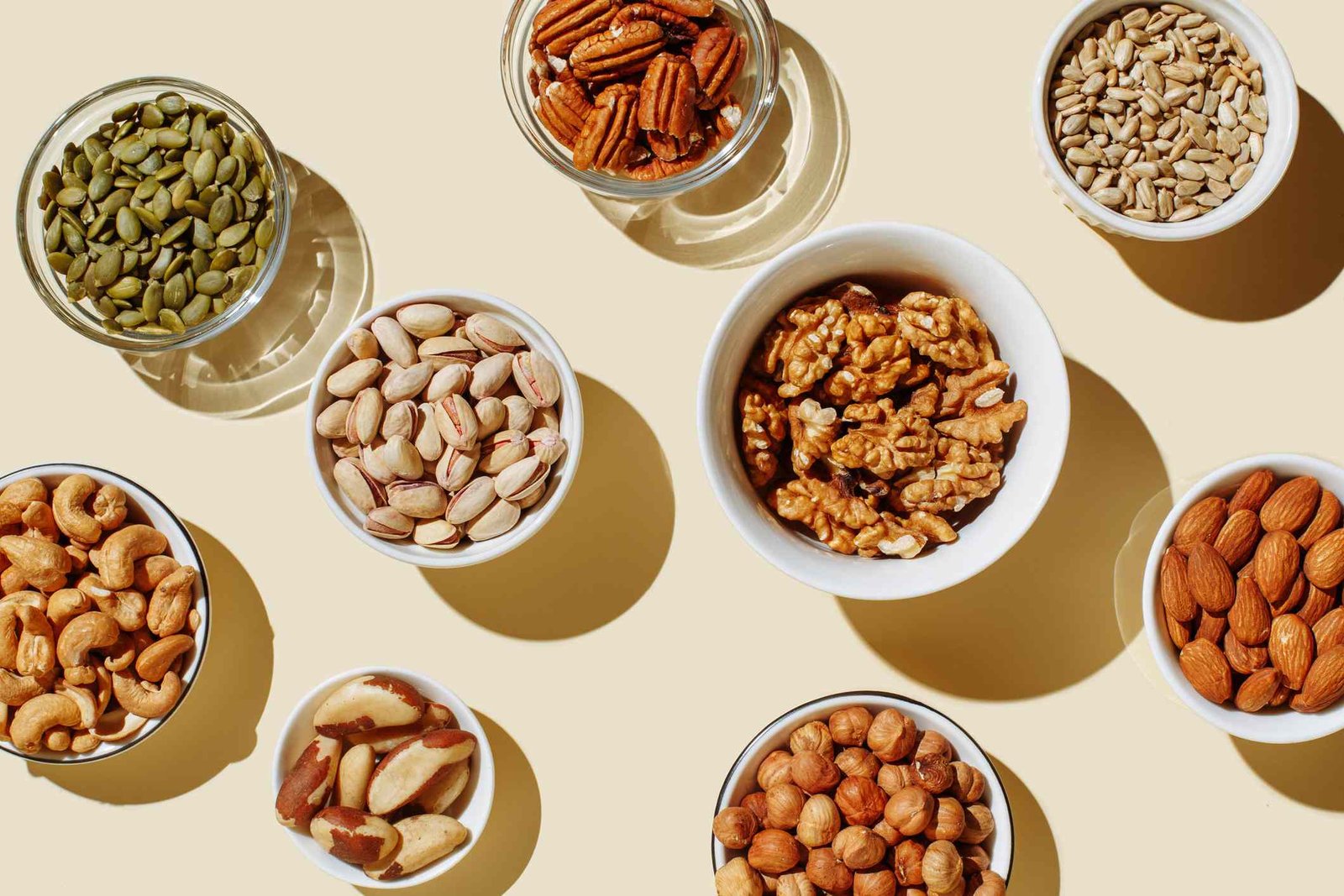
Your body needs omega-3s to build cell structures, support brain function, promote heart health, reduce inflammation, and support the immune system. Omega-3s are predominantly found in seafood. However, some nuts and seeds are important plant sources of omega-3 fatty acids.
AlexandraFlorian / Getty Images
- Serving size: 15 grams or 2 tablespoons
- Omega-3 content: 2.9 grams of alpha-linolenic acid (ALA), a plant omega-3
- Other notable nutrients: Protein, fiber, and selenium
Flaxseed is one of the highest omega-3 sources per gram of food. One serving provides 2.9 grams of ALA, which is more than 180% of the established Adequate Intake (AI).
Flaxseed also has a good omega-6-to-omega-3 ratio. This means the food contains much more omega-3 than omega-6. Western diets are usually too high in omega-6 and too low in omega-3. A lower ratio (more omega-3 relative to omega-6) is linked to reduced inflammation and better heart health.
A 2024 study showed that flaxseeds help reduce triglycerides, blood sugar, and an inflammation marker called C-reactive protein (CRP), all of which support heart health. However, there were no changes in cholesterol levels.
Another 2024 study found that eating 40 grams of crushed flaxseeds daily for eight weeks improved high-density lipoprotein (HDL), also called “good” cholesterol. It also decreased low-density lipoprotein (LDL), the “bad” cholesterol, and C-reactive protein (CRP) in women in menopause.
everydayplus / Getty Images
- Serving size: 28 grams or 2 tablespoons
- Omega-3 content: 5 grams of ALA
- Other notable nutrients: Protein, fiber, magnesium, and selenium
You can get more than 300% of the recommended daily amount of ALA from one serving of chia seeds. They also have a great omega-6-to-omega-3 ratio (1:3).
A 2024 study found that eating chia seeds regularly may help lower systolic blood pressure, waist circumference, and CRP. Another 2025 study also showed beneficial effects on blood pressure but not on body weight or composition.
Chia seeds are a solid source of protein, with one serving providing about 4.6 grams. They’re also packed with fiber. One serving has about 9 grams, which is roughly one-third of your daily fiber needs.
Most of the fiber in chia seeds is insoluble, meaning it doesn’t dissolve in water. This type of fiber adds bulk to your stool and helps keep bowel movements regular.
bhofack2 / Getty Images
- Serving size: 30 grams or 3 tablespoons
- Omega-3 content: 2.6 grams of ALA
- Other notable nutrients: Protein, magnesium, zinc, phosphorus, vitamin B1 (thiamine)
Hemp seeds are an excellent source of plant-based protein. One serving provides over 9 grams of protein. They are especially rich in arginine, an amino acid. Arginine helps support heart health by promoting the production of nitric oxide. Nitric oxide helps relax blood vessels, improving blood flow.
Hemp seeds provide high amounts of zinc and magnesium per serving. They supply 59% of the Daily Value for magnesium and 27% for zinc. Magnesium helps regulate blood pressure, and zinc helps reduce inflammation and oxidative stress. Together, these nutrients support heart health.
Peter Meade / Getty Images
- Serving size: 30 grams or 7 walnuts
- Omega-3 content: 2.5 grams of ALA
- Other notable nutrients: Protein and fiber
Walnuts are rich in ALA, fiber, and polyphenols, all of which support heart health. Eating more walnuts is linked to a lower chance of dying, including from heart disease.
A 2021 study found that eating five or more servings of walnuts per week was associated with about a 14% lower risk of death from heart-related causes.
Also, eating walnuts regularly may support brain health and cognitive functions like memory, focus, and information-processing speed. A 2025 study found that a breakfast containing 50 grams of walnuts improved reaction times on decision-making tasks and increased brain activity during tasks involving thinking, remembering, and focusing.
Omega-3 is essential for brain and heart health, immune system function, and the regulation of inflammation. Here are a few ways to increase your omega-3 intake:
- Eat seafood, especially fatty fish: Fatty fish like salmon, sardines, and mackerel contain high amounts of readily available omega-3s. Eat two servings of fish per week to support adequate omega-3 intake.
- Add seeds to your meals: You can easily add chia seeds, flaxseeds, and hemp seeds to oatmeal, smoothies, yogurt parfaits, and baked goods.
- Use flaxseeds in egg-free or vegan baking: Flaxseed is a great egg substitute. Mix 1 tablespoon of ground flaxseed with 3 tablespoons of water to replace one egg in baking.
- Use omega-3-rich oils in cold dishes: You can use flaxseed oil, walnut oil, or hemp seed oil on salads, protein bowls, or other cold foods. These oils are excellent sources of omega-3 (ALA), but high heat can break ALA down. So, it’s best to avoid using them for frying or high-temperature cooking.
- Add walnuts to your snacks: Add walnuts to trail mixes, oatmeal balls, energy bars, smoothies, or stir-fries.
