

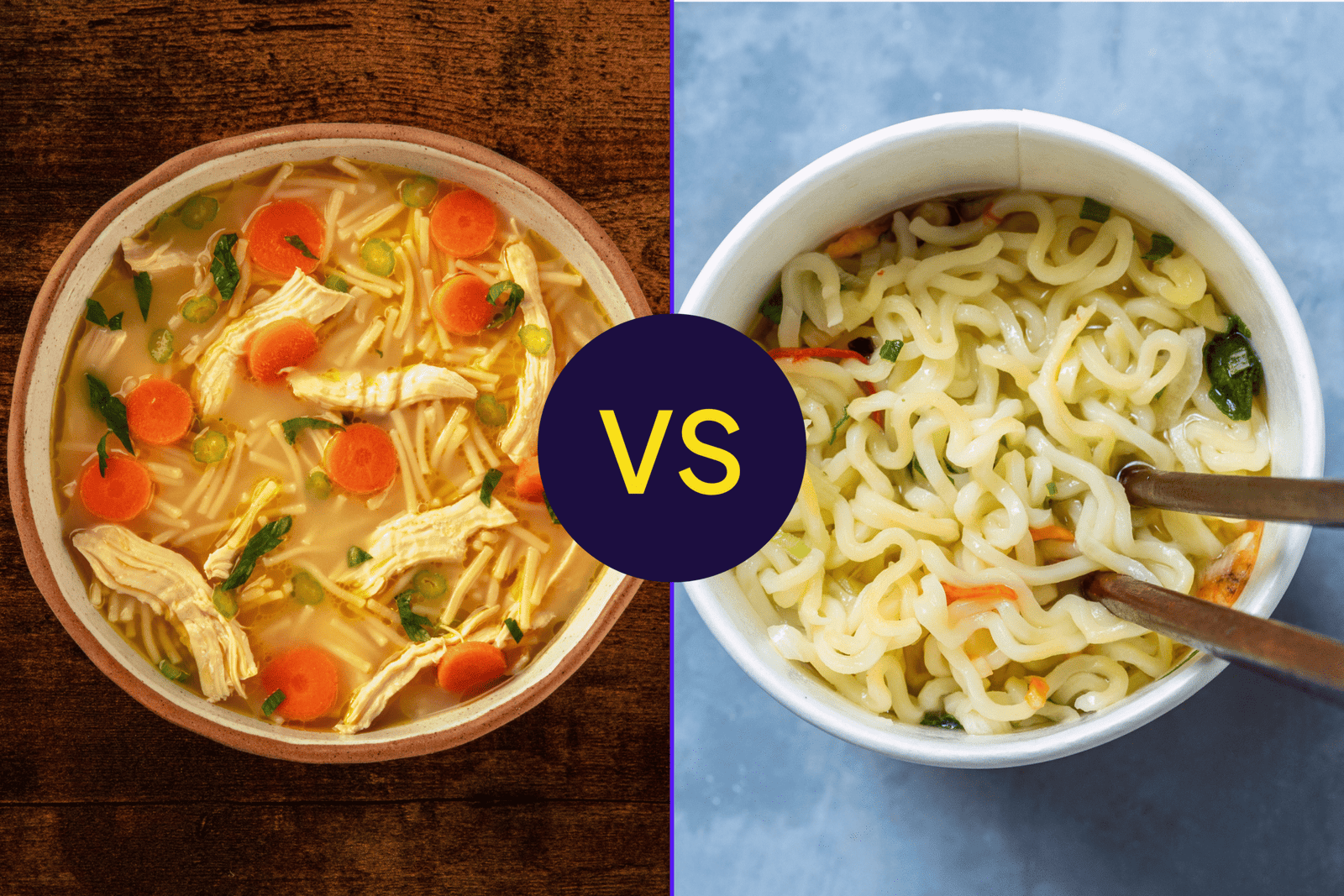
Canned chicken noodle soup and instant ramen are convenient pantry staples that make for delicious meals in a pinch. But when it comes to their sodium content—and subsequent effect on heart health—these soups aren’t created equal.
Sodium content in store-bought soup varies based on the brand, but chicken noodle tends to have less sodium than instant ramen. One serving of a popular brand of chicken noodle soup and one serving of a popular ramen contain the following:
- Canned chicken noodle soup: 890 milligrams of sodium in a one-half cup of condensed soup
- Instant ramen: 1,070 milligrams of sodium in a one-serving cup of chicken-flavored ramen
Though chicken noodle soup is the better option, it’s important to note that both soups contain a significant amount of sodium. In fact, soups are considered one of the top contributors of sodium in adults’ diets.
People in the United States are encouraged to consume no more than 2,300 milligrams of sodium each day, which means some packaged ramen contains nearly half of that recommended daily intake.
The amount of sodium you eat can have a major impact on your blood pressure and heart health. Specifically, sodium increases fluid retention in your body, which raises blood pressure. Over time, frequent intake of high-sodium foods can increase your risk of developing high blood pressure (hypertension) and strain your cardiovascular system, which raises the risk of heart disease and stroke.
Canned soup is considered a high-sodium food, and the National Institutes of Health recommend limiting your consumption to protect your heart health.
But with its even higher sodium content, instant ramen may pose a greater threat.
Research has found that consuming ramen noodles or noodles in general is associated with a higher risk of metabolic syndrome. This condition encompasses high blood pressure, high blood sugar, high cholesterol, and a larger waist, all of which increase the risk of heart disease and type 2 diabetes.
A study conducted in Japan found that men and people under the age of 70 who frequently consume ramen may have a greater risk of death.
Traditional chicken noodle soup is made with broth, chicken, egg noodles, and sometimes vegetables like carrots and celery. Pre-packed ramen consistently features wheat noodles and broth (often from a high-sodium seasoning packet), and occasionally has corn, carrots, or other vegetables.
What you find in a bowl of chicken noodle soup and ramen can vary significantly depending on preparation method, ingredients, and brand. But here’s how one serving of a common brand of canned chicken noodle soup compares to a serving of popular instant ramen.
Campbell’s chicken noodle soup, condensed (one-half cup)
Nissin Cup Noodles ramen noodle soup, chicken flavor (one container)
Calories
60
290
Protein
3 grams (g)
6 g
Carbohydrates
8 g
42 g
Fiber
0.96 g
3 g
Sodium
890 milligrams (mg)
1070 mg
Fats
2 g
11 g
Eating pre-packaged ramen or canned chicken noodle soup frequently may take a toll on your blood pressure and heart health. However, these soups can be part of a nutritious diet—and can even benefit your health—if you make certain modifications:
- Look for varieties with less sodium: Many brands sell reduced-sodium versions of their canned soups or instant ramen.
- Switch up the preparation: Most of the sodium in ramen comes from the seasoning packet, so using less of it or cooking the noodles in your own low-sodium broth can help reduce your intake. With canned chicken noodle soup, try diluting some of the soup with water for a lower amount of sodium per bowl.
- Try making your own at home: When you make your own soup, you have control over the amount of salt and other ingredients you include. For chicken noodle soup, try choosing a low-sodium broth, adding more vegetables, and including whole-grain noodles for more fiber to support digestion. If you want to make ramen at home, use healthier seasonings like sesame oil or miso paste, add in extra vegetables, and top your soup with protein such as eggs, tofu, chicken, or edamame to help you feel full.
Making your own ramen or chicken noodle soup is the best way to ensure that the ingredients in your dish support your health. Adding more lean protein supports muscle maintenance and extra vegetables provide a boost in minerals and antioxidants to boost heart health. Research has even shown that chicken-based soups may help relieve some symptoms of respiratory illnesses and reduce inflammation.
Health.com uses only high-quality sources, including peer-reviewed studies, to support the facts within our articles. Read our editorial process to learn more about how we fact-check and keep our content accurate, reliable, and trustworthy.
U.S. Department of Agriculture: FoodData Central. Ramen Noodle Soup, Chicken (Branded, 2622937).
U.S. Department of Agriculture: FoodData Central. Chicken Noodle Soup, Chicken Noodle (Branded, 2211874).
Centers for Disease Control and Prevention. About sodium and health.
Food and Drug Administration. Sodium in your diet.
American Heart Association. Get the scoop on sodium and salt.
National Heart, Lung, and Blood Institute. Halt the salt: 5 ways to cut down on sodium and improve your heart health.
Jeon DE, Kim Y. The association between noodle consumption and metabolic syndrome in Korean adults. Asia Pac J Clin Nutr. 2025;34(1):193-201. doi:10.6133/apjcn.202504_34(2).0006
MedlinePlus. Metabolic syndrome.
Suzuki M, Suzuki N, Sho R, Souri M, Konta T. Frequent Ramen consumption and increased mortality risk in specific subgroups: A Yamagata cohort study. J Nutr Health Aging. 2025;29(10):100643. doi:10.1016/j.jnha.2025.100643
U.S. Department of Agriculture: FoodData Central. Chicken noodle soup (Branded, 1626481).
Farrand C, Charlton K, Crino M, et al. Know Your Noodles! Assessing Variations in Sodium Content of Instant Noodles across Countries. Nutrients. 2017;9(6):612. doi:10.3390/nu9060612
American Heart Association. Homestyle chicken noodle soup.
U.S. Department of Agriculture: MyPlate. Grains.
Michigan State University Extension. Make your instant noodles healthier.
Dhillon J, Craig BA, Leidy HJ, et al. The Effects of Increased Protein Intake on Fullness: A Meta-Analysis and Its Limitations. J Acad Nutr Diet. 2016;116(6):968-983. doi:10.1016/j.jand.2016.01.003
MedlinePlus. Protein in diet.
Blekkenhorst LC, Sim M, Bondonno CP, et al. Cardiovascular Health Benefits of Specific Vegetable Types: A Narrative Review. Nutrients. 2018;10(5):595. doi:10.3390/nu10050595
Lucas S, Leach MJ, Kimble R, Cheyne J. Were Our Grandmothers Right? Soup as Medicine-A Systematic Review of Preliminary Evidence for Managing Acute Respiratory Tract Infections. Nutrients. 2025;17(13):2247. doi:10.3390/nu17132247
