

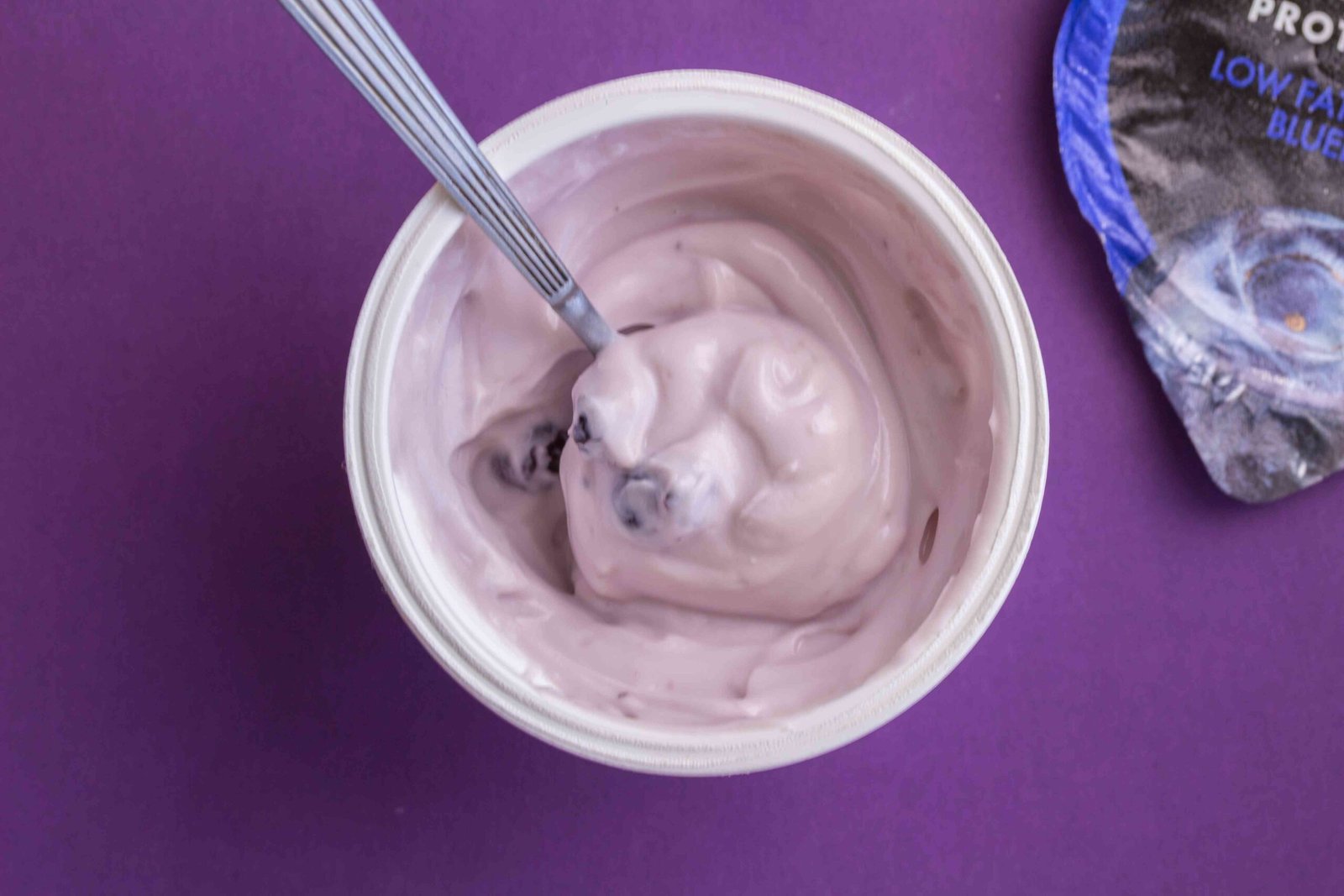
Sometimes what makes yogurt tasty—like added sugars and artificial flavors—can also make it less healthy. But with loads of options at grocery stores, you can choose tasty yogurts that still offer nutrition benefits with fewer additives. Below, see why dietitians don’t always love flavored yogurts—and what they recommend instead.
The nutrition label is your source of truth here—make sure to check both the total sugars and added sugars. “Aim for yogurts with under 8 to 10 grams of total sugars pers serving, and ideally no added sugars,” registered dietitian Caroline Susie, RDN, LD, a spokesperson for the Academy of Nutrition and Dietetics, told Health.
Look at the ingredients list too. Added sugars can come in many different forms. High-fructose corn syrup, cane sugar, and fruit concentrate are some examples to look out for and avoid.
Certain artificial add-ins (flavorings, sweeteners, etc.) have been linked to an increased risk of cardiovascular disease, diabetes, and cancer.
Artificial flavoring is often identified by vague phrases like “artificial flavor” or “natural flavor,” while some common artificial sweeteners include aspartame and acesulfame potassium (acesulfame-K).
For artificial coloring, steer clear of ingredients like Blue 1, Blue 2, Green 3, Red 3, Red 4, Yellow 5, and Yellow 6; instead, opt for yogurts that use beetroot powder or curcumin for coloring agents.
The thickness and consistency of your yogurt might depend on certain gums and thickeners—ingredients that may be better to avoid. (For example, the thickener carrageenan has been linked to digestive woes and inflammation.)
Your best bets? Look for natural, unprocessed additives in yogurt, such as chickpea, moringa, date palm, and lentil flour.
Yogurt is considered a healthy food for a reason: Once you get rid of all the unnecessary fillers, it’s a great source of calcium, protein, and probiotics.
“If you are trying to figure out what yogurt is best for your overall health, then it’s a good idea to limit yogurts that seem like dessert,” said registered dietitian Amy Bragagnini, MS, RD, CSO, a spokesperson for the Academy of Nutrition and Dietetics.
Choosing a healthy yogurt starts with reading the nutrition information and ingredients label—here’s what to look for:
1. A Short Ingredients List
For a healthy yogurt, you want as few ingredients as possible. The healthiest options tend to have just two or three ingredients: pasteurized milk, cream, and live active cultures.
“[Fewer ingredients] allows you to limit your intake of unnecessary additives and preservatives,” said Bragagnini.
2. As Much Protein As Possible
A high-protein yogurt can keep you feeling full and manage your blood sugar levels.
Most high-protein yogurts contain at least 10 grams of protein per serving—but some, like Greek or Icelandic yogurts, can pack anywhere from 12–20 grams of protein per serving. Those are the ones to choose if you really want a protein boost.
3. Proof of Probiotics
Remember those live active cultures from the ingredients list? Those are proof of probiotics—gut-healthy bacteria that are both naturally present in and added to yogurt.
“Not only does yogurt contain a high amount of protein per serving, but it’s also a fermented food, which supports gut health with probiotics,” Cara Clark, an integrative nutritionist and author of The Feel-Good Way, told Health.
Some common strains of probiotics in yogurt include Lactobacillus bulgaricus, Streptococcus thermophilus, Lactobacillus acidophilus, Bifidobacterium (also known as bifidus), and Lacticaseibacillus casei.
Probiotics have been shown to boost the immune system, relieve or treat gastrointestinal symptoms, and even possibly prevent cancer.
4. Little to No Added Sugars
Ideally, yogurts should contain no added sugar or be low in added sugar.
For reference, added sugars should make up less than 6% of your daily calories—in women, that works out to 25 grams (6 teaspoons) per day; for men, that’s 36 grams (9 teaspoons).
“Choose unsweetened yogurt and then experiment with different ways you can sweeten it up,” said Bragagnini. “Yogurt is a blank canvas so feel free to add colorful fresh or dried fruit to give some natural sweetness.”
If you do buy a yogurt containing sweetener, opt for naturally sourced sweeteners—some of which are zero sugar—instead, like stevia and monk fruit.
