

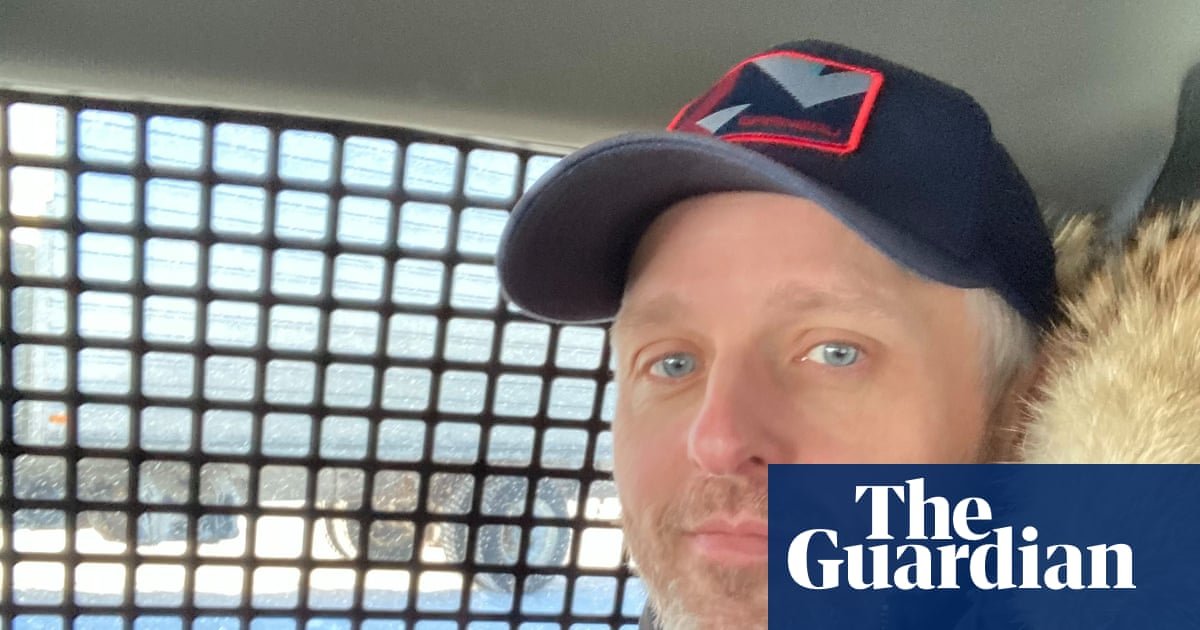
I spent nearly 20 years working as a criminal defence lawyer in the remote communities of the Canadian Arctic. Nunavut – roughly the size of western Europe – is home to fewer than 40,000 people, most of whom are Inuit. The brief summers boast endless days, while polar night descends over long winters where temperatures occasionally drop as low as -50C. Despite the lack of urban centres and a small, homogenous population, the territory records one of the highest violent-crime rates per capita in the world.
There are no roads connecting Nunavut’s 26 communities. Aircraft is the only option, except for a brief ice-free window in late summer when supplies and fuel can be delivered by boat. Several times a year, the justice system arrives: a travelling circuit court sets up a temporary courtroom in local gymnasiums or community halls for three to four days.
I handled many tragic and strange cases over the course of two decades, but one stands out. Early in my career, I represented a young Inuit man charged with firing a rifle at a parked car filled with innocent passengers. Several sober, reliable witnesses gave articulate, seemingly unembellished statements. They said they had seen the accused leave his house with a rifle, walk towards the vehicle, and open fire – shattering several windows and terrorising the people inside. Miraculously, no one was seriously injured.
When I interviewed him in a holding cell, my client adamantly denied firing a gun, despite all the evidence against him. Police reports suggested that the car’s glass bore damage consistent with bullets, and further witness statements detailed loud gunshots and the pungent odour of gun smoke. It looked to be an open and shut case. Things were not, however, as they appeared.
It is standard practice in firearms cases in Canada for the weapon to be sent for forensic analysis. The report arrived late, shortly before the hearing. It revealed that not only had the gun not been fired recently, it had never been fired at all. It was completely inoperable. It turned out that the accused had actually used an old, broken rifle from his porch like a baseball bat to smash out the windows. The more serious charges of discharging a firearm and endangering lives, which carried lengthy jail terms, were dropped.
We rely on our senses and memory to define ourselves, but the brain is not a perfect instrument
I realised that day just how malleable our reality can be. We rely on our senses and memory to define ourselves and navigate our lives, but the brain is not a perfect instrument. Confidence does not always equal accuracy. The witnesses had not fabricated their accounts; they truly believed they had seen an angry man point a gun at them and shoot. Their fear was very real. Yet that fear impaired their senses and, over time, their memories were reshaped by a yearning to make sense of their trauma, and the subtle influences of others.
Over the years I spent doing criminal trial work, I saw genuine belief at odds with reality again and again. But this was the first time it shook me. It not only caused me to be wary of the reliability of eyewitness evidence, but it also made me question my understanding of my own life.
When I was much younger, I had survived a near‑drowning. Two malicious older boys prevented me from getting out of a deep area of a pond, forcing me to tread water for too long. I went under, inhaled a large amount of water, and had to be rescued. I never spoke about the incident with anyone.
Malcolm Kempt in Nunavut, Canada, by the remains of a ship built for Roald Amundsen’s second expedition to the Arctic. Photograph: Courtesy of Malcolm Kempt
Throughout my life, I would occasionally wake in the middle of the night gasping for breath, tangled in sweaty sheets and seized by panic and lingering sensations of drowning. Instead of confronting it through therapy, I spent my life defiantly challenging water. I scuba‑dived around the globe, surfed in South America, swam long distances on reckless dares, and free‑dived in the frigid North Atlantic until the darkness and cold became unbearable. Water became an adversary. Whenever I was alone and saw a large body of water, I stared into its depths, feeling its pull, and then dared it to take me a second time. I told myself I was being resilient, but ultimately, it was an unhealthy approach.
It wasn’t until a particularly dark period just before the pandemic that I sought help. With a psychiatrist, I revisited the drowning episode from countless angles over many months. Through these sessions, I began to see the same frailties of eyewitness recollection also at work inside me. The details of the near drowning were a blurred mess of intense emotions, physical sensations and visual flashes, and yet I had let them negatively impact my life as if they were immutable.
During one session, I sat with my eyes closed, describing the incident – the crushing pressure in my chest and the sensation of my feet flailing for solid ground. The psychiatrist noticed that my shoes rested on the chair’s rungs and gently told me to place them on the floor. I rarely cried in my life, but in that moment, I sobbed uncontrollably.
Following that session, I emerged as a new person. I spent months doing breathwork and consciously editing the traumatic experience into a version where I could always breathe and my feet were firmly on the ground. The night terrors ended, and my overall mental health improved dramatically.
William Burroughs, a teenage hero of mine, once said: “Everything is recorded, and if it is recorded, then it can be edited.” Just as the forensic report forced me to question the reliability of human memory and perception, therapy forced me to question what I thought I knew about my own trauma. I learned that we can rewrite the terrible parts of our history. We can learn to react differently to triggers and move beyond self-imposed limitations. We can be the authors of our own lives.
A Gift Before Dying by Malcolm Kempt is published 22 January by John Murray Press (£22). To support the Guardian, order your copy at guardianbookshop.com. Delivery charges may apply.
