

The DASH (Dietary Approaches to Stop Hypertension) and Mediterranean diets are widely recommended for heart health. Both have been shown to support healthy blood pressure and reduce the risk of heart disease.
If lowering blood pressure is your main goal, the DASH diet has a slight advantage. It was created specifically to help reduce high blood pressure, and research shows it works well for people who already have this condition.
Studies suggest that the DASH diet can lower systolic blood pressure (the top number) by a few points on average, with larger benefits for people with high blood pressure. People with normal blood pressure may see smaller drops, but even modest reductions can help protect the heart.
The Mediterranean diet can also help lower high blood pressure, but the effects are usually smaller. Some studies show modest reductions in both systolic and diastolic blood pressure (the bottom number), particularly when the diet is followed closely.
If your main goal is to lower high blood pressure as much as possible, the DASH diet may be the better choice, especially when combined with reduced sodium intake.
Both the DASH and Mediterranean diets are widely seen as heart-healthy, but they support heart health in slightly different ways.
In addition to lowering blood pressure, research shows that the DASH diet can improve cholesterol levels and other markers linked to heart health. Because of these benefits, the DASH diet is often recommended as a heart-healthy eating pattern for people with and without high blood pressure.
The Mediterranean diet is linked to long-term protection against heart disease. Studies have found that it can lower LDL (“bad”) cholesterol levels and reduce the risk of heart attack and stroke. Its focus on healthy fats, fish, and plant-based foods may help explain these benefits.
Some studies that directly compared the two diets found that the Mediterranean diet led to greater blood pressure reductions when salt intake was also limited. This suggests that how a diet is followed, including choices like sodium intake, can matter as much as the diet itself.
Both eating patterns are supported by strong research and are widely recommended by health experts for supporting heart health. When it comes to overall heart health, not just blood pressure, the Mediterranean diet may offer broader benefits. However, both diets are good options.
The DASH and Mediterranean diets share many similarities. Both focus on more plant-based eating and lean proteins, but they emphasize different foods and eating habits.
DASH Diet
Mediterranean Diet
Foods in the Diet
Fruits and vegetables; whole grains; lean meats like chicken and fish; beans; low-fat or fat-free dairy
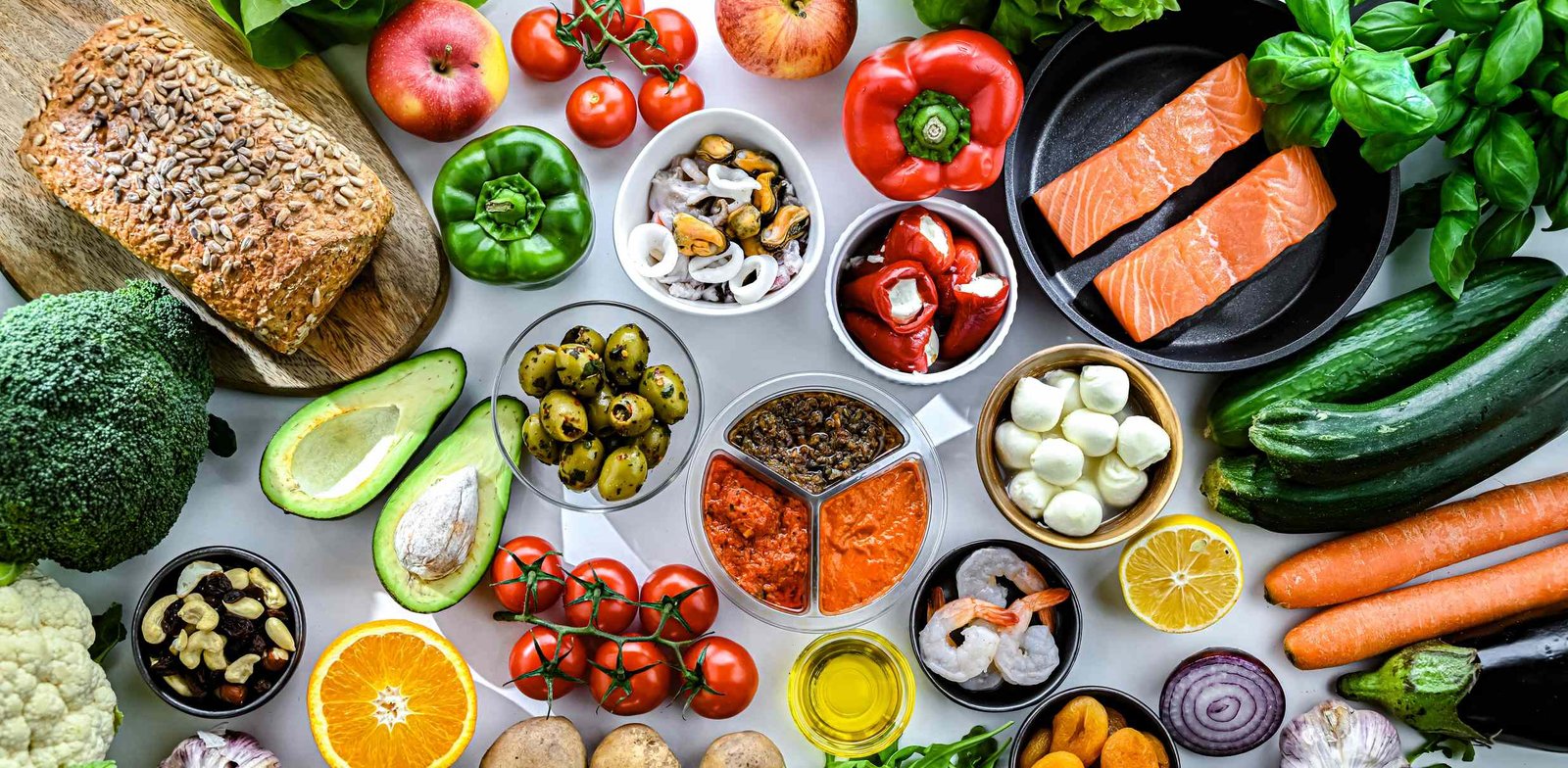
Healthy fats like olive oils and nuts; fish; legumes; whole grains; fruits and vegetables; (dairy, meat, eggs, and red wine in moderation)
Foods To Limit
Foods high in sodium and saturated fat
Processed meats; foods high in sugar; refined grains
Sodium Intake
2,300 milligrams per day or less (1,500 mg or less for some people with high blood pressure)
No strict limits
The DASH diet is more structured with a focus on limited sodium and saturated fat. Cutting sodium is a key part of the DASH diet because it plays an important role in lowering blood pressure.
The Mediterranean diet has a more flexible approach based on traditional eating patterns from countries in the Mediterranean region. The diet does not focus as heavily on sodium, though it naturally includes fewer processed foods, which can help keep intake lower.
When it comes to long-term habits, the DASH and Mediterranean diets can feel very different.
The Mediterranean diet may be easier for people to follow in the long term. It allows more flexibility, includes flavorful foods like olive oil and nuts, and doesn’t require strict rules or tracking. Meals are also meant to be enjoyed, which can make the diet feel less restrictive and more like a lifestyle.
The DASH diet can be highly effective, but it may be more challenging for some individuals to maintain. The focus on low sodium, along with specific recommendations for dairy and portion sizes, may take more planning.
Adherence to diets varies from person to person. Some people may prefer the clear structure of the DASH diet, while others do better with the flexibility of Mediterranean eating.
The best diet is one you can stick with. For many people, the Mediterranean diet may feel more sustainable, but both approaches support heart health when followed consistently.
Choosing between the DASH and Mediterranean diets comes down to what you want to focus on most.
- If your main goal is to lower blood pressure: The DASH diet may be a good place to start. It was created for this purpose and includes clear guidance on sodium, portion sizes, and food groups, which can help some people see results more quickly.
- If your goal is to maintain overall health or to follow a diet long-term: The Mediterranean diet may be a better fit. Some people find the Mediterranean diet requires less planning and allows for more foods, which may make it easier to follow.
- For a balanced approach: You don’t have to choose just one diet. Many people combine elements of both, such as eating more fruits, vegetables, and whole grains, using olive oil, choosing fish more often, and keeping sodium intake in check, to get the benefits of each.
Your choice between the DASH vs. Mediterranean diets depends on your health goals, preferences, and lifestyle. Any plan that helps you eat more whole foods and fewer highly processed foods can support heart health.
Diet has an important role in heart health, but it works best when combined with other healthy habits, whether you follow the DASH or Mediterranean diet.
Certain habits help protect the heart and can boost the benefits of a heart-healthy eating pattern, including lowering blood pressure and reducing heart disease risk. These include:
- Exercise regularly
- Get enough sleep
- Manage stress
- Avoid smoking
- Maintain a healthy weight determined by you and your doctor
While what you eat matters, diet is just one part of the picture. Combining the DASH or Mediterranean diet with other healthy lifestyle habits offers the greatest benefit for blood pressure and overall heart health.
Health.com uses only high-quality sources, including peer-reviewed studies, to support the facts within our articles. Read our editorial process to learn more about how we fact-check and keep our content accurate, reliable, and trustworthy.
Conlin PR. The dietary approaches to stop hypertension (DASH) clinical trial: implications for lifestyle modifications in the treatment of hypertensive patients. Cardiol Rev. 1999;7(5):284-288. doi:10.1097/00045415-199909000-00013
MedlinePlus. Understanding the DASH diet.
Chiavaroli L, Viguiliouk E, Nishi SK, et al. Dash dietary pattern and cardiometabolic outcomes: an umbrella review of systematic reviews and meta-analyses. Nutrients. 2019;11(2):338. doi:10.3390/nu11020338
Isnaini N, Dewi FST, Madyaningrum E, Supriyadi. Blood pressure impact of dietary practices using the DASH method: a systematic review and meta-analysis. Clinical Hypertension. 2025;31:e12. doi:10.5646/ch.2025.31.e12
Finicelli M, Di Salle A, Galderisi U, Peluso G. The Mediterranean diet: an update of the clinical trials. Nutrients. 2022;14(14):2956. doi:10.3390/nu14142956
Filippou C, Thomopoulos C, Konstantinidis D, et al. DASH vs. Mediterranean diet on a salt restriction background in adults with high normal blood pressure or grade 1 hypertension: A randomized controlled trial. Clin Nutr. 2023;42(10):1807-1816. doi:10.1016/j.clnu.2023.08.011
Filippou C, Tatakis F, Polyzos D, et al. Overview of salt restriction in the Dietary Approaches to Stop Hypertension (Dash) and the Mediterranean diet for blood pressure reduction. Rev Cardiovasc Med. 2022;23(1):36. doi:10.31083/j.rcm2301036
MedlinePlus. Mediterranean diet.
Lichtenstein AH, Appel LJ, Vadiveloo M, et al. 2021 dietary guidance to improve cardiovascular health: a scientific statement from the American Heart Association. Circulation. 2021;144(23). doi:10.1161/CIR.0000000000001031
