

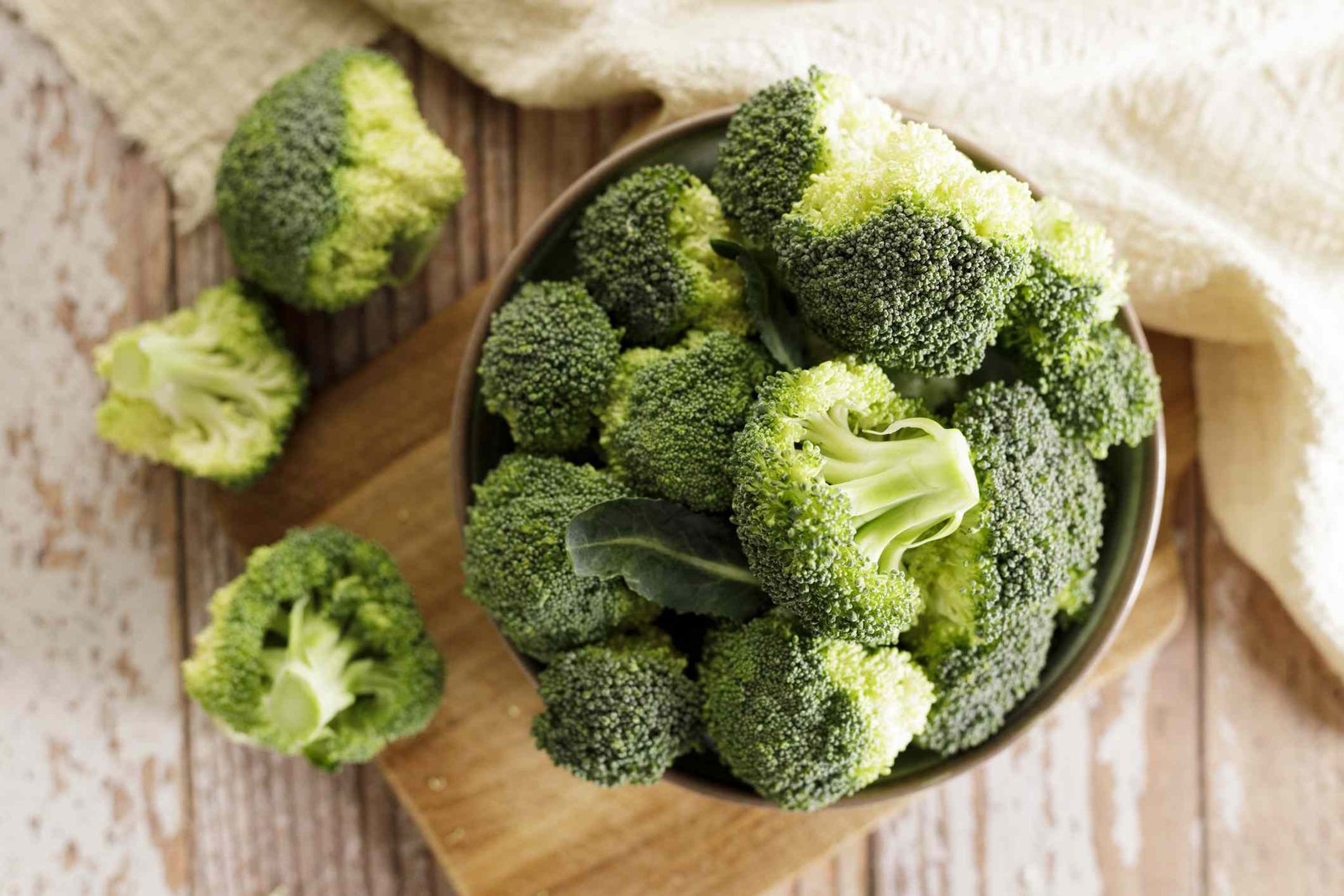
Broccoli is rich in vitamin C, vitamin K, and folate. It also contains sulfur compounds. These compounds might support the body’s natural detoxification.
One cup (76 grams) of broccoli has 77.5 micrograms of vitamin K. That is about 64% of the Daily Value. Your body needs vitamin K for blood clotting, strong bones, and a healthy heart.
You can get a lot of vitamin K from broccoli, but it’s not the only option. Many other foods have more vitamin K per serving than broccoli.
alvarez / Getty Images
- Vitamin K content: 598 micrograms (498% of the Daily Value (DV)) per serving of two cups (72 grams) of raw Swiss chard.
- Health benefits: Swiss chard is packed with vitamins A and C. One serving gives you about 24% of the DV for both vitamins. These vitamins help support the immune system. Vitamin A also helps keep your eyes, heart, and lungs healthy. Vitamin C helps your body absorb iron and make collagen. Swiss chard also provides about 14% of the DV for magnesium. Your body needs magnesium for brain, bone, muscle, and heart health, as well as blood sugar regulation.
- How to use it: Swiss chard is very versatile. You can use its leaves to wrap meals, add them to omelets, soups, and stews, or even make chips.
bhofack2 / Getty Images
- Vitamin K content: 314 micrograms (261% of the DV) per serving of two cups (72 grams) of raw collard greens.
- Health benefits: A serving of collard greens gives you about 20% of the DV for vitamin A, 28% for vitamin C, and 11% for vitamin E, all antioxidant nutrients. Antioxidants help protect against cell damage and support the immune system. Collard greens are also high in fiber. A serving provides about 10% of the daily fiber recommendation. They also provide about 23% of the DV for folate. Your body needs folate to repair DNA and make red blood cells that carry oxygen. It’s especially important during pregnancy for the baby’s brain development.
- How to use it: Steaming or cooking collard greens reduces their bitterness. They’re great to add to soups, stews, and stir-fries. You can also use collard greens as a substitute for vine leaves when making Mediterranean-style dolma.
Kinga Krzeminska / Getty Images
- Vitamin K content: 304 micrograms (253% of the DV) per serving (2 cups or 76 grams) of raw beet greens.
- Health benefits: Beet greens may help support the body’s antioxidant system. One study showed that drinking juice made from beet greens and stalks supports the body’s antioxidant defenses. They also provide over 26% of the DV for vitamin A and 24% for vitamin C. Beet greens are also rich in iron compared to most green leafy vegetables. One serving provides about 10% of the DV. Iron is essential for producing hemoglobin, a protein in red blood cells that carries oxygen.
- How to use it: Sautéed or boiled beet greens pair great with nuts, beans, grains, and cheeses.
Minh Hoang Cong / Getty Images
- Vitamin K content: 290 micrograms (241% of the DV) per serving of 2 cups (60 grams) of raw spinach.
- Health benefits: Spinach contains nitrates, compounds that support healthy blood pressure. A study showed that eating a diet high in nitrates (from spinach) improved blood pressure in people without chronic conditions. Spinach is also rich in vitamins A, E, folate, and magnesium.
- How to use it: Simmer spinach with chickpeas and spices like curry, then serve it with naan or rice.
VU PHAM VAN / Getty Images
- Vitamin K content: 288 micrograms (240% of the DV) per serving of 2 cups (112 grams) of raw mustard greens.
- Health benefits: Mustard greens contain sulfur compounds. These compounds might support the body’s natural detoxification. Sulfur compounds may also help fight damaged cells and infections. Mustard greens are rich in fiber, with one serving providing over 12% of the daily recommended amount. They also provide 86% of the DV for vitamin C, 16% of the DV for vitamin E, and 10% of the DV for iron.
- How to use it: You can add mustard greens to salads, but they can be a little bitter. Cook mustard greens with olive oil and spices like pepper flakes and garlic, then add vinegar or lemon juice to balance the bitterness.
daniaphoto / Getty Images
- Vitamin K content: 283 micrograms (235% of the DV) per serving of one ounce.
- Health benefits: Natto is a fermented soybean product. The type of vitamin K found in natto stays longer in the blood. This means it may be more effective in supporting bone health. Natto also contains an enzyme called nattokinase. Some studies suggest that nattokinase may improve blood flow, blood pressure, and blood lipids. Natto is also rich in many nutrients, including protein and fiber, as well as iron, potassium, magnesium, and zinc.
- How to use it: You can serve natto with rice, salads, soups, or noodles.
Your body needs vitamin K for blood clotting, bone strength, and heart health. You can get a lot of vitamin K from broccoli, but many other foods contain more of it.
The richest sources include Swiss chard, collard greens, beet greens, spinach, mustard greens, and natto, all of which have more vitamin K per serving than broccoli.
