

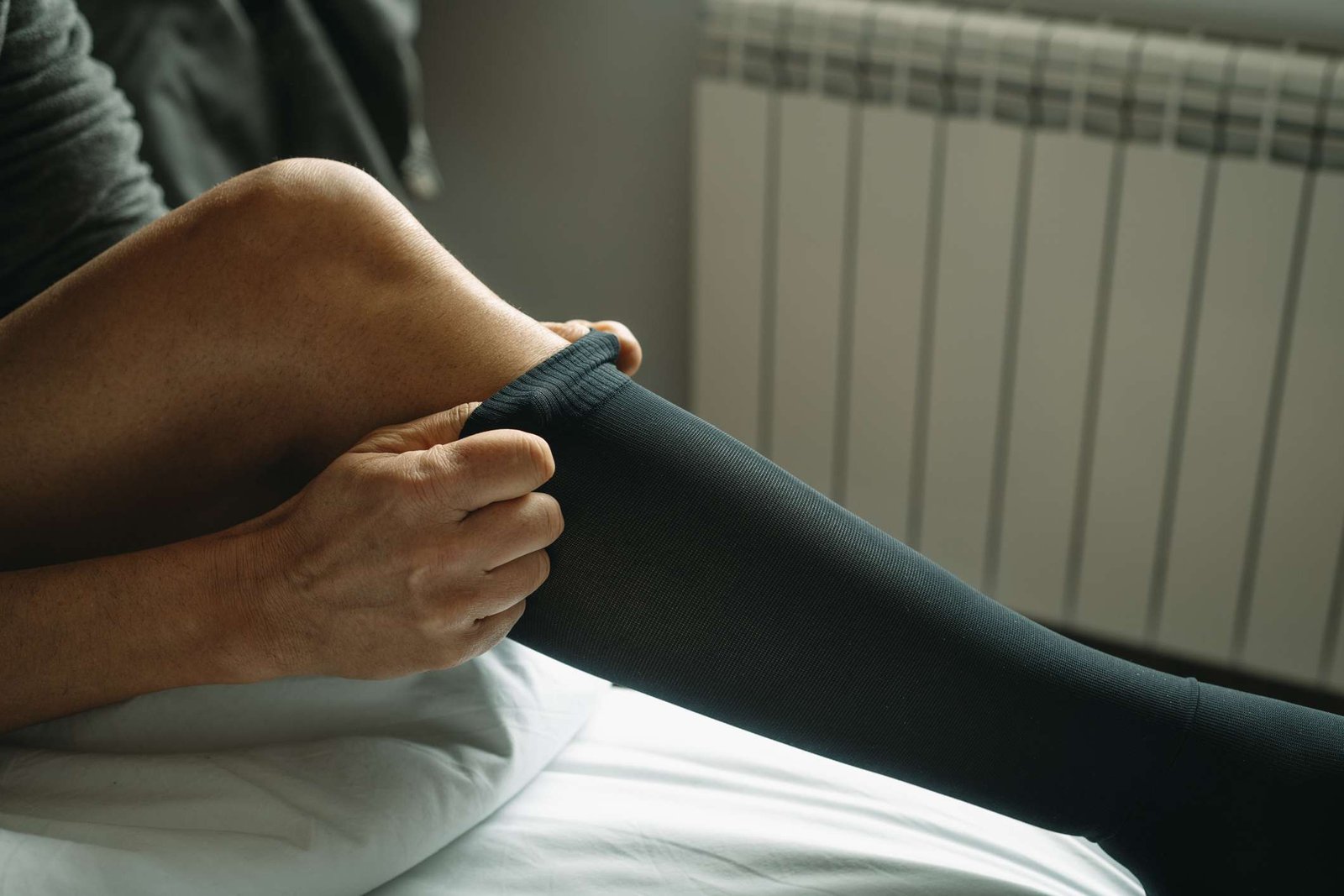
Compression socks are designed to provide gradual pressure to your legs, which encourages blood flow and reduces swelling. They also help prevent blood clots and support tired or weak leg muscles.
If you have fluid in your legs, are pregnant, have certain medical conditions, or are an athlete recovering from extensive workouts, you may find wearing compression socks during the day useful. However, most healthcare providers advise against wearing them at night, aside from certain medical situations.
If you have fluid build up in your legs or ankles, or you are recovering from a medical procedure, a healthcare provider may recommend daytime use of compression socks.
However, they may advise against sleeping in them. While sleeping, your legs are already in a position that encourages blood flow, and there is little evidence that nighttime use is beneficial. Taking compression socks off at night allows your skin to breathe and may prevent skin breakdown.
However, there are times when your healthcare provider may recommend sleeping in compression socks, especially if you are recovering from an invasive surgery. Researchers have found that nighttime use of compression stockings is sometimes recommended for people who have:
- Venous ulcers (open sores on legs due to lack of blood flow)
- Radiofrequency ablation
- Phlebectomy (a procedure to remove varicose veins)
- Stripping of varicose veins
If you are considering wearing compression socks, talk to your doctor first, especially if you plan to sleep in them. It can be unsafe to wear compression socks 24 hours a day, and they are not safe to use for everyone.
For instance, people with peripheral arterial disease (PAD) may not be able to safely wear compression socks. PAD causes a narrowing of the arteries that carry blood from the heart to other parts of the body. In this case, compressing the legs may be dangerous.
Also, people in wheelchairs or those with limited feeling in their legs need to be careful with compression socks. They may find it difficult to tell when a sore is developing or be unable to gauge the strength of compression or when something is too tight. The same risks apply for people with limited cognitive function. When wearing compression socks, you need to be able to communicate how they feel and if they are uncomfortable.
Other risks of sleeping in compression socks include:
- Skin irritation
- Dryness and itchiness
- Allergic reactions to the material
- Pain and discomfort
- Skin discoloration
- Infections, sores, or skin breakdown
- Nerve damage
- Swelling in other areas, such as the toes or thighs
If your healthcare provider recommends wearing compression socks, follow their instructions closely. They will let you know the pressure you need and how long to wear them. The pressure is measured in millimeters of mercury (mmHg) and comes in low pressure, medium pressure, and high pressure, so it is important to choose the right one.
Here are some other things to consider when wearing compression socks, particularly if you have been advised to sleep in them:
- Wear the compression socks to the height recommended. Try not to bunch them up or pull them too high because this can restrict blood flow and increase swelling.
- Remove the stockings according to your healthcare provider’s instructions. Once you have them off, clean your legs and care for the skin.
- Check your legs for sores regularly. If you notice red marks or a sore starting to develop, let your doctor know and do not put the socks back on unless told to do so.
- Keep your compression socks clean. Wash them every day if you can, and avoid wearing dirty stockings because this can increase the risk of skin irritation or sores.
- Replace your compression socks when they become loose. Typically, you will need to replace your compression socks every three months or more.
If you find that wearing compression socks, especially at night, is uncomfortable or just not conducive to your lifestyle, there are alternatives you can try. Talk to your healthcare provider before experimenting with other options. They can let you know which alternatives are right for you and your condition. Here are some potential alternatives to compression socks to consider:
- Tubigrip: This is a tubular support bandage that comes in a roll. You can cut off what you need and slip it on your leg. This approach may be best if you have trouble putting on compression socks.
- Compression garments: If you have limited mobility, you may find that purchasing compression garments like leggings is easier to put on and wear than compression socks.
- Circaid compression wraps: These wraps, which are made of elastic material, can be adjusted to the compression you want. They can also be useful for people with open sores or those who have trouble putting on compression socks.
- Ace bandages or elastic wraps: These bandages are used to wrap the legs and can provide some pressure for people who cannot put on compression socks.
- Intermittent pneumatic compression (IPC) devices: These compression devices use a small machine to inflate the devices and provide compression.
- Sequential compression devices (SCDs): Once attached to a pump, these compression devices inflate and deflate to promote blood flow and prevent blood clots.
Sleeping in compression socks is usually not recommended unless you have venous ulcers or have had an invasive procedure. Your healthcare provider will let you know what is best for your condition.
In many instances, there is no need to sleep in them because your legs are already in a position to promote blood flow. Plus, there is little research to support their use at night.
If you do sleep in compression socks, keep them clean and dry and pay attention to your skin. If you develop sores or if the socks are too tight, call your healthcare provider right away. These issues need to be addressed promptly to avoid any further skin breakdown or medical issues.
