

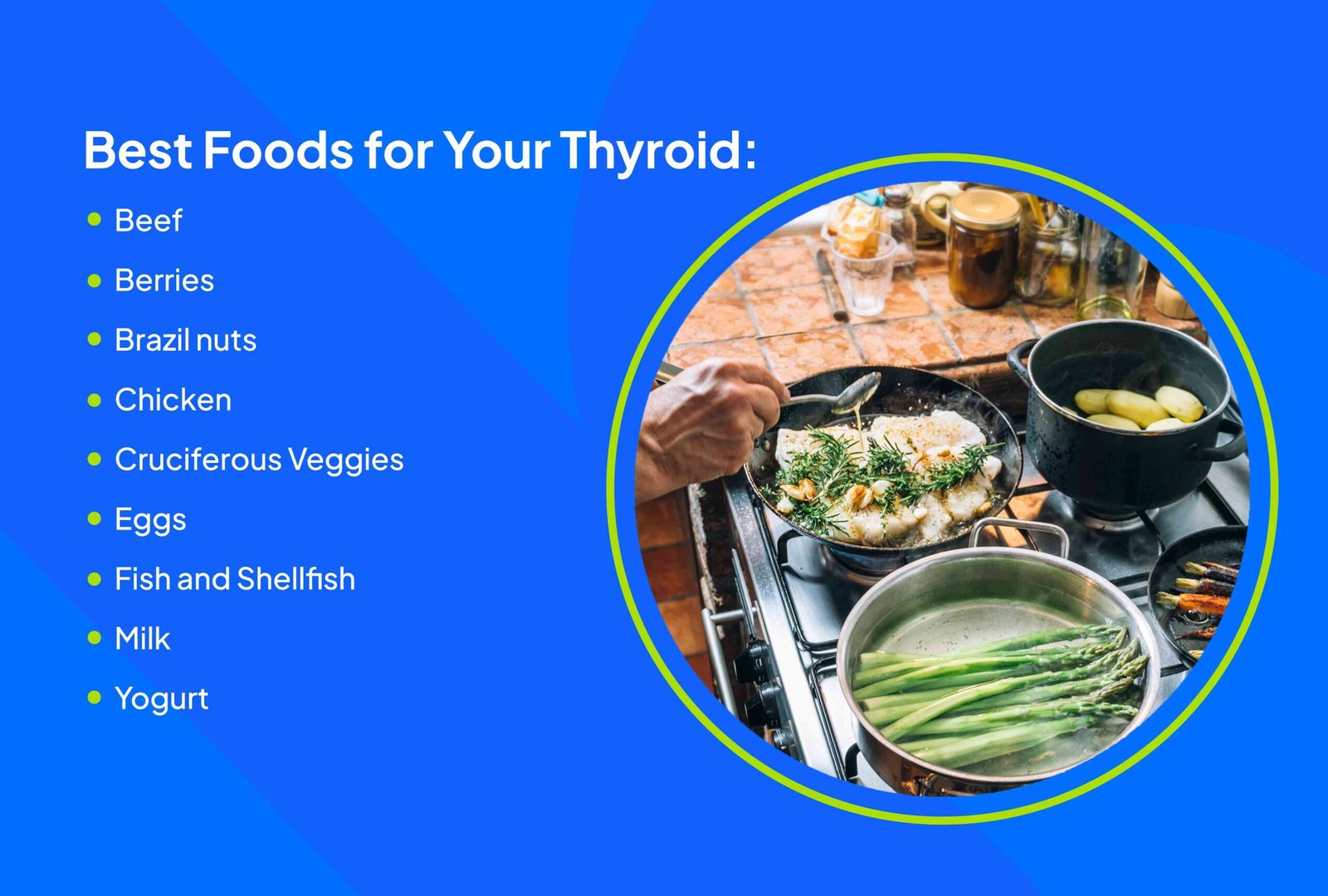
Foods for thyroid health include those that are high in iodine, selenium, and zinc. These minerals are essential for thyroid hormone production and inflammation control.
Your thyroid needs iodine to work properly and make enough thyroid hormone for your body’s needs.
Fish
Iodine: 146 micrograms per 3 ounces of cod, or 97% of the DV
Iodine is found in soils and seawater, so fish are a good source.
“The most convincing evidence we have [for thyroid problems] is the absence of adequate nutrition,” Salvatore Caruana, MD, the director of the division of head and neck surgery in the department of otolaryngology-head and neck surgery at Columbia Doctors, told Health.
Even fish sticks provide a good amount of iodine, with 57 micrograms in a 3-ounce serving.
Seaweed
Iodine: 116 micrograms per 2 tablespoons of dried nori, or 77% of the DV
Seaweed is high in iodine, but avoid having sushi every day. Too much iodine can trigger or worsen hypothyroidism (an underactive thyroid).
To benefit without overdoing it, Cynthia Sass, MPH, RD, recommended one fresh seaweed salad a week (plus sushi). Avoid seaweed teas and supplements.
Milk
Iodine: 84 micrograms per 1 cup of non-fat milk, or 56% of the DV
Opt for a glass of milk fortified with vitamin D. People with hypothyroidism are more likely to be vitamin D-deficient.
Yogurt
Iodine: 87 micrograms per ¾ cup of plain, non-fat Greek yogurt, or 50% of the DV
Keep in mind that the amount of iodine in dairy products like yogurt varies. This is partly because livestock are given iodine supplements. The milking process also involves iodine-based cleaners.
Eggs
Iodine: 31 micrograms per 1 hard-boiled egg, or 21% of the DV
If you have not been instructed otherwise, eat the whole egg. Much of the iodine is in the yolk, according to Mira Ilic, RD, a registered dietician at the Cleveland Clinic.
Cheese
Iodine: 14 micrograms per 1 ounce of cheddar cheese, or 9% of the DV
Cheese is also a source of vitamin D, which is important for thyroid health.
Note: Just remember to eat cheese in moderation, since its calcium content may interfere with the thyroid medication levothyroxine.
Shellfish
Iodine: 13 micrograms per 3 ounces of cooked shrimp, or 9% of the DV
Shellfish also contain omega-3 fatty acids, which have anti-inflammatory effects. High inflammation levels can negatively affect thyroid function.
Selenium is another nutrient that helps regulate thyroid hormones. It may help prevent long-term damage in people with Hashimoto’s thyroiditis (thyroid inflammation).
One Brazil nut contains 68-91 micrograms of selenium. The upper limit of selenium is 400 micrograms a day, so eat Brazil nuts in moderation.
Other sources of selenium include:
- Tuna: 92 micrograms (mcg) per 3 ounces (oz) of cooked yellowfin, or 167% of the DV
- Sardines: 45 mcg per 3 canned oz, or 82% of the DV
- Shrimp: 42 mcg per 3 cooked oz, or 76% of the DV
- Spaghetti: 33 mcg per 1 cooked cup, or 60% of the DV
- Baked beans: 13 mcg per 1 canned cup, or 34% of the DV
Note: Too much selenium can cause “garlic breath,” hair loss, discolored nails, and even heart failure, Ilic told Health.
Taking in too little zinc can lead to hypothyroidism.
You likely get enough zinc. However, you may risk deficiency if you have a poor diet or a digestive disease that affects absorption.
Sources of zinc include:
- Oysters: 28.2 milligrams (mg) per 3 oz of cooked Pacific oysters, or 256% of the DV
- Beef: 3.8 mg per 3 oz of roasted bottom sirloin, or 35% of the DV
- Fortified breakfast cereals: 2.8 mg per 1 serving, or 25% of the DV
- Pumpkin seeds: 2.2 mg per 1 roasted oz, or 20% of the DV
- Turkey breast: 1.5 mg per 3 roasted oz, or 14% of the DV
Foods high in antioxidants support thyroid health. They can help protect cells and manage thyroid dysfunction.
Berries of all kinds are rich in antioxidants. Black raspberries provide very high antioxidant levels, fiber, and relatively few natural sugars.
“Cruciferous vegetables like cauliflower and kale are important for a healthy diet and a healthy thyroid,” said Ilic.
However, the amount and type matter. Eating too much (more than 1 kilogram daily for months) raw Russian/Siberian kale, some collards, and Brussels sprouts may decrease iodine uptake.
Instead, opt for cruciferous vegetables like:
- Bok coy
- Broccoli
- Broccoli rabe
- Chinese cabbage
Note: Cruciferous vegetables have compounds called glucosinolates, which might affect thyroid hormone production in high amounts. This includes broccoli, cauliflower, kale, and Brussels sprouts. Cooking them releases enzymes related to glucosinolates.
Certain foods may trigger or worsen thyroid diseases. You might want to avoid or limit them in your diet.
Gluten
Autoimmune diseases like celiac disease, Hashimoto’s, and Graves’ disease frequently occur together. Gut bacteria affect immune health, nutrient absorption, and thyroid function.
It’s not entirely clear whether a gluten-free diet can treat thyroid disease on its own. If you have celiac disease, you will need to eat a strict gluten-free diet.
Processed Foods
Do not increase your intake of salty, processed foods to fit more iodine into your diet. “Manufacturers don’t have to use iodized salt in their products,” said Ilic.
Taking in too much sodium can increase your risk of hypertension (high blood pressure) and heart disease.
Fast Food
Fast food chains are also not required to use iodized salt in their foods. You may avoid fast foods since there’s no reasonable way to determine which use iodized salt.
One fast food hamburger patty may contain 3.3 micrograms of iodine per 100 grams. In contrast, a non-fast-food ground beef patty can have 8 micrograms of iodine per 100 grams.
