

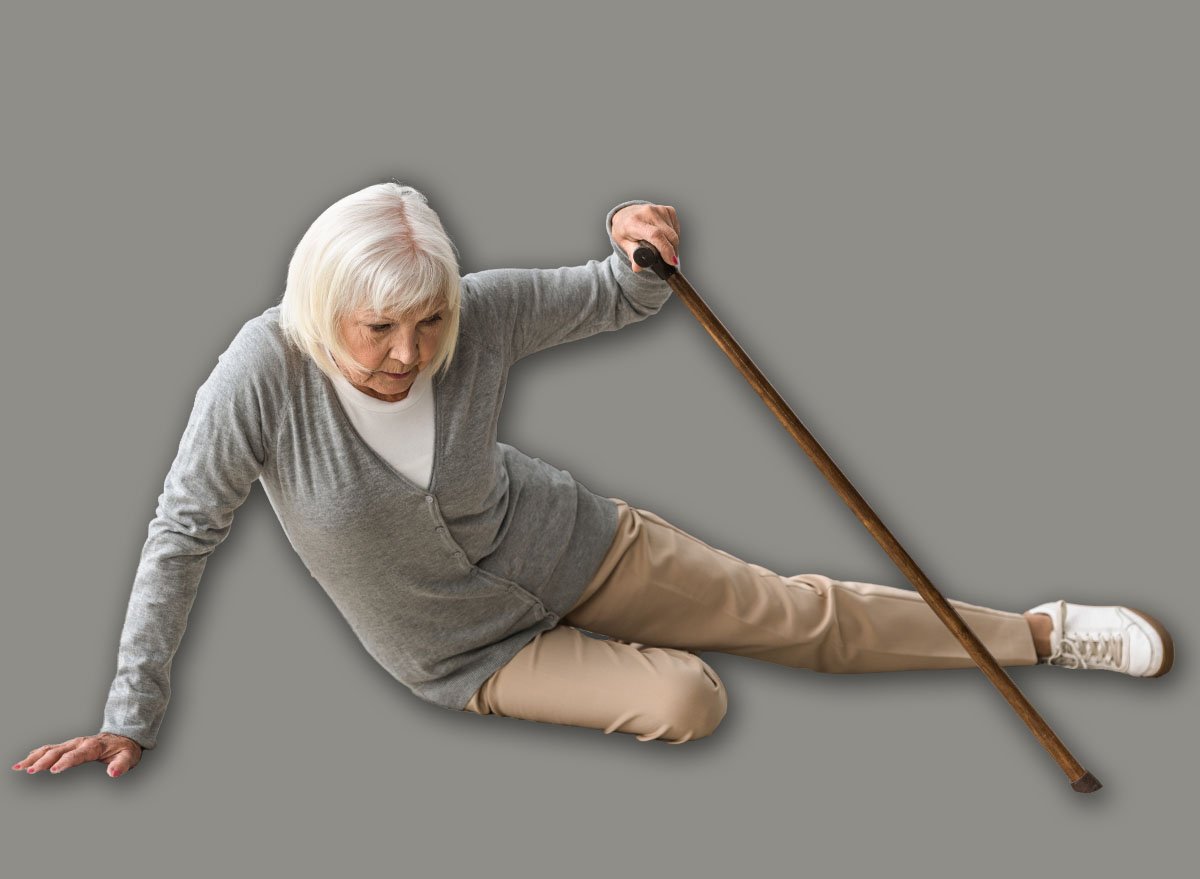
A trainer’s 4-phase method rebuilds your ability to get off the floor after 65.
When I talk about exercise that makes getting off the floor easier after 65, I’m not just talking about what’s convenient. I’m talking about independence, confidence, and in some cases, survival. According to the CDC, more than one in four adults over 65 falls every year, and falls are the leading cause of injury-related deaths for older adults.
Each year, falls lead to roughly three million emergency room visits and about one million hospitalizations among older adults. But here’s the part people don’t think enough about. It’s not only the fall that matters. It’s what happens after.
Can you get back up? Can you roll to your side, push onto your knees, get one foot underneath you, and stand without panicking or injuring yourself further? When older adults fall and can’t get up, the situation becomes much more serious. Research on older adults found that many people who fall are unable to get up without help, and some remain on the floor for an hour or more. That prolonged time on the floor is often called a long lie.
A long lie can dehydrate you, cause pressure injuries, muscle damage, hypothermia, delayed medical care, and a major loss of confidence. And once fear enters the body, people move less. They stop getting on the floor. They stop walking as much. They stop challenging their legs, hips, trunk, shoulders, and balance. That’s where the downward spiral can begin.
Less movement leads to less strength. Less strength leads to less balance. Less balance leads to more fear. More fear leads to fewer activities. And fewer activities lead to a greater chance that the next fall will become more serious.
Hip fractures are one of the biggest concerns after a fall. They usually require surgery, hospitalization, rehab, and long-term care. Studies estimate that roughly 18% to 33% of older adults die within one year after a hip fracture, depending on overall health status and risk factors. Recent estimates place the yearly cost of nonfatal older adult falls in the United States around $80 billion, with Medicare bearing the majority of that cost.
So when I teach people how to get off the floor, I’m not just trying to make someone better at exercise. I’m trying to help keep them on the physical map that allows them to return from the ground to standing. That map includes rolling, pushing, kneeling, lunging, rotating, bracing, breathing, and coordinating the whole body. Getting off the floor isn’t one movement. It’s a conversation between the feet, knees, hips, spine, shoulders, hands, eyes, inner ears, and the nervous system.
These four exercises are designed to rebuild that conversation. They help train the body to stay calm, organized, and capable if you ever find yourself on the floor. After 65, the goal isn’t just to avoid falling. It’s to have enough strength, mobility, awareness, and confidence to recover if life puts you there.
Phase 1: Roll to Your Forearm
This first phase teaches your body to use leverage, not just muscle, to shift its weight. By bending one leg and using the opposite arm as a guide, you’re training the rotational pattern that starts the entire floor-to-stand sequence. The eyes stay on the raised hand throughout, which keeps the nervous system calm and organized. You’re learning to feel your way up, not search for the floor.
Muscles Trained: Core, obliques, hip flexors, shoulder stabilizers
How to Do It:
- Start lying on your back.
- Bend your right leg and raise your right arm, keeping your eyes on your hand.
- Push through your right foot to drive yourself up onto your left forearm.
- Return all the way back down to the starting position.
- Repeat 5 to 10 times until you’re comfortable, then switch sides.
Form Tip: Keep your eyes on your raised hand throughout the entire movement. The goal is to feel your way up, not look at the floor.
Phase 2: Lift to the Hand and Bridge
Once you can smoothly roll to your forearm, this phase adds two critical elements: pushing up onto a straight arm and lifting the hips. That hip lift builds the glute and core strength needed to clear the ground and establish a stable base. It additionally reinforces the pattern of stacking joints, which is key for safe, controlled movement on the floor.
Muscles Trained: Glutes, triceps, core, hip extensors
How to Do It:
- Complete Phase 1: bend the leg, reach the arm, roll to the forearm.
- Shift your weight from the forearm onto your hand so your arm is straight.
- Lift your hips up into the air and hold briefly.
- Return back down, one step at a time, all the way to the starting position.
- Repeat 4 to 5 times before moving on.
Form Tip: Don’t rush the transition from forearm to hand. Shift your weight intentionally before lifting the hips.
Phase 3: Bring the Leg Through
This is the pivot point of the whole sequence. Sweeping the leg under the body while holding the hip bridge position requires coordination, balance, and hip mobility working together. It’s the movement most people have lost without realizing it, and regaining it is what makes a controlled floor exit possible instead of a scramble.
Muscles Trained: Hip flexors, glutes, core stabilizers, adductors
How to Do It:
- Complete Phases 1 and 2: roll to the forearm, shift to the hand, lift the hips.
- From the hip bridge position, bring your free leg under your body.
- Hold the position briefly.
- Return in reverse order, one phase at a time, back to the starting position.
- Repeat the full three-phase sequence 4 to 5 times.
Form Tip: Don’t drop the hips as you sweep the leg through. Keep them lifted to sustain stability in the transition.
Phase 4: Stand Up and Come Back Down
The final phase puts all three earlier movements together and adds the stand. But coming back down is just as important as standing up. Practicing the controlled descent, finding the leg, sweeping it back through, lowering to the forearm, and returning to the floor, teaches the body that this is a two-way street. That’s what builds real confidence: knowing you can go down safely, not just get back up.
Muscles Trained: Quadriceps, glutes, hamstrings, core, shoulders, calves
How to Do It:
- Complete Phases 1, 2, and 3.
- From the kneeling position, square up and stand.
- To return to the floor: extend sideways to find the ground, bring the leg back through, lower to the forearm, and roll all the way down to the starting position.
- Aim for 5 repetitions on each side before switching.
Form Tip: Don’t skip the return. Practicing the controlled descent is just as important as the stand. The goal is confidence in both directions.
