

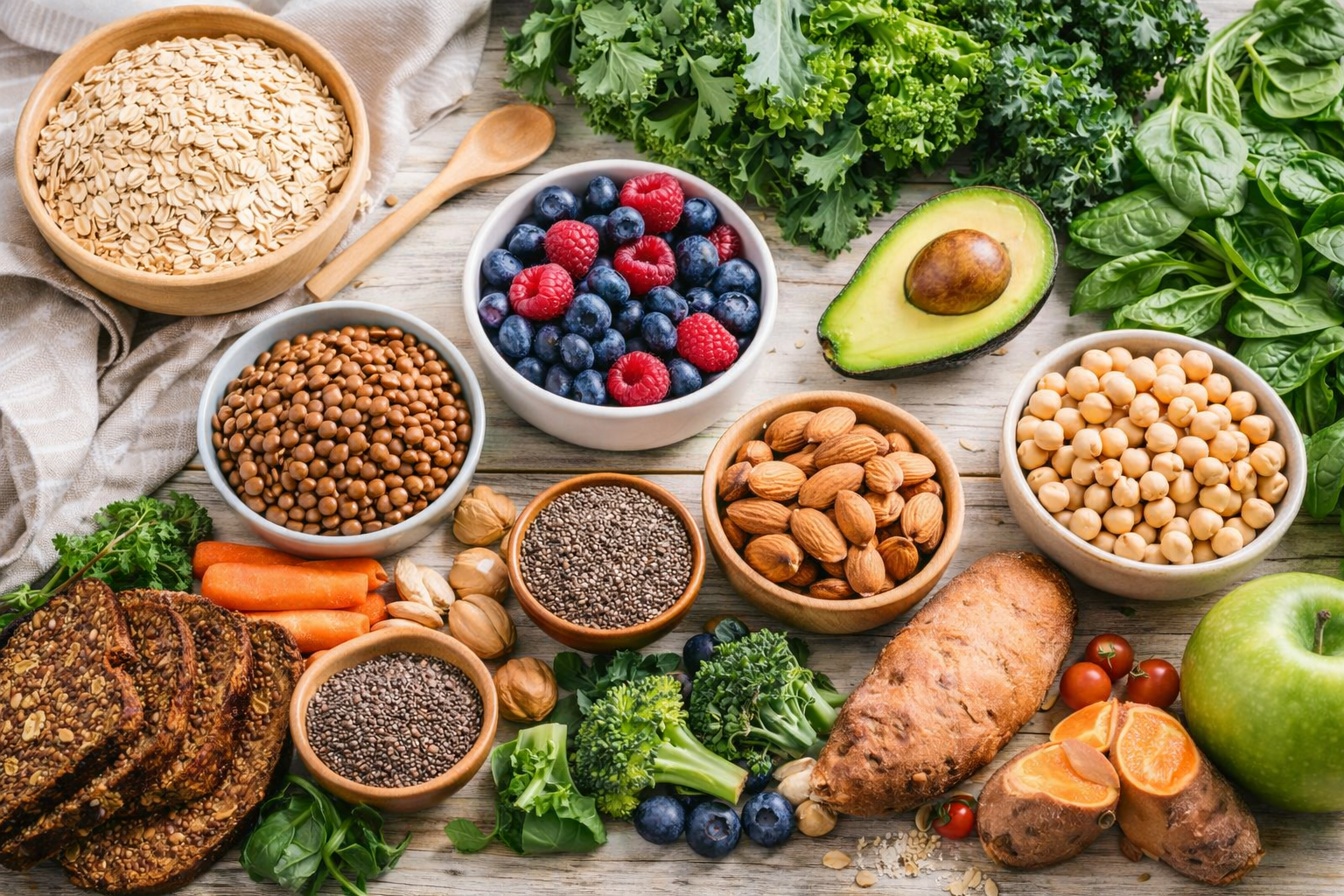
Many people feel frustrated by digestion.
They try to eat “healthy,” yet still deal with bloating, irregularity, constipation, or that heavy feeling in the stomach that makes the whole day feel off. Sometimes the answer is not doing something extreme. Sometimes the body simply needs what it has been missing for a very long time: real plant fiber.
This matters more than most people realize. The vast majority of adults still do not get enough fiber. That gap affects not only regularity, but also the gut microbiome, immune balance, inflammation, blood sugar stability, and even how well the body clears waste.
From a Hallelujah Diet perspective, this should not surprise us. When we move away from the foods God designed to nourish the body—living plant foods full of natural structure, water, enzymes, and fiber—the body often begins to struggle in quiet but persistent ways. Digestion slows. Elimination weakens. The inner terrain becomes less balanced.
Fiber is not a trend. It is part of the design. In this article, you will learn why fiber matters for digestive health and discover 25 plant foods that can help support regularity, nourish the microbiome, and gently strengthen digestion over time.
In This Article
Why Fiber Matters So Much for Gut Health
Fiber is the part of plant food your body does not fully digest. Instead of being broken down like sugar or starch, it travels through the digestive system and performs important work along the way.
Some fiber adds bulk to stool and supports movement through the intestines. Other types absorb water and create a softer gel-like texture, helping waste pass more easily. Certain fibers also feed beneficial gut bacteria, which then produce compounds that nourish the colon and support a healthier internal environment.
Fiber supports gut health in several key ways:
• Supports regular bowel movements
Fiber helps form stool, soften waste, and improve movement through the colon.
• Feeds beneficial gut bacteria
Certain fibers act as nourishment for the microbiome. When helpful bacteria are well fed, they help maintain a healthier digestive environment.
• Supports the gut lining
When gut bacteria ferment fiber, they create beneficial compounds that help nourish the cells of the colon and support barrier integrity.
• Promotes whole-body wellness
Healthy digestion affects more than the stomach. It connects to energy, immune balance, comfort, and how the body manages daily stress.
Digestive discomfort should not be ignored. Constipation, bloating, and sluggish digestion often signal that something foundational is out of balance. For many people, restoring fiber through whole plant foods is one of the simplest ways to begin supporting better digestive health.
Soluble vs. Insoluble Fiber: What Is the Difference?
Both kinds of fiber matter, but they do different jobs.
Soluble fiber
Soluble fiber mixes with water and forms a soft gel-like substance. It is often found in foods like oats, beans, apples, citrus fruits, carrots, barley, chia, and flax.
This type of fiber can help: – soften stool – slow digestion in a helpful way – support blood sugar stability – feed beneficial gut bacteria
Insoluble fiber
Insoluble fiber does not dissolve in water. It adds bulk and helps move material through the digestive tract. It is found in foods like leafy greens, vegetable skins, whole grains, nuts, and many vegetables.
This type of fiber can help: – support movement through the bowels – reduce sluggishness – encourage regular elimination
Most people do best with a mix of both. The goal is not to obsess over categories. The goal is to eat a wide variety of whole plant foods.
Why Some Healthy High-Fiber Foods Cause Bloating at First
This is where many people get discouraged.
They add beans, raw vegetables, chia pudding, bran cereal, or a huge smoothie overnight, and within a day or two they feel puffy, uncomfortable, and convinced fiber is not for them.
Usually that is not the real problem.
The problem is often too much, too fast.
If the gut has been underfed in fiber for years, the microbiome may not be ready to process a sudden surge of fermentable food. Gas and bloating can increase during that adjustment period. This does not always mean the food is bad. It often means the body needs a slower transition.
That is why wisdom matters here. More is not always better in the beginning.
A gentle approach tends to work far better: – increase fiber gradually – drink more water – start with easier foods first – prepare beans and legumes well – pay attention to your body without becoming fearful
For many people, the gut adapts over time.
25 High-Fiber Plant Foods That Support Gut Health
Whole plant foods provide the natural fiber the digestive system was designed to use. The foods below help support regular elimination, beneficial gut bacteria, and long-term digestive balance.
Below are 25 fiber-rich plant foods grouped by category to make them easier to explore and incorporate into everyday meals.
Legumes
Legumes are among the most powerful fiber foods available. They support digestion while feeding beneficial gut bacteria.
Lentils
Fiber: ~15g per cooked cup
Lentils are one of the richest plant-based sources of fiber. Their soluble fiber helps nourish beneficial gut bacteria while supporting regular digestion.
Easy ways to eat them
• lentil soup
• vegetable stews
• grain bowls
• sprouted lentil salads
Black Beans
Fiber: ~15g per cooked cup
Black beans provide substantial fiber that helps support microbial diversity and digestive regularity.
Easy ways to eat them
• burrito bowls
• vegetable chili
• bean salads
• blended into spreads
Chickpeas
Fiber: ~12g per cooked cup
Chickpeas provide both fiber and plant protein while often being easier to digest than heavier beans.
Easy ways to eat them
• hummus
• roasted chickpeas
• soups
• salads
Split Peas
Fiber: ~16g per cooked cup
Split peas are one of the highest-fiber legumes and are especially helpful for supporting regular bowel movements.
Easy ways to eat them
• split pea soup
• vegetable stews
• thick soups
• grain bowls
Green Peas
Fiber: ~9g per cooked cup
Green peas are often gentler than dried legumes but still provide meaningful fiber and nutrients.
Easy ways to eat them
• added to rice or quinoa
• blended into soups
• mixed into salads
• simple side dish
Berries and Fruits
Fruit provides gentle fiber along with antioxidants and hydration, making it an excellent entry point for increasing fiber intake.
Raspberries
Fiber: ~8g per cup
Raspberries are one of the most fiber-dense fruits available and are easy to add to many meals.
Easy ways to eat them
• smoothies
• oatmeal
• fruit bowls
• yogurt alternatives
Blackberries
Fiber: ~8g per cup
Blackberries provide excellent fiber along with beneficial plant compounds.
Easy ways to eat them
• fresh snacks
• smoothies
• fruit salads
• breakfast bowls
Blueberries
Fiber: ~4g per cup
Blueberries provide fiber along with powerful antioxidants that support overall wellness.
Easy ways to eat them
• oatmeal
• smoothies
• fruit bowls
• salads
Pears
Fiber: ~5–6g per fruit
Pears contain beneficial soluble fiber, especially when eaten with the skin.
Easy ways to eat them
• fresh snacks
• sliced into salads
• baked fruit dishes
• smoothies
Apples
Fiber: ~4–5g per fruit
Apples provide pectin, a soluble fiber that supports beneficial gut bacteria.
Easy ways to eat them
• sliced with nut butter
• oatmeal topping
• fruit bowls
• blended smoothies
Bananas
Fiber: ~3g per fruit
Bananas are often one of the gentlest fiber foods for beginners.
Easy ways to eat them
• smoothies
• oatmeal
• fruit bowls
• frozen desserts
Oranges
Fiber: ~3–4g per fruit
Eating the whole orange provides fiber that juice does not.
Easy ways to eat them
• fresh snacks
• fruit salads
• smoothie blends
• citrus bowls
Fruits provide gentle fiber along with antioxidants that support digestive and metabolic health.
Vegetables
Vegetables provide fiber along with minerals, phytonutrients, and hydration that support digestive health.
Sweet Potatoes
Fiber: ~4g per cup
Sweet potatoes are one of the easiest high-fiber foods to digest.
Easy ways to eat them
• baked
• roasted cubes
• mashed
• added to bowls
Carrots
Fiber: ~3–4g per cup
Carrots are mild, versatile, and easy to incorporate into daily meals.
Easy ways to eat them
• raw snacks
• salads
• soups
• roasted vegetables
Broccoli
Fiber: ~5g per cup
Broccoli provides fiber along with powerful plant nutrients.
Easy ways to eat them
• steamed
• stir-fries
• roasted
• soups
Brussels Sprouts
Fiber: ~4g per cup
These small vegetables provide concentrated fiber and nutrients.
Easy ways to eat them
• roasted
• sautéed
• shredded salads
• grain bowls
Artichokes
Fiber: ~10g per medium artichoke
Artichokes are among the highest-fiber vegetables and contain powerful prebiotic compounds.
Easy ways to eat them
• steamed
• salads
• dips
• roasted halves
Kale and Leafy Greens
Fiber: ~2–3g per cup
Leafy greens provide gentle fiber along with minerals and chlorophyll-rich nourishment.
Easy ways to eat them
• salads
• smoothies
• sautéed greens
• soups
(Note: your memory preference for collard greens could also be included here for future versions.)
Whole Grains
Whole grains provide steady fiber along with complex carbohydrates that support energy and digestive balance.
Oats
Fiber: ~4g per cup cooked
Oats are one of the easiest high-fiber foods for most people to tolerate.
Easy ways to eat them
• oatmeal
• overnight oats
• smoothies
• homemade cereals
Barley
Fiber: ~6g per cup
Barley is rich in soluble fiber that supports heart and digestive health.
Easy ways to eat them
• soups
• grain bowls
• salads
• vegetable stews
Quinoa
Fiber: ~5g per cup
Quinoa provides both fiber and plant protein.
Easy ways to eat them
• grain bowls
• salads
• breakfast porridge
• vegetable dishes
Brown Rice
Fiber: ~3–4g per cup
Brown rice offers more natural fiber and nourishment than refined white rice.
Easy ways to eat them
• vegetable bowls
• stir-fries
• stuffed vegetables
• grain salads
Seeds and Nuts
Seeds and nuts provide concentrated fiber along with healthy fats.
Chia Seeds
Fiber: ~10g per 2 tablespoons
Chia seeds absorb water and form a gel that supports digestion.
Easy ways to eat them
• chia pudding
• smoothies
• oatmeal
• sprinkled on fruit
Ground Flaxseeds
Fiber: ~5g per 2 tablespoons
Ground flax provides both fiber and beneficial fats.
Easy ways to eat them
• smoothies
• oatmeal
• homemade cereals
• baked goods
Almonds
Fiber: ~3–4g per ounce
Almonds are a convenient fiber-rich snack that also provides healthy fats.
Easy ways to eat them
• snack handful
• chopped in salads
• nut butter
• blended into sauces
Special Mention: Avocado
Fiber: ~10g per avocado
Avocados provide substantial fiber along with healthy fats that help support satiety and digestive balance.
Easy ways to eat them
• salads
• grain bowls
• blended dressings
• plant-based spreads
Legumes are among the most fiber-dense foods in nature and provide powerful support for gut health.
Which High-Fiber Foods Are Easiest on the Stomach?
If you are just starting, it often helps to begin with foods that are more gentle.
Good beginner options include: – oats – bananas – sweet potatoes – carrots – raspberries – oranges – quinoa – brown rice – leafy greens – almonds
These foods can help you begin supporting digestion without overwhelming the system.
Which High-Fiber Foods Are More Likely to Cause Gas at First?
Some foods are excellent for the gut but may need a slower introduction: – beans – lentils – split peas – broccoli – Brussels sprouts – artichokes – apples – pears – large amounts of chia
These are not “bad” foods. They simply require wisdom, portion awareness, and preparation.
How to Increase Fiber Without Making Bloating Worse
This is where simple habits matter.
Start low and go slow
Add a little at a time. Do not jump from a low-fiber pattern to a very high-fiber pattern overnight.
Increase water too
Fiber needs water to do its job well. Without enough fluids, constipation can get worse instead of better.
Use simple preparation methods
Beans and lentils are often easier to tolerate when soaked, rinsed, and cooked thoroughly.
Build meals around whole foods
Rather than chasing one “miracle” fiber food, build a rhythm of fruits, vegetables, grains, seeds, and legumes across the day.
Give your body time
Some adjustment is normal. A little temporary gas does not necessarily mean something is wrong.
A Simple Gentle Plan to Begin
Here is a calm way to start:
Week 1
Add one easy fiber food each day, such as oatmeal, a banana, or cooked carrots.
Week 2
Add a second source, such as berries, quinoa, or sweet potato.
Week 3
Introduce a moderate portion of chickpeas, lentils, or broccoli.
Week 4
Continue widening variety, listening to your body, and increasing hydration.
This kind of slow progression is usually far more sustainable than a sudden “healthy overhaul.”
Common Fiber Myths
Myth: All fiber works the same
It does not. Different fibers affect digestion and the microbiome in different ways.
Myth: More fiber right away is always better
Not usually. A fast increase often creates unnecessary bloating and discomfort.
Myth: Supplements are better than food
Whole foods offer more than isolated fiber. They bring vitamins, minerals, water, antioxidants, and the natural balance the body recognizes.
Myth: Gas from fiber means the food is bad for you
Not necessarily. Sometimes it simply means your gut is adjusting.
Myth: Fiber only matters for constipation
Fiber supports far more than regularity. It affects gut bacteria, satiety, blood sugar handling, and overall digestive health.
When to Seek Medical Guidance
Digestive changes should be taken seriously when they become persistent or concerning.
Talk to a healthcare professional if you have: – constipation lasting more than a few weeks – blood in the stool – severe abdominal pain – unexplained weight loss – nausea or vomiting with constipation – a sudden major change in bowel habits – new constipation later in life without a clear reason
This article is for education and nourishment guidance, not diagnosis.
Final Encouragement
Many people do not need a more complicated health plan. They need a more faithful return to simple foundations.
Whole plant foods bring structure, life, and nourishment that the body was created to use well. When fiber has been missing for years, the answer is rarely to force the body. The answer is to support it gently.
Start with one food. Add another next week. Drink more water. Stay steady.
Small steps, done consistently, can make a meaningful difference.
If you want deeper support in building a more plant-centered way of eating, you may explore more nutrition resources at MyHDiet.com.
We offer these teachings freely to support clarity, stewardship, and responsible care.
If this article was helpful, you may explore additional resources here:
Thank you for being part of a community committed to thoughtful, responsible healing.
