

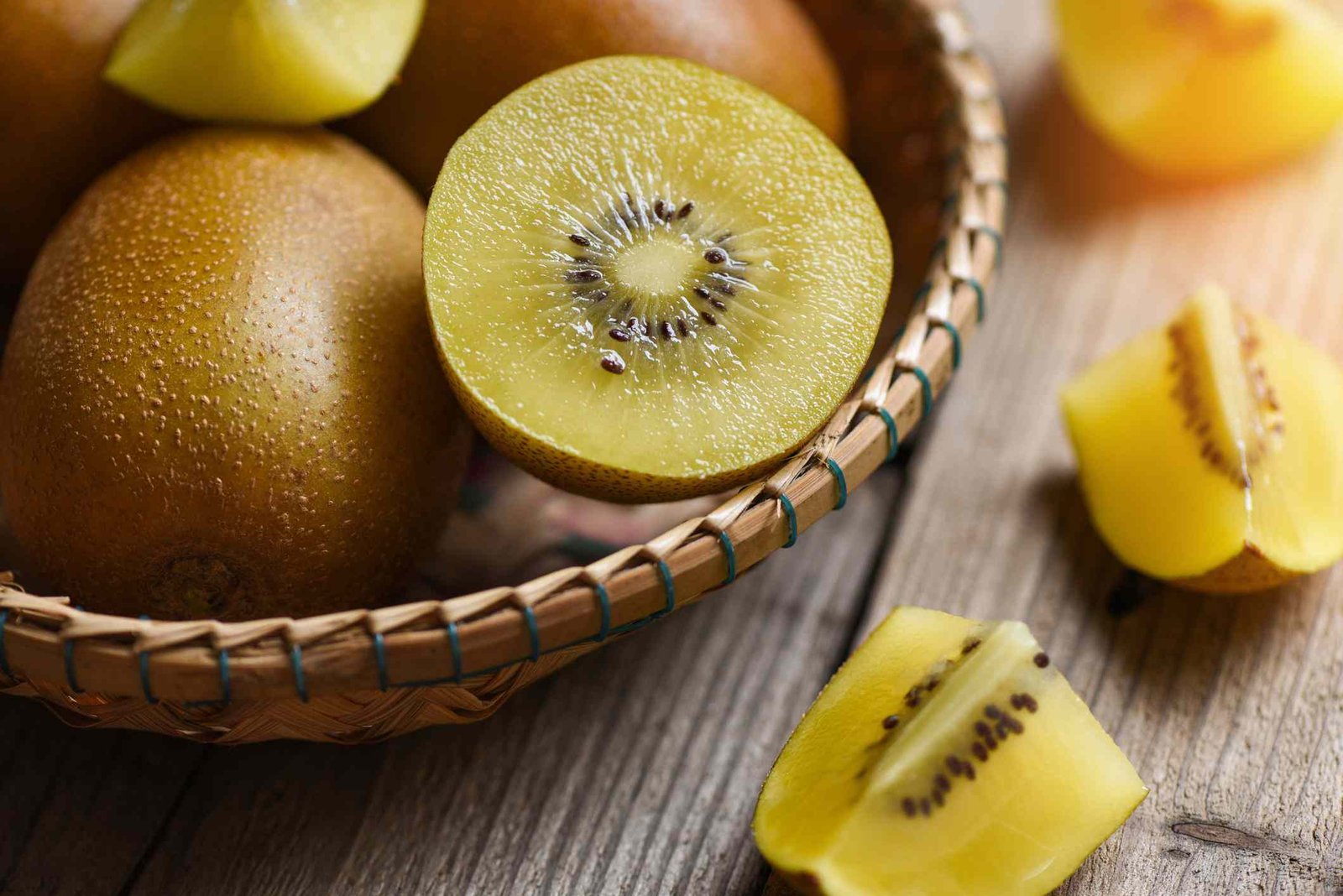
SunGold kiwis provide over 290% of your daily vitamin C needs. Eating two each day may replace the need for supplements.
Kiwis are vitamin C powerhouses. Most people think of oranges or supplements to boost vitamin C.
However, according to Jacqueline Wyman, MS, RDN, CDN, owner of Jacqueline Wyman Nutrition LLC, SunGold kiwi offers the highest amount of vitamin C per serving.
“By adding one or two kiwis per day, you can be sure that you are getting the recommended amount of vitamin C,” Wyman told Health.
Snacking on kiwis can replace less nutritious snacks, improving overall health. According to Wyman, a SunGold kiwi contains 130 milligrams of vitamin C per 80-gram serving. The green variety contains 70 milligrams of vitamin C and is slightly smaller.
“If you enjoy kiwifruit, they are a great source for meeting your daily requirement of vitamin C,” said Wyman.
There’s limited research on whether or not kiwifruit will prevent you from getting a cold or flu, even with its large quantities of vitamin C.
The idea of taking large doses of vitamin C to prevent the common cold originated in the 1970s when scientist and researcher Linus Pauling speculated that a daily vitamin C intake of 1,000 milligrams could decrease the incidence of colds by about 45%.
However, subsequent clinical studies have failed to demonstrate its efficacy. That said, researchers in a 2012 study did find that eating kiwifruit could potentially shorten the duration of a cold.
Scientists found that people who ate four gold kiwis a day reported less severe congestion and sore throat pain than the control group. Participants who ate kiwis each day also reported that their cold symptoms resolved faster than those in the control group.
Other Kiwi Benefits
There are also other benefits to eating kiwifruit.
Regularly eating kiwis can increase high-density lipoprotein cholesterol (HDL), decrease triglycerides, and lower blood pressure. Gold kiwis may help people with anemia boost their iron levels when eaten alongside iron-rich meals.
“Incorporating kiwi into your daily routine this winter is a practical way of taking in vitamin C because smaller doses are more readily absorbed than one large dose, such as a supplement,” said Wyman.
Wyman recommended planning to include a kiwi as part of a midday snack or dessert, along with other fruits and vegetables that are higher in vitamin C.
According to Wyman, obtaining vitamin C from a variety of fruits and vegetables is preferred to supplements because they offer many other benefits, unlike a single vitamin.
“It is interesting to note that in studies of vitamin C and prevention or treatment of disease, [researchers] state that it is difficult to separate the benefits of vitamin C from the synergistic effect of all the components in fruit and vegetables, for example, fiber, folate, magnesium, and potassium,” said Wyman.
If you are looking to boost your vitamin C but do not like kiwi or are allergic to it, you can find vitamin C in several other foods, too.
Aside from oranges, bell peppers in all colors are rich in vitamin C, with orange bell peppers having the most, said Wyman.
“You can also get a comparable amount of vitamin C in kale, broccoli, Brussels sprouts, cabbage, strawberries, and pineapple,” said Wyman.
