

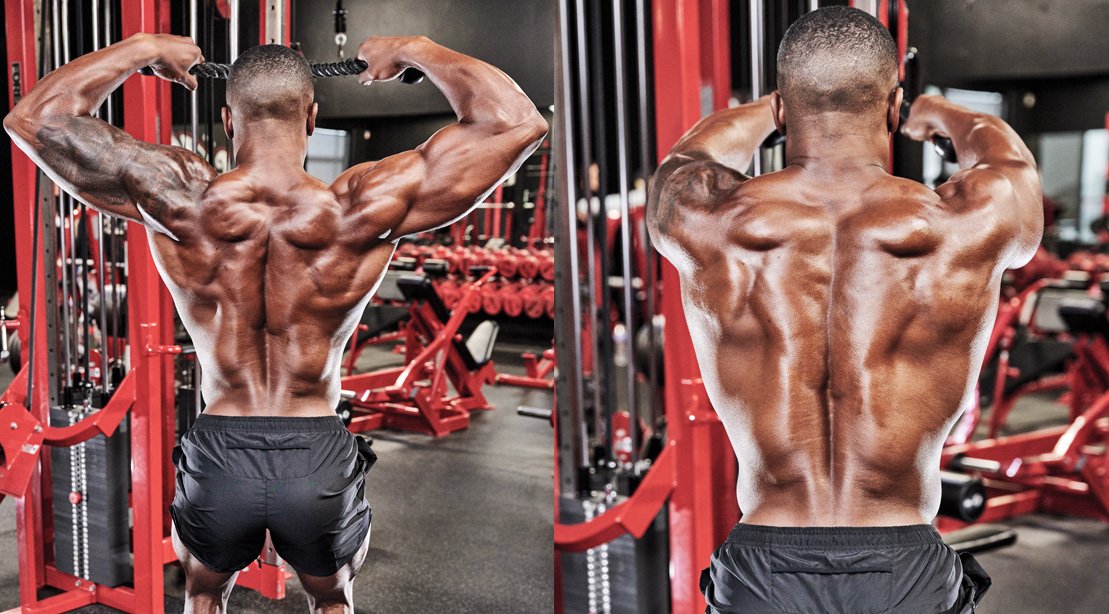
The standard face pull variation is excellent for shoulder health, better posture, and improved presses and pulls. However, your shoulders, traps, and upper back muscles run at different angles, but if you train only them at one angle, you’re leaving potential gains behind.
Some lifters rely on one or two variations, thereby possibly neglecting certain upper back muscles. You don’t have to do that. These 10 face-pull variations attack your upper back from multiple angles, reinforce scapular control, and build shoulder stability that carries over to everything in and out of the gym.
Train them well, and everything gets stronger.
Here we’ll explore 10 face-pull variations that will have your rear delts and upper back saying thank you. But first, I’ll explain why I chose these variations.
Why You Need Multiple Face Pull Variations
The variations below are “the same but different.” They keep you engaged, help avoid overuse-related niggles, and let you tailor the exercise to your needs. Here are five reasons they made the cut.
- Protect Your Press: Strong rear delts, lower traps, rhomboids, and external rotators create better shoulder stability. Without that, pressing becomes a grind, and the shoulders take a beating. These variations reinforce scapular control and external rotation, the exact qualities that support bigger benches and stronger overhead presses.
- Improve Pulling Power: Your lats and upper back can’t generate full force if your shoulder blades don’t move and stabilize well. These movements train scapular retraction, depression, and upward rotation so your rows, deadlifts, and Olympic pulls feel smoother and tighter.
- It’s All About The Angles: Changing cable height, grip position, body position, and stability shifts emphasis across the rear delts, mid traps, lower traps, and rotator cuff. It’s a strategic variation for developing the entire shoulder and upper back area.
- Eliminates Cheating: Some variations reduce momentum, others increase instability. Together, they require enhanced focus and intentional contraction. That means stronger end-range control and fewer shoulder issues when the going gets heavy.
- They’re Progressive, Not Corrective: No rehab fluff here. Each variation can be loaded, paused, slowed, or programmed for hypertrophy and endurance. When trained well, face pulls become a performance tool, not just shoulder maintenance.
10 Face Pull Variations to Build Stronger Shoulders
When you’re ready, willing, and able to upgrade your face pulls, take one of these variations out for a test drive.
Foam Roller Supine Face Pulls
According to Gareth Sapstead (MSc, CSCS), a strength coach who has used this exercise to build the physiques of world champion and Olympia athletes, this unique version focuses on stricter technique. “This is one of my go-to face pull variations,” says Sapstead. “When the goal is quality of movement, not load.”
He explains that you lie supine with a long foam roller running lengthwise down the spine. The cable is set low to mid, and the pull finishes toward the face as usual.
Benefits
- Developing scapular control and awareness
- Biasing the rear delts and mid-traps without upper-trap dominance
- Teaching proper retraction and external rotation sequencing
Form Tip: “No leaning back, no momentum, and no jutting the neck forward to finish the reps,” warns Sapstead.
Sets & Reps: 2-3 sets of 10–20 reps.
High-to-Low Face Pull
The high-to-low face pull is performed with the cable set above head height, pulling down toward the forehead area or upper chest. Instead of pulling straight down to eye level, the downward angle emphasizes scapular depression and lower-trap engagement.
Benefits:
- Strengthens lower traps and mid-back
- Improves overhead pressing stability
- Reinforces shoulder positioning under load
Form Tip: Pull elbows slightly down and back, not flared high. Think chest up and shoulder blades in your back pocket.
Sets & Reps: 2-3 sets of 15 reps
Single-Arm Face Pull
The single-arm face pull is a unilateral version using one handle or gripping the rope with one hand. As with most unilateral exercises, they strengthen imbalances between sides and demand more from your mid-section.
Benefits:
- Fixes left-right imbalances
- Improves shoulder blade control
- Enhances core engagement
Form Tip: Engage glutes, keep the hips square, and resist torso rotation during the pull.
Sets & Reps: 2-3 sets of 12 per side
Rear Delt Face Pull
Matt Wenning of Wenning Strength doesn’t mess around, and he brings this intensity to his face pull variation. “Most lifters butcher face pulls,” explains Wenning. “Because they turn them into a row with a lean-back. He often uses bands to target the rear delts at the end of the motion. “Using bands for rear-delt face pulls is money,” he says. “If the goal is to bias the rear delts instead of turning it into an upper-trap or mid-back exercise.”
Benefits
- The scapula and posterior rotator cuff work better together
- Constant tension improves motor unit recruitment in the rear delts
- Enhanced scapular retraction & posterior shoulder work
Form Tip: Finish with elbows high, forearms externally rotated, and pause for 2 seconds before returning to the starting position.
Sets & Reps: 3–4 sets of 8–12 strict reps
Half-Kneeling Face Pull
The half-kneeling face pull is performed from a half-kneeling stance to increase core demand, improve hip mobility, and reduce compensation. Removing the stability of standing and reducing your support base increases bracing requirements, and you’re working more muscles with the same weight.
Benefits:
- Improves core-to-shoulder connection
- Reinforces upright posture
- Enhances shoulder stability under tension
Form Tip: Squeeze the glute of the down knee, keep your shoulders down, chest up, and lock in that core for the entire set. Ensure you swap the knee down for each set.
Sets & Reps: 2–4 sets of 10 reps
Banded Face Pull with Overhead Press
Regarding shoulder health, Dr. Bo Babenko, of Colorado’s Fitcare Physiotherapy, doesn’t do anything by halves, as shown by the banded face-pull with an overhead press. This isn’t just a face pull with a press tacked on. It’s a sequencing drill that teaches the shoulder blade to move the way it was designed to. “If the scapula doesn’t move well,” explains Babenko, “the humerus pays the price.”
Unlike a traditional rope face pull that stops at retraction, this variation integrates upward rotation and pressing mechanics. It bridges posterior shoulder activation with overhead movement, the missing link for many lifters.
Benefits
- Strengthens rear delts and serratus anterior in sequence
- Reinforces full scapular movement pattern
- Encourages better rib cage positioning during pressing
Form Tip: Keep ribs down, don’t flare the chest, and let the shoulder blades rotate instead of shrugging.
Sets & Reps: 3 sets of 8 controlled reps
Chest-Supported Face Pull
A common issue with the standard face pull is that the load pulls you forward. Instead of building your rear delts and upper back, you’re fighting balance. Performing it seated on an adjustable weight bench eliminates almost all momentum and balance requirements, forcing strict rear-delt and mid-back work.
Benefits:
- Enhanced muscle isolation
- Better mind-muscle connection
- Reduced cheating
Form Tip: Pause briefly at the goal post position and control the negative. Don’t be afraid to go heavier here, given your increased stability.
Sets & Reps: 3–4 sets of 8.
TRX Face Pull with External Rotation
The TRX face pull with external rotation variation combines the face pull with additional external rotation. Here, you’ll adjust your intensity by moving your feet closer to or farther from the anchor point. You may end up moving more weight than in the standard variation while further strengthening your core.
Benefits:
- Improves scapular rhythm
- Further strengthens the external rotators
- The strap instability enhances the need for proper form
Form Tip: Keep glutes tight, feet screwed into the ground, and rotate hands back at the top.
Sets & Reps: 3 sets of 15 reps
Incline Bench Cable Face Pull
You will perform this variation on an inclined bench positioned in front of a cable stack. The incline bench eliminates the ability to lean back, use momentum, or compensate through the lower body. With your torso supported, the movement becomes strict, shifting the emphasis directly onto the rear delts, mid-traps, and external rotators.
Benefits:
- Enhanced rear-delt isolation
- Eliminates cheating and torso sway
- Excellent hypertrophy option for upper-back thickness
Form Tip: Keep your torso glued to the inclined bench and pause briefly before lowering under control.
Sets & Reps: 3 sets of 10-15 reps
‘Heavy’ Face Pulls
The heavy face pull is the brainchild of Mike T Nelson, Ph.D., CSCS, CISSN. “The big difference,” explains Nelson, “is the position of the arms that allows you to use more weight and still go into upper arm extension.” Here you’ll pull toward your chest, rather than your face, allowing you to load up.
Benefits
- Strengthens upper arm extension
- The potential for increased load
- More upper back activation
Form tip: Nelson says that using a monkey grip (thumb on the same side as your fingers) feels better because it provides more activation in your back and less in your biceps. Think about driving your elbow toward the wall behind you.
Sets & Reps: 3 sets of 12-15 reps
