

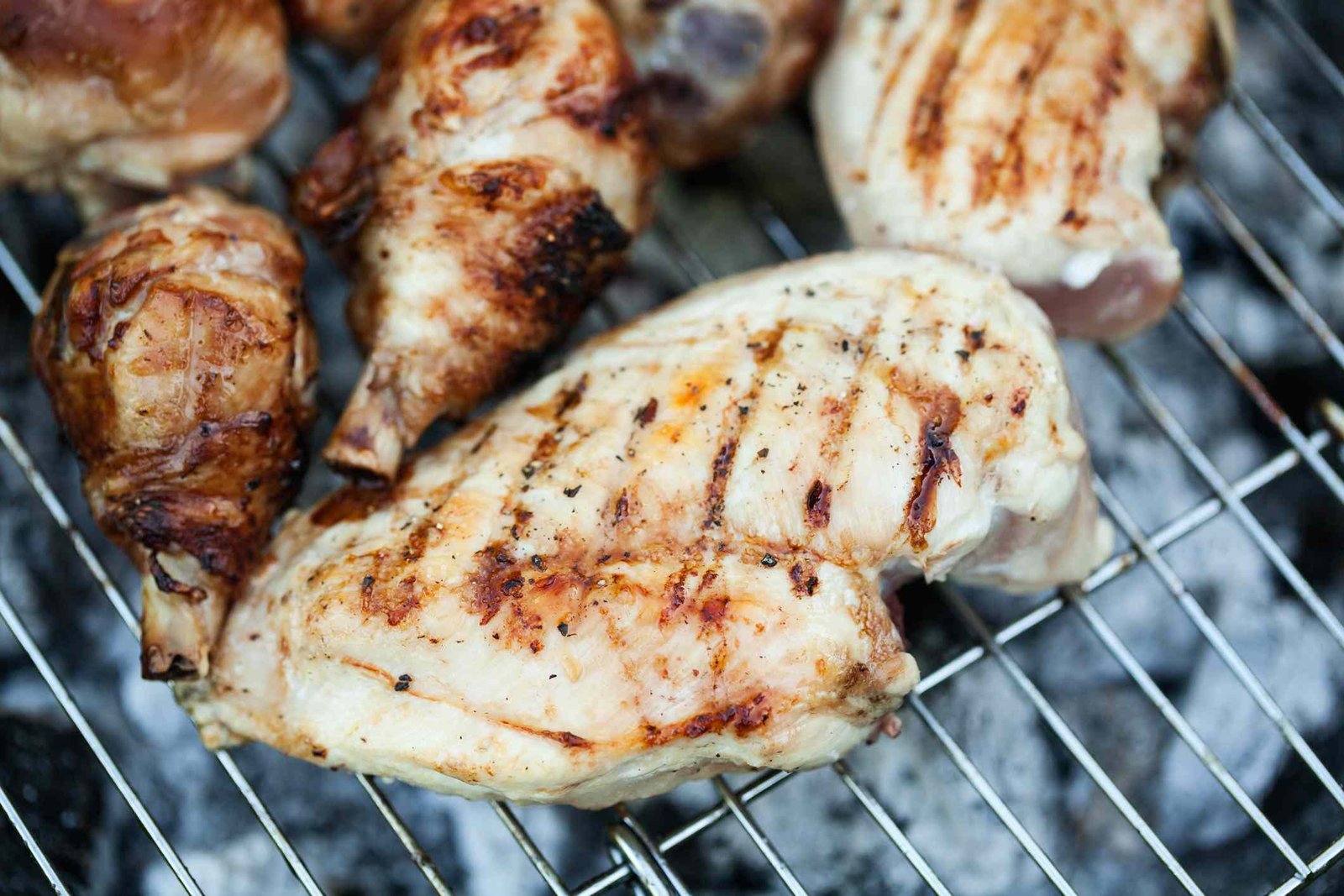
Chicken should be cooked to an internal temperature of 165 degrees Fahrenheit (74 degrees Celsius). Eating chicken that isn’t fully cooked can cause food poisoning. About one million people get sick each year from eating undercooked chicken.
Undercooked or raw chicken can be contaminated with harmful bacteria that can cause food poisoning. Bacteria commonly found in chicken include:
- Salmonella: Chicken and turkey are major contributors to salmonella infection (salmonellosis), which is often associated with diarrhea, stomach pain, and fever.
- Campylobacter: Campylobacter infection (campylobacteriosis) is most commonly caused by eating undercooked chicken. It is the most common cause of bacterial diarrhea each year. Many cases go undiagnosed or unreported.
- Clostridium perfringens (C. perfringens): This type of bacteria can produce a toxin in the intestines that causes diarrhea. It’s often linked to poultry, meat, and gravy that are cooked in large batches and kept at unsafe temperatures, especially during holidays or large gatherings. Common symptoms include diarrhea and stomach cramps without vomiting or fever.
In most cases, people with food poisoning recover on their own without treatment. However, in some cases, it can last longer or lead to serious health problems, including:
- Guillain-Barré syndrome (GBS): A rare but serious illness that can happen after food poisoning. It causes muscle weakness and, in some cases, paralysis (loss of muscle function). Campylobacter often causes GBS. The condition affects about 1 in 1,000 people who are infected with Campylobacter bacteria.
- Irritable bowel syndrome (IBS): Severe food poisoning can cause inflammation and irritation in your stomach and intestines. This can upset the balance of bacteria in your gut and increase your risk of developing IBS. Symptoms of IBS include bloating, changes in bowel habits, and abdominal pain or discomfort.
- Reactive arthritis: A rare condition that occurs when bacteria from undercooked chicken or other contaminated food cause joint inflammation, leading to pain and swelling.
Symptoms of foodborne illness can last from several hours to several days and range from mild to severe. Common symptoms include:
- Nausea
- Diarrhea
- Fever
- Stomach pain or cramps
- Vomiting
See a healthcare provider if you have any of the following more severe symptoms:
- Bloody diarrhea or diarrhea lasting more than three days
- A fever over 102°F (39°C)
- Severe vomiting
- Signs of dehydration (dry mouth, dizziness when standing, peeing very little)
Some people, including children under age 5, adults over 65, pregnant people, and those with weakened immune systems, are at higher risk for severe illness. If you or your child are in these groups and suspect you have food poisoning, see your doctor right away.
The time it takes for symptoms to appear depends on the type of bacteria. Some can make you sick within a few hours, while others may take several days.
- Salmonella: Symptoms can appear in six hours to six days; symptoms last less than four to seven days
- Campylobacter: Two to five days; last around one week
- Clostridium perfringens: Six to 24 hours; usually lasts less than 24 hours
Follow these tips to help prevent foodborne illness caused by chicken:
- Keep chicken juices away from other foods: While shopping, place chicken in a disposable bag and keep it at the bottom of your cart to prevent leaks. At home, store chicken on the bottom shelf of the fridge in a leak-proof container.
- Keep your hands washed when handling chicken: Wash your hands for at least 20 seconds with soap and water after handling raw chicken.
- Avoid rinsing off your chicken: This can spread germs and contaminate your sink.
- Use a different cutting board for raw chicken: Never place fresh produce or cooked food on a cutting board or plate that was used for raw chicken without washing it first with hot, soapy water.
- Use a food thermometer: Insert the probe into the thickest part of the chicken. For a whole chicken, check the thigh, wing, and breast. Avoid the bone. For thinner pieces, insert the thermometer through the side into the center. The internal temperature should reach at least 165 degrees.
- Handle frozen raw chicken in microwaveable meals the same as fresh raw chicken: Carefully read and follow cooking directions to prevent food poisoning.
- Freeze or refrigerate leftovers: Store within two hours, or within one hour if food has been sitting out in temperatures above 90°F (32°C), such as in a hot car or at a picnic.
Here are ways to know your chicken is safe to eat:
- Use a food thermometer: Make sure the thickest part reaches 165 degrees.
- Check the color: Chicken should be white all the way through, with no pink areas.
- Look at the juices: When you cut into the chicken, its juice should be clear. If the meat is pink or red, it is likely not done.
- Feel the texture: Cooked chicken should have a firm texture, unlike raw chicken, which can feel rubbery or slimy.
Undercooked chicken can contain harmful bacteria like Salmonella and Campylobacter. These germs can make you sick with symptoms like diarrhea, nausea, or vomiting. Symptoms may start a few hours or days after eating.
To stay safe and prevent foodborne illness, cook chicken to 165 degrees Fahrenheit using a food thermometer. Always wash your hands with soap and water after handling raw chicken.
