

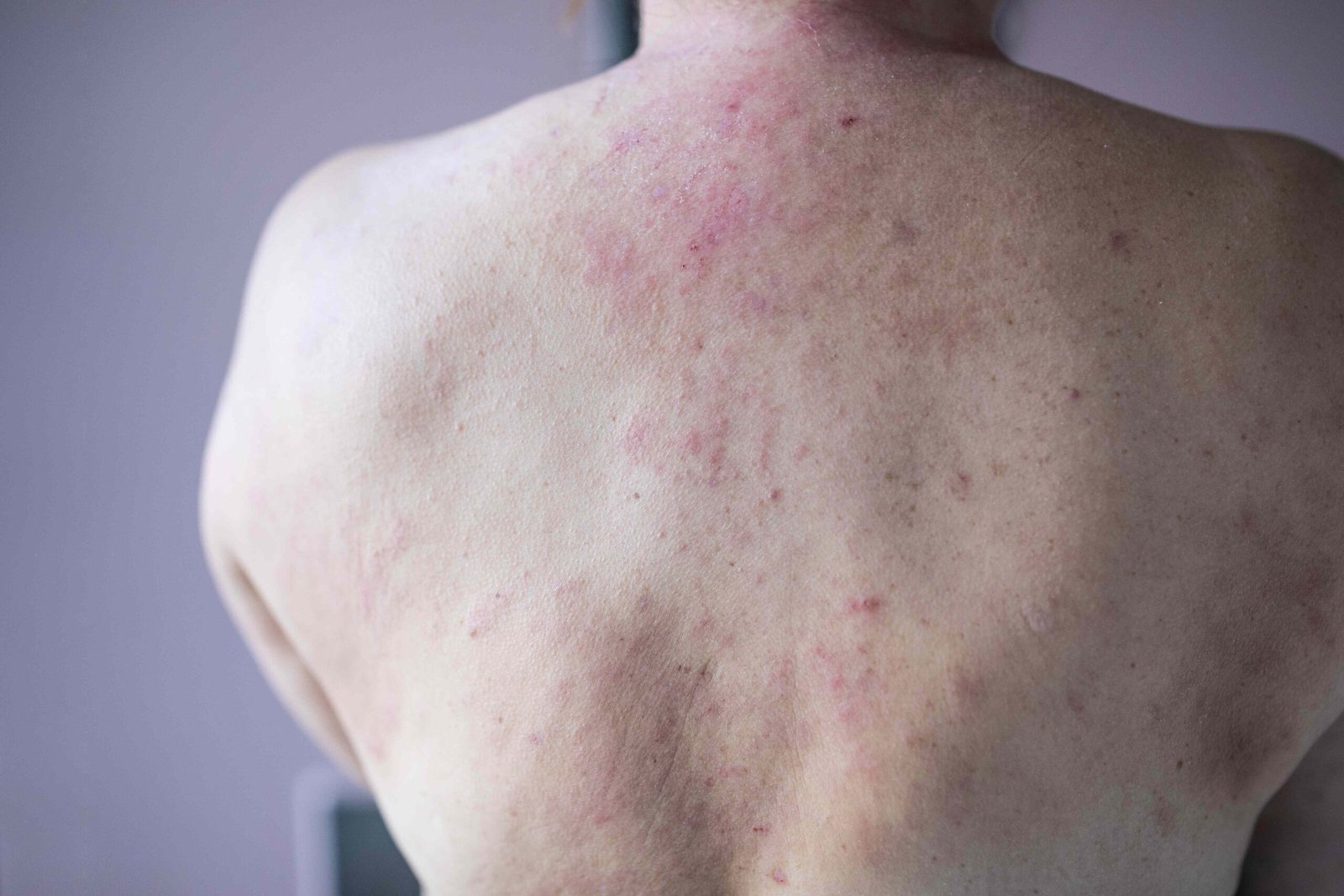
Chronic spontaneous urticaria (CSU) is a skin condition that causes bouts of itchy, raised hives on your skin that last for at least six weeks. Unlike typical hives, CSU appears without a clear trigger, such as food, medications, or contact with an irritant.
CSU causes itchy, raised patches of skin or lesions called wheals or hives. Usually, hives (or urticaria) are a sign of an allergic reaction, and they last for a few hours up to a few days. However, with CSU, hives are present somewhere on the body for at least six weeks and the cause may be unclear.
Rather than being prompted by an allergy or environmental trigger, experts believe CSU is usually autoimmune-related, meaning it occurs when your immune system becomes overactive.
In over half of CSU cases, the immune system randomly actives infection-fighting cells called mast cells. These mast cells can be found under the skin, and when activated, they release histamine and other chemicals. This can lead to leaky blood vessels and the formation of hives.
Experts aren’t totally sure why people with CSU have overactive immune systems, though genetic changes may make someone more susceptible to the condition.
Other possible causes of CSU may include:
- Infections: Some research has found links between CSU and hepatitis A or C, digestive system infections, and bacterial infections.
- Associated autoimmune diseases: CSU can sometimes be an early manifestation of an autoimmune disease, such as systemic lupus erythematosus (SLE), celiac disease, type 1 diabetes, and autoimmune thyroid disease.
- External triggers: Though it’s less common, sometimes CSU can be caused by external or environmental triggers. That may include stress, hormonal changes, nonsteroidal anti-inflammatory drugs (NSAIDs) use, pressure, water, cold, heat, exercise, vibration, and sunlight.
People who develop CSA are also more likely to have allergic rhinitis (hay fever), asthma, or atopic dermatitis (eczema), though they don’t seem to cause the condition.
CSU causes smooth, itchy bumps or wheals on your skin. These wheals often appear red or pink on light or medium skin tones. On darker skin, they may be shades of lighter or darker brown.
Hives can appear anywhere on your body and vary greatly in size and shape. Individual wheals usually fade by themselves within 24 hours, but new ones usually appear in different areas.
If you have CSU, you may experience:
- Mild to intense itching
- A stinging or burning sensation in the affected areas
- Welts that turn white or pale when you press them
- Impaired quality of life, such as trouble sleeping, sexual dysfunction, or mental health concerns
About four in 10 people with CSU also experience angioedema, which is a deep swelling under the skin. Angioedema often affects the lips or the area around your eyes, or less commonly, the genitals, hands, or feet. It may cause tingling, numbness, or pain.
It’s often challenging to determine what’s causing CSU—it may be a person’s immune system, an infection, or some other unknown factor. Because of this, you can’t always prevent it.
However, people who develop the condition may be able to reduce symptoms flares by avoiding known triggers. Keeping a symptom diary can help you identify if specific factors, such as heat or stress, make your hives worse.
Common strategies include:
- Avoiding certain medications like aspirin and ibuprofen
- Minimizing pressure from tight belts or clothing that causes friction
- Managing stress through mindfulness, yoga, or journaling
CSU usually goes away on its own. For about 50% of people, it resolves within six months. In others, it lasts longer, but rarely for 10 years or more. Cases tend to linger longer if someone has thyroid autoimmune issues or also experiences angioedema, or intense swelling.
However, CSU can be treated—the primary goal is to help patients control their symptoms and improve their quality of life. Healthcare providers start your treatment plan with standard medications and increase the strength as needed.
Common treatments include:
- Second-generation antihistamines: These are usually recommended first, and people with CSU will usually be instructed to take them daily. Second-generation antihistamines work by blocking histamine receptors in your skin to reduce itching and swelling. Examples include cetirizine, loratadine, and fexofenadine.
- High-dose antihistamines: If your symptoms don’t improve with the standard dose, your doctor may increase it by up to four times. About 40% of people with CSU will see a significant reduction in symptoms with these medications.
- Omalizumab: If antihistamine medications aren’t working, omalizumab is a good alternative. This injectable medication targets your immune system and prevents mast cell activation. Research suggests this method helps up to 70% of CSU patients.
- Cyclosporine: If nothing else is helping, doctors may consider cyclosporine. This medication dampens an overactive immune system but can also cause unpleasant side effects, including high blood pressure or kidney function issues.
Usually hives go away on their own. But if they’re persistent and you think you may have CSU, it’s best to check in with a doctor to rule out other conditions or get treatment.
A dermatologist, immunologist, or allergist typically manages CSU. They may perform screening tests like a complete blood cell count or C-reactive protein (CRP) test to rule out underlying disorders.
If at any point your hives become widespread or you develop other severe symptoms—such as swelling of the throat or tongue or difficulty breathing—seek emergency medical attention. These may be signs of a life-threatening allergic reaction called anaphylaxis.
