

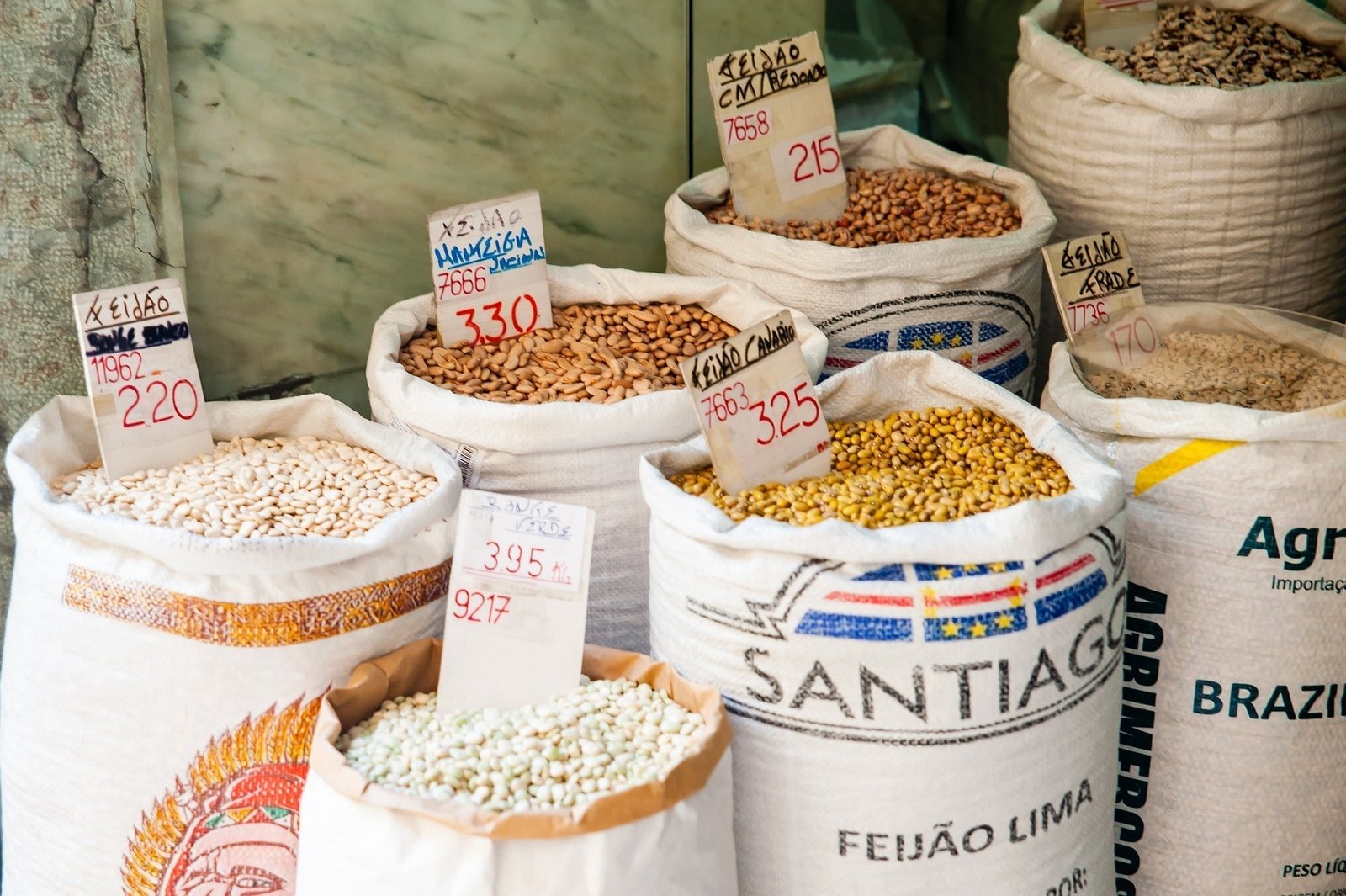
A new clinical trial just made headlines in the nutrition world. One food. Twelve weeks. Cholesterol down. Inflammation down. Researchers want it written into public health guidelines. It costs 80 cents a serving and has fed every civilization that ever existed — and yet Americans have spent decades turning their noses up at it in favor of expensive supplements and trendy superfoods. Can you guess what it is?
New research is showing once again that beans deserve a much more prominent place on your plate and on your doctor’s list of recommended foods. A 2025 study presented at the annual meeting of the American Society for Nutrition found that eating just one cup of beans a day significantly lowered cholesterol and reduced inflammation in adults with prediabetes.
The findings are simple, affordable, and actionable. Here’s what the research shows and why it matters.
Houston, We Have A Problem: More than Half of Adults in the USA Struggle with Blood Sugar Issues
Americans around the world are known for a couple of things:
1. That they only speak one language.
2. That they’re rather large, especially around the waist.
We do have a problem as a nation with our metabolic health. Not everyone has diabetes yet, but among adults over the age of 40, about 18% have diabetes, and another 45% have prediabetes. That is almost two-thirds of the adult population. So it is a big problem.
Pre-diabetes is the same condition as diabetes, but it’s not advanced to a state of official diagnosis yet.
Diabetes and pre-diabetes are not really a blood sugar problem. That’s just a symptom. Inside, it’s a fat problem—too much fat in the liver and the pancreas. This impairs liver function, gives rise to insulin resistance, creates low-grade inflammation all the time, and leads to an early demise from heart disease and type 2 diabetes.
“To address poor metabolic health, we really need to change what we eat. As individuals and as a nation, we need to eat more beans.”
The New Study: Black Beans, Chickpeas, and Prediabetes
The new randomized controlled trial, led by researchers at the Illinois Institute of Technology and presented at NUTRITION 2025, enrolled 72 adults with prediabetes. Participants were randomly assigned to eat 1 cup of black beans, chickpeas, or rice each day for 12 weeks. Blood samples were collected at the start, 6 weeks, and 12 weeks. The team measured cholesterol levels, markers of inflammation, and blood sugar, and also performed glucose tolerance tests at the beginning and end.
The Results
Chickpeas and cholesterol
For the group consuming chickpeas, total cholesterol significantly decreased from an average of 200 mg/dl at the beginning of the study to 186 mg/dl after 12 weeks, a drop of nearly 15 points in just three months from a single dietary addition. LDL cholesterol also dropped about 10 points.
Black beans and inflammation
In the black bean group, the average level of interleukin-6 (IL-6, a pro-inflammatory cytokine) was 2.57 pg/mL. At the beginning, it decreased significantly to 1.88 pg/mL by the end of the 12-week intervention.
Blood sugar
There weren’t any significant changes in blood sugar metabolism. This may have to do with what else was being eaten alongside the beans. A more complete dietary change is usually necessary to move the needle on blood sugar. Either using a comprehensive whole-foods plant-based diet or losing a significant amount of weight has been shown to make a significant difference.
“Our study showed the benefits of consuming beans in adults with prediabetes, but they are a great option for everyone. These findings could be used to inform dietary guidelines, clinicians, or public health programs focused on preventing heart disease and diabetes.”
– Morganne Smith, MS, Illinois Institute of Technology [1]
Previous Studies Agree with New Study: Beans Beat Metabolic Health Challenges
Several previous studies using similar quantities of beans each day have found the same thing that the researchers found at the Illinois Institute of Technology. The results are quite consistent across populations and bean types.
The quantity of beans you eat a day matters quite a bit. Many summaries and reviews of bean research include only populations eating a small number of beans, even at “high levels.” So in those studies, no one is eating enough beans to make a “hill of beans” of difference.
It’s more important to look at the high-serving trials to get a picture of what beans can really do for you.
Beans Lower LDL and Total Cholesterol
A six-week randomized control trial published in the Journal of Nutrition tested 120 grams of beans a day, about three-quarters of a cup, compared to a rice-based control. The bean group saw significant reductions in LDL cholesterol, non-HDL cholesterol, and total cholesterol compared to the rice group.
The dried pea group in the same study didn’t get the same LDL benefit. So it appears there is something specific to the beans that dried peas don’t have. So it wasn’t just fiber. [2]
A 2010 crossover feeding trial at Penn State University enrolled 64 middle-aged men, in random order, who received either the high-legume diet with roughly 150 grams of legumes per day or a “healthy American” controlled diet for 4 weeks each.
Compared to the controlled diet, the high legume diet produced significantly greater reductions in total cholesterol and LDL cholesterol. The insulin-sensitive men showed the largest reduction in cholesterol. [3]
Lentils Lower Cholesterol, Blood Sugar, and Inflammation Simultaneously
A recent study published in Nutrients measured cholesterol, blood glucose, and inflammation markers in a 12-week intervention study. 38 overweight adults consumed either 980 grams of cooked green lentils per week (about 2/3 of a cup per day) or identical meat-based control meals.
The lentil group had significant reductions in LDL cholesterol and total cholesterol. They also had a lower blood glucose response after eating a high-fat meal challenge. Two inflammation markers, interleukin-1β and interleukin-17, were also reduced in the lentil group. So the lentils helped cholesterol, blood glucose, and inflammation markers in this study. [4]
Legumes and the Gut Microbiome: A Deeper Mechanism
Another randomized controlled trial published in 2025 in Nature Communications found that a legume-enriched diet produced a significantly greater reduction in LDL cholesterol and total cholesterol than a calorie-restricted controlled diet in adults with prediabetes. It also found that a legume-rich diet improved the gut microbiome, thereby reducing cardiovascular risk. [5]
Why Beans Work: The Mechanisms Behind the Benefits
Beans work by a few different mechanisms that overlap and work together.
Soluble fiber
Soluble fiber is the star player. Beans are one of the richest foods in soluble fiber. Soluble fiber binds to cholesterol in the gut so that it does not get absorbed. This is one of the mechanisms for lowering cholesterol without making any other dietary changes.
Prebiotic activity
Beans are one of the most effective prebiotic foods available. The fiber in beans feeds beneficial gut bacteria, which in turn produce short-chain fatty acids – particularly butyrate – that reduce systemic inflammation. I wrote about this recently in the article about multiple myeloma. Butyrate production by gut bacteria was an important mechanism for slowing tumor progression. Here, we see that the microbiome also reduces inflammation and lowers cardiovascular risk.
Low glycemic index
Beans are what nutritionists call a slow carb. This means that beans digest slowly and don’t cause a rush of sugar into the bloodstream. They provide sustained energy. They are a healthy carbohydrate, unlike the refined carbohydrates that give all carbs a bad name.
Plant protein
When beans replace animal protein at meals, they reduce saturated fat intake. This indirectly lowers LDL cholesterol. There is a strong linear correlation between saturated fat intake and cholesterol levels.
Phytochemicals
Beyond the fiber in beans, there are phytochemicals, including saponins and polyphenols, that help lower cholesterol through additional mechanisms.
Micronutrient density
Beans supply nutrients that are often missing in the American diet: folate, magnesium, and potassium. They are a good source of plant-based iron and zinc as well. Calorie-for-calorie, legumes, especially lentils, are more nutrient-dense than grains.
A Hallelujah Diet Perspective
While we emphasize mostly raw foods at the Hallelujah Diet, we encourage people to eat beans and legumes as an essential part of their cooked foods on a weekly basis. Without legumes, a raw food diet can be quite low in protein. So beans are a very important part of a mostly raw food diet program like the Hallelujah Diet. It’s hard to go wrong with beans. They have been a foundational part of the human diet for thousands of years across the world’s healthiest cultures. And modern research is showing this is still true.
You don’t have to eat superfoods to be healthy. Legumes such as pinto beans, chickpeas, or lentils are inexpensive and can have a big impact on your health. Health food doesn’t have to be expensive.
If you’re already following the Hallelujah Diet, this research is an affirmation that beans are an important part of your diet. If you’re just starting out on the program, beans are an easy addition to your diet. They are versatile, very affordable, and the science shows that you get good results from realistic servings.
Practical Tips: How to Eat a Cup of Beans Every Day
Here are some practical ideas for incorporating beans into your diet every day.
Add beans to your salads. Whether it’s chickpeas, black beans, or pinto beans, a few beans in the green salad are a great topper.
Blend white beans or lentils into a soup. We use this technique, which adds creaminess without using any dairy products. A little coconut cream helps, too.
Make hummus. Hummus is a great way to eat more vegetables. The chickpeas, tahini, lemon, and garlic give you a really filling snack with a real nutritional punch.
Eat beans or lentils as a side dish rather than white rice or pasta. You get way more nutrition this way.
Start with canned beans. You don’t have to home-cook your beans to get started.
Use spices. Cumin, garlic, and onions are all staples for us, along with a wee bit of coriander. Smoked paprika and paprika are great, too, for refried-style beans.
Make beans in an Instant Pot. Pressure cooking helps the spices penetrate the beans more, and they taste better. We cook our beans in an Instant Pot all the time, and the color and flavor are way better than stove-top cooked beans.
If you’re not used to eating beans regularly, as my family does, start by eating smaller amounts and gradually increase them over a week or two. Your gut microbiome will adjust, and you have less digestive discomfort over time. The Chamberlin 2024 Lentil Trial is reassuring on this point. Even at the large doses used in that study, GI symptoms were rated as none or mild. And lentils tend to cause fewer GI symptoms than pintos, red beans, or kidney beans anyway.
Have you had your beans yet today?
References
Smith M, Edirisinghe I, Burton-Freeman B. “Study Finds Daily Cup of Beans Boosts Heart and Metabolic Health.” Presented at: NUTRITION 2025, American Society for Nutrition. June 3, 2025. Abstract OR18-01-25. https://www.eurekalert.org/news-releases/1084815
Bell RC, Zahradka P, Aliani M, et al. “A Comparison of Dry Bean and Pea Consumption on Serum Cholesterol: A Randomized Controlled Trial in Adults with Mild Hypercholesterolemia.” The Journal of Nutrition. 2024;154(11):3375–3387. doi: 10.1016/j.tjnut.2024.09.011. PMID: 39357673.
Zhang Z, Lanza E, Kris-Etherton PM, et al. “A High Legume Low Glycemic Index Diet Improves Serum Lipid Profiles in Men.” Lipids. 2010;45(9):765–775. doi: 10.1007/s11745-010-3463-7. PMID: 20734238.
Chamberlin ML, Wilson SMG, Gaston ME, Kuo WY, Miles MP. “Twelve Weeks of Daily Lentil Consumption Improves Fasting Cholesterol and Postprandial Glucose and Inflammatory Responses – A Randomized Clinical Trial.” Nutrients. 2024;16(3):419. doi: 10.3390/nu16030419. PMID: 38337705.
Latypov O, et al. “A Legume-Enriched Diet Improves Metabolic Health in Prediabetes Mediated Through Gut Microbiome: A Randomized Controlled Trial.” Nature Communications. 2025 Jan 22. doi: 10.1038/s41467-025-56084-6.
