

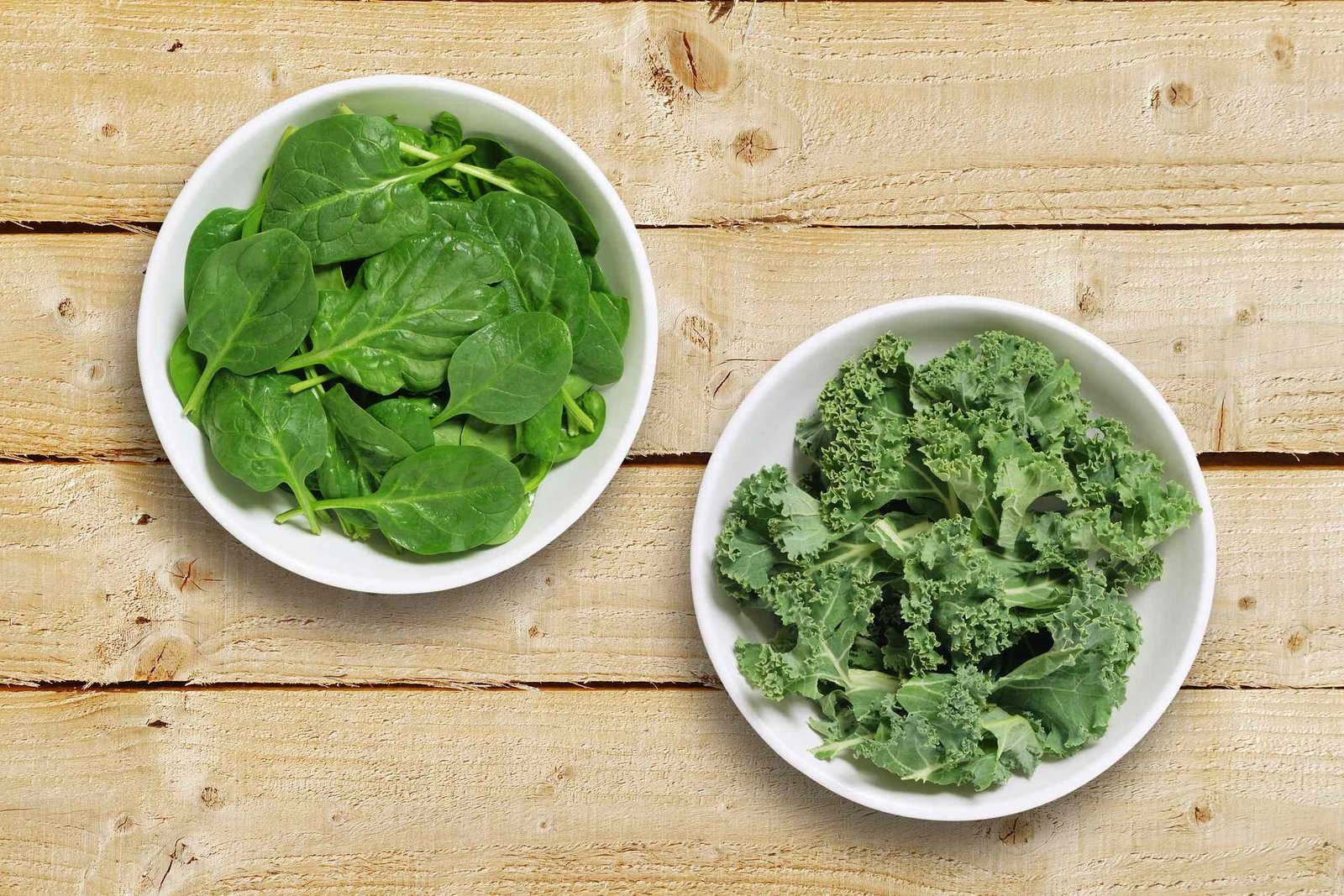
Spinach
Kale
Calories
23
36
Carbs
3.75 grams (g)
5.3 g
Protein
2.97 g
2.94 g
Fiber
2.4 g
4 g
Folate
146 micrograms (mcg) or 36.5% of the Daily Value (DV)
65 mcg or 16.3% of the DV
Vitamin A
524 mcg or 58.2% of the DV
146 mcg or 16.2% of the DV
Vitamin C
9.8 mg or 10.8% of the DV
17.8 mg or 19.8% of the DV
Vitamin E
2 mg or 13.3% of the DV
1.6 mg or 10.7% of the DV
Vitamin K
494 mcg or 411.6% of the DV
418 mcg or 348.3% of the DV
Calcium
136 mg or 10.5% of the DV
150 mg or 11.5% of the DV
Iron
3.57 mg or 19.8% of the DV
0.84 mg or 4.7% of the DV
Magnesium
87 mg or 20.7% of the DV
25 mg or 6% of the DV
Manganese
0.9 mg or 39% of the DV
0.54 mg or 23.5% of the DV
Potassium
466 mg or 9.9% of the DV
144 mg or 3% of the DV
Lutein and zeaxanthin
11,300 mcg
4,980 mcg
Here’s a quick summary of the nutrition showdown:
- Kale and spinach contain a similar amount of calories, though kale contains 67% more fiber.
- When it comes to nutrition, spinach beats out kale for most vitamins and minerals. Spinach is a better source of folate, vitamin A, vitamin E, vitamin K, iron, magnesium, manganese, and potassium.
- Spinach is much higher in vitamin A than kale. Vitamin A is necessary for vision, immune function, cognitive function, and reproductive health.
- Spinach is more concentrated in magnesium and potassium, minerals that play a critical role in controlling blood pressure.
- Spinach is higher in nitrates, which are compounds that relax blood vessels, supporting healthy blood pressure regulation.
- Spinach has higher levels of the carotenoid plant pigments lutein and zeaxanthin. These compounds have powerful cellular-protective properties.
- Kale is higher in vitamin C and calcium than spinach.
Though both are nutritious, spinach beats out kale in many categories, including vitamin and mineral content and levels of certain antioxidants.
However, research shows that both are beneficial for health. For example, studies show that eating green leafy vegetables, like spinach and kale, can lower the risk of certain cancers, cognitive decline, and heart disease.
A 2021 review found that a higher intake of green leafy vegetables was linked to a 7% reduced risk of all cardiovascular disease events, including stroke and coronary heart disease.
Adding kale and spinach to your diet can also increase your intake of essential vitamins and minerals, as well as antioxidant compounds like carotenoids.
It’s best to consume a variety of leafy greens, including kale and spinach. However, there are some differences in taste and texture between the two, and some people may prefer one over the other.
Kale is more fibrous and has a bitter taste, while spinach has a milder flavor and softer texture.
Spinach and kale can be enjoyed fresh or cooked, though kale requires a bit more effort to make it palatable when eaten raw. If you’re planning on eating kale raw, such as in a salad, you can tenderize it by drizzling it with olive oil, and then massaging the leaves between your fingers for a few minutes. This helps break down the fibers in the leaves and makes them more tender.
Spinach and kale can be enjoyed in:
- Salads
- Sautéed or steamed
- Soups, stews, and baked goods
- Smoothies and homemade juices
Spinach and kale are incredibly healthy. However, there are some downsides to consider.
Oxalates in Spinach
Certain vegetables, like spinach, are high in anti-nutrient compounds called oxalates. Oxalates bind to minerals, like calcium, in your digestive system, making it more difficult for your body to absorb them.
For this reason, kale is a better source of calcium than spinach. However, cooking spinach, such as boiling it, can significantly reduce oxalate levels, which may improve nutrient availability.
Additionally, consuming excessive amounts of oxalate-rich foods can harm your kidneys by causing calcium oxalate crystals to deposit in the renal tubules, which are parts of the kidneys that are responsible for removing waste from your body and returning important substances to your blood. This can lead to kidney damage and even kidney failure in rare cases.
Goitrogens in Kale
Cruciferous vegetables, like kale, contain compounds called goitrogens. Goitrogens may block iodide transport to the thyroid, impairing the synthesis of thyroid hormones.
Although cooking reduces oxalate levels, it’s best to avoid consuming large amounts of goitrogen-containing foods, like kale, especially if you have thyroid disease.
Kale and spinach are nutritious greens that can fit into most healthy diets.
For the most nutritional benefits, it’s best to consume a variety of vegetables, including spinach and kale.
However, spinach is generally higher in vitamins, minerals, and certain antioxidants, like lutein and zeaxanthin.
