

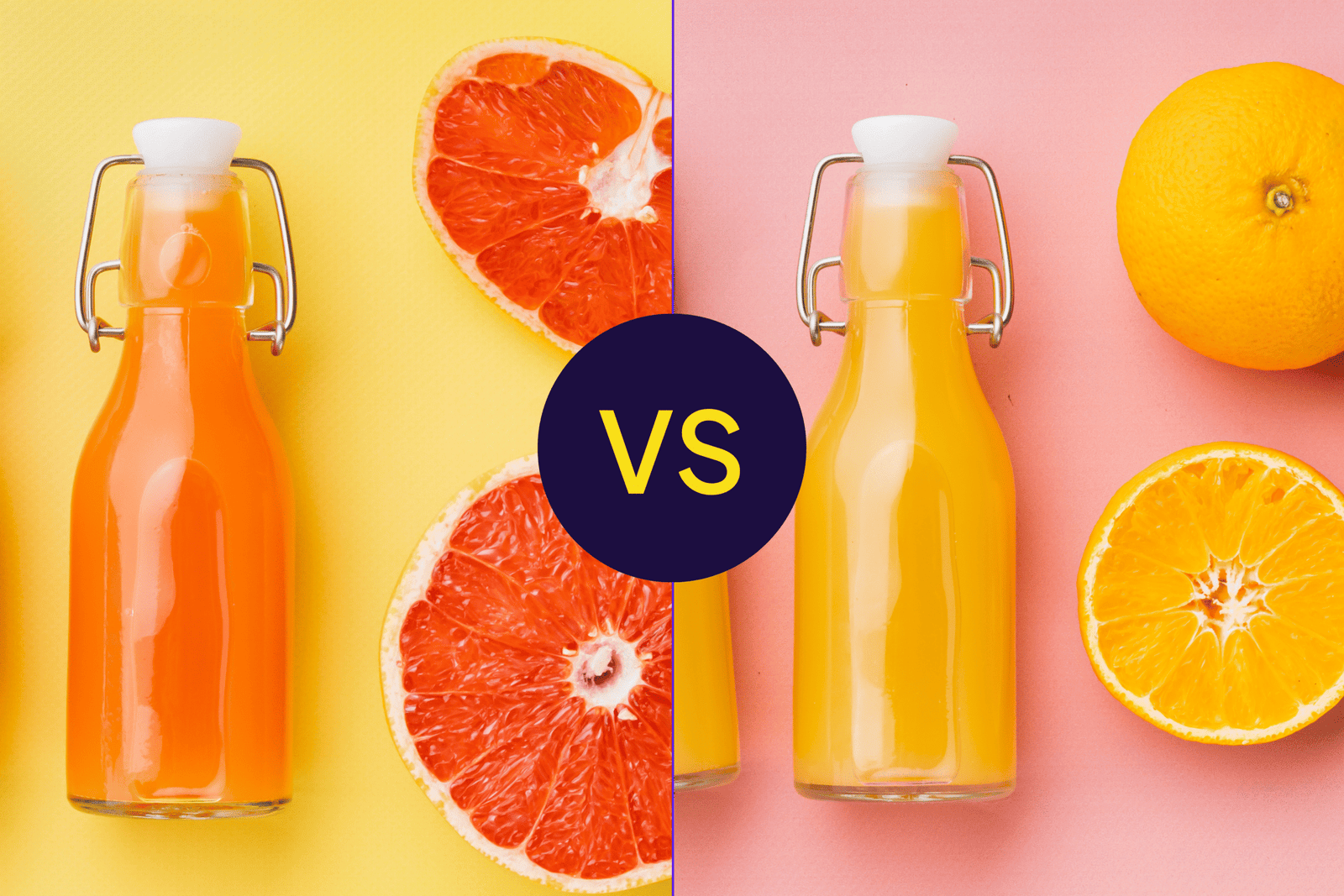
Grapefruit juice and orange juice are popular breakfast drinks. But is one citrus juice better than the other when it comes to boosting your immune system or keeping your blood sugar in check? Here’s how the two stack up.
Orange and red grapefruit juice are good options for immune support because they are both high in vitamin C. However, orange juice has just a bit more:
- Orange juice: 61 milligrams of vitamin C in 200 grams (around a 7-ounce pour)
- Grapefruit juice: 48.2 milligrams of vitamin C in 200 grams (around a 7-ounce pour)
Men are encouraged to get 90 milligrams of vitamin C every day and women should get 75 milligrams per day, so drinking a glass of either of these juices will get you close to that goal.
Vitamin C is essential for many functions in the body, but it’s best known for protecting and strengthening your immune system. It does that by:
- Acting as an antioxidant: As the immune system fights germs, it releases compounds called free radicals that can damage cells. Vitamin C is an antioxidant, so it neutralizes these free radicals. This avoids unnecessary cell damage and inflammation that might otherwise take a toll on your health.
- Helping immune cells work effectively: Your white blood cells absorb high amounts of vitamin C, indicating they need it to function. It helps these cells travel to the site of an infection to destroy germs. Vitamin C also supports T-cell and B-cell lymphocytes, special cells that remember specific invaders and create antibodies to fight them.
- Supporting healing and controlling inflammation: Your body needs vitamin C to build collagen, a protein that helps repair wounds and injured tissue. It also influences molecules that regulate inflammation in the body.
You might expect grapefruit juice to have significantly less sugar than orange juice due to its tart taste. While orange juice does contain a bit more sugar, the amounts are very similar:
- Orange juice: 16.16 grams of sugar per 200 grams (around a 7-ounce pour)
- Grapefruit juice: 14.24 grams of sugar per 200 grams (around a 7-ounce pour)
Foods and beverages that have higher amounts of sugar, including fruit juices, can cause an increase in blood sugar.
Experts use a measure called the glycemic index (GI) to rank foods and beverages based on how much they impact blood sugar. Those with a GI score under 55 raise blood sugar gently, while items with a score over 70 cause sharp spikes.
The glycemic indexes for both orange juice and grapefruit juice are similar:
- Orange juice: GI of 43
- Grapefruit juice: GI of 48
While both are low GI beverages, they are higher than whole oranges and grapefruits because fruit juices lack fiber.
To ensure that your glass of grapefruit or orange juice doesn’t cause a steep spike in blood sugar, make sure to avoid products that include added sugar.
Both orange juice and grapefruit juice offer more than just vitamin C and natural sugars. But orange juice comes out on top when comparing many other key vitamins and minerals:
- Folate: Orange juice is the better choice for this B vitamin. In about 7 ounces (200 grams) of orange juice, there are 58 micrograms of folate, while the same amount of red grapefruit juice contains 38 micrograms. Your body needs folate to create DNA, and it’s crucial during pregnancy. Adults require 400 micrograms daily.
- Thiamin: Levels of thiamin (vitamin B1) are also slightly higher in orange juice. Seven ounces of orange juice provides 0.15 milligrams—there are 0.07 milligrams, or about half the amount, in the same amount of grapefruit juice. Thiamin helps turn food into energy. Men need 1.2 milligrams daily, and women need 1.1 milligrams.
- Potassium: Orange juice again leads this mineral category with 366 milligrams of potassium in a 7-ounce pour. Grapefruit juice is close behind with 256 milligrams. Potassium regulates fluid balance and blood pressure, and supports proper muscle and nerve function. Men are encouraged to get 3,400 milligrams of potassium every day, and women need 2,600 milligrams.
- Magnesium: You’ll find similar amounts of this mineral in both drinks, however 7 ounces (200 grams) of orange juice has 20.6 milligrams, while grapefruit juice has 15.4 milligrams. Magnesium supports muscle and nerve function, blood sugar control, and blood pressure regulation. Depending on age, men need 400-420 milligrams daily and women need 310-320 milligrams daily.
The specific nutrients in your glass of juice depend on the fruit variety and product you choose. Some juices are fortified, meaning they have additional nutrients—many grapefruit juice and orange juice brands add calcium and vitamin D to support bone health.
Orange juice beats out grapefruit juice when it comes to vitamin and mineral content including vitamin C, B vitamins, potassium, and magnesium. However, the nutritional profiles of both juices are very similar, meaning both can be healthy additions to your diet.
But beyond nutrient density, medication safety is a major factor when it comes to choosing between orange and grapefruit juice.
Grapefruit juice can affect drug absorption in two ways:
- It can raise concentrations of a drug in your body: Grapefruit contains plant compounds called furanocoumarins, which block a certain type of enzyme (a protein) in your digestive system. This special enzyme, called CYP3A4, normally processes medication. Without enough CYP3A4, more of the drug enters your bloodstream, plus, it stays in your body longer than it should. This can increase the risk of side effects or adverse reactions.
- It can lower concentrations of a drug in your body: Grapefruit juice can block proteins in your body that transport drugs into your cells. Without these transport proteins, the body can’t absorb the medication, and the drug doesn’t work as well as it should. This is most common with the allergy medication fexofenadine (Allegra). Orange juice can also block transport proteins for this drug.
Common medications that interact with grapefruit include certain statins for cholesterol, high blood pressure drugs, and corticosteroids that treat irritable bowel disease, among others. Talk to your doctor or pharmacist about adding grapefruit juice to your diet if you take daily medications.
